Home and On-Site Urine Drug-Test Kits: Accuracy and Limits
THE OKOROCHA FIRM*
Content notice: Scientific and toxicology content on this site was written by non-toxicologist marketing staff at Connectica, LLC. It has not been verified for accuracy by a trained forensic toxicologist. Read the full Content Disclaimer.
Updated August 29, 2026. Home and on-site urine drug-test kits can provide rapid screening information, but their results are qualitative and presumptive. Performance depends on the specific device, drug class, cutoff, specimen, operator, storage, and reading time.
What does a home drug-test kit report?
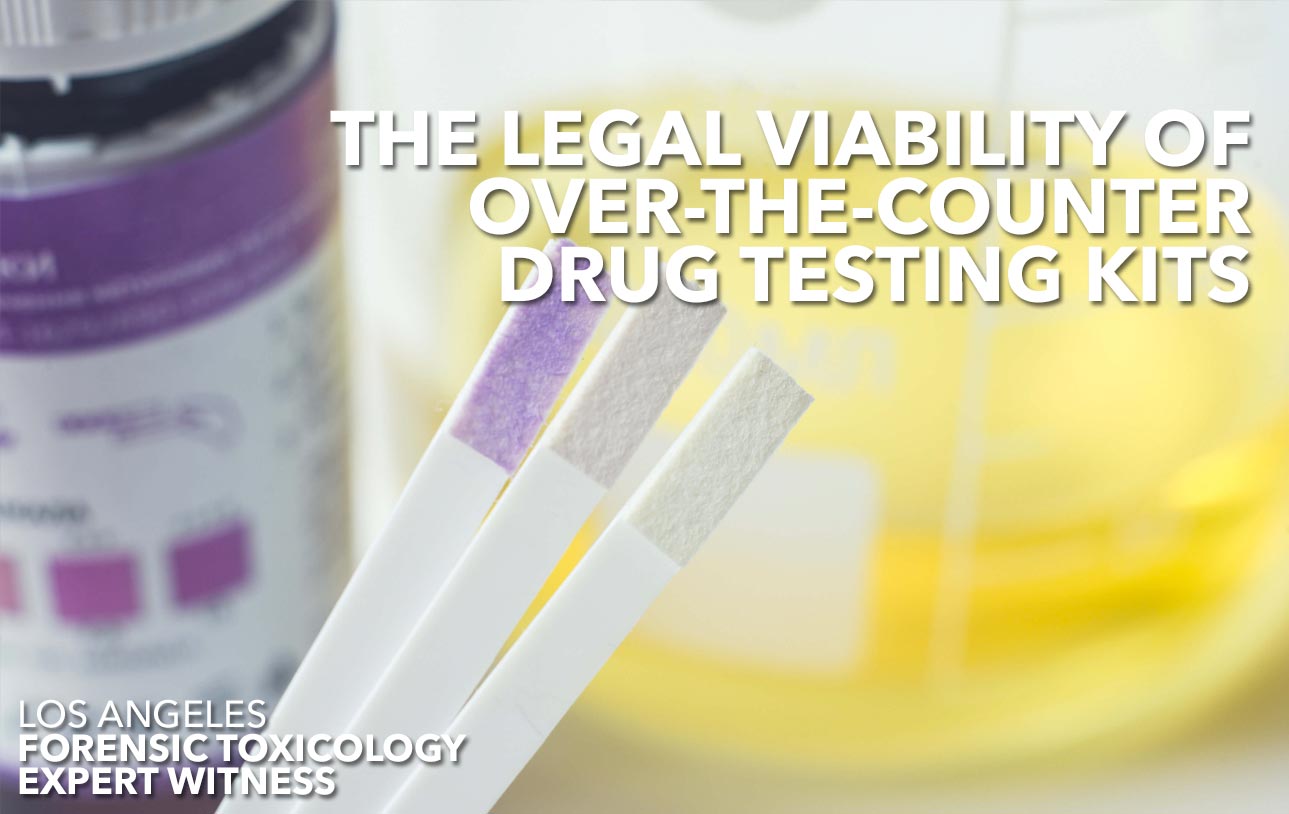
Most home-use urine devices are immunoassays. They report whether the response for a named drug or drug class is above or below a preset cutoff. They do not measure the amount of a drug in a way that establishes dose or impairment.
The FDA describes home testing as a two-step process: first, a rapid at-home test; second, laboratory testing if the first result suggests that a drug may be present. The FDA calls the initial positive preliminary or presumptive and advises against taking serious action until the laboratory result is available.
What drugs are included?
There is no universal home-test panel. Devices may test for one analyte or several drug classes. The label and package insert should identify each target, cutoff, specimen type, timing requirements, and known limitations. A five-panel, ten-panel, or similarly named kit should not be assumed to match another product with the same marketing label.
A negative result applies only to the substances and cutoffs the device was designed to detect. It does not exclude drugs outside the panel, concentrations below the cutoff, collection outside the detection window, degradation, or a false-negative device result.
How accurate are on-site devices?
Accuracy cannot be assigned to home tests as a single category. Comparative studies have found meaningful differences among devices and drug classes, especially with challenging specimens near the cutoff. In one five-device study, researchers reported discrepancies between product claims and observed performance for every device evaluated, particularly for amphetamines. Another study of five non-instrumented devices found approximately 66% to 74% overall accuracy when results were assessed against confirmation cutoffs in a deliberately difficult near-cutoff specimen set.
Those studies evaluated particular products under defined conditions and should not be used as a current performance rating for every device sold today. Their broader lesson remains important: device identity, drug class, concentration relative to the cutoff, operator interpretation, and comparison method all affect performance.
Why can a preliminary result be wrong?
- Cross-reactivity: another medication, metabolite, food, supplement, or compound may react with the assay.
- Wrong panel: the drug of interest may not be included or may be poorly recognized.
- Cutoff effects: concentrations near the threshold can produce inconsistent classifications.
- Timing: collection may occur before the target appears in urine or after it falls below the cutoff.
- Storage or expiration: heat, moisture, improper storage, or an expired device can affect performance.
- Operator error: incorrect sample volume, timing, or visual reading can alter the reported result.
- Specimen validity: dilution, substitution, or adulteration may make the result incomplete or invalid.
What should happen after a presumptive positive?
The specimen should be tested by an appropriate laboratory using a more specific method when the result may affect employment, treatment, discipline, custody, liberty, or another significant interest. Confirmation commonly uses chromatography with mass spectrometry. The laboratory report should identify the compound tested, method, cutoff or reporting limit, and result.
Even a confirmed urine result generally establishes prior exposure to a detected compound above a reporting threshold. It does not automatically establish misuse of a prescription, exact time or amount of use, impairment, or the legal consequence of the finding.
Can an at-home result be used in court or at work?
There is no universal answer. Admissibility and legal weight depend on the jurisdiction, proceeding, governing testing program, purpose of the test, authentication, chain of custody, device validation, operator training, confirmation, and the evidence offered with the result. Federal workplace programs have their own mandatory procedures, and private or state programs may follow different rules.
An at-home device result should not be described as legally conclusive. Anyone relying on a result with serious consequences should preserve the device information, lot and expiration data, package insert, photographs taken within the required reading time, specimen records, and laboratory confirmation documents.
Records to request or preserve
- Product name, manufacturer, model, lot number, and expiration date
- Package insert and instructions in effect for that lot
- Drug panel, target analytes, and cutoffs
- Collection date, time, specimen type, and handling records
- Device storage conditions and quality-control records
- Operator identity, training, timing, observations, and photographs
- Specimen validity results
- Laboratory accession, screening, confirmation, and chain-of-custody records
Primary and official sources
- U.S. Food and Drug Administration. Drugs of Abuse Home Use Test.
- U.S. Food and Drug Administration. Drugs of Abuse Tests.
- Taylor EH, Oertli EH, Wolfgang JW, Mueller E. Accuracy of five on-site immunoassay drugs-of-abuse testing devices. Journal of Analytical Toxicology. 1999;23(2):119-124. doi:10.1093/jat/23.2.119.
- Peace MR, Tarnai LD, Poklis A. Performance evaluation of four on-site drug-testing devices for detection of drugs of abuse in urine. Journal of Analytical Toxicology. 2000;24(7):589-594. doi:10.1093/jat/24.7.589.
- Kadehjian LJ. Performance of five non-instrumented urine drug-testing devices with challenging near-cutoff specimens. Journal of Analytical Toxicology. 2001;25(8):670-679. doi:10.1093/jat/25.8.670.
Related reading: See Urine Drug Testing: Reliability, Detection Windows and Interpretation, False-Positive Urine Drug Screens, Rapid Urine Drug Tests in Court: 12 Records That Matter, and the Forensic Toxicology topic hub.
This page is general informational and marketing content. It is not legal advice, expert opinion, or a statement of scientific fact. Case-specific interpretation requires the complete record and consultation with a qualified forensic toxicologist or licensed attorney.