Urine Drug Testing: Reliability, Detection Windows and Interpretation
THE OKOROCHA FIRM*
Content notice: Scientific and toxicology content on this site was written by non-toxicologist marketing staff at Connectica, LLC. It has not been verified for accuracy by a trained forensic toxicologist. Read the full Content Disclaimer.
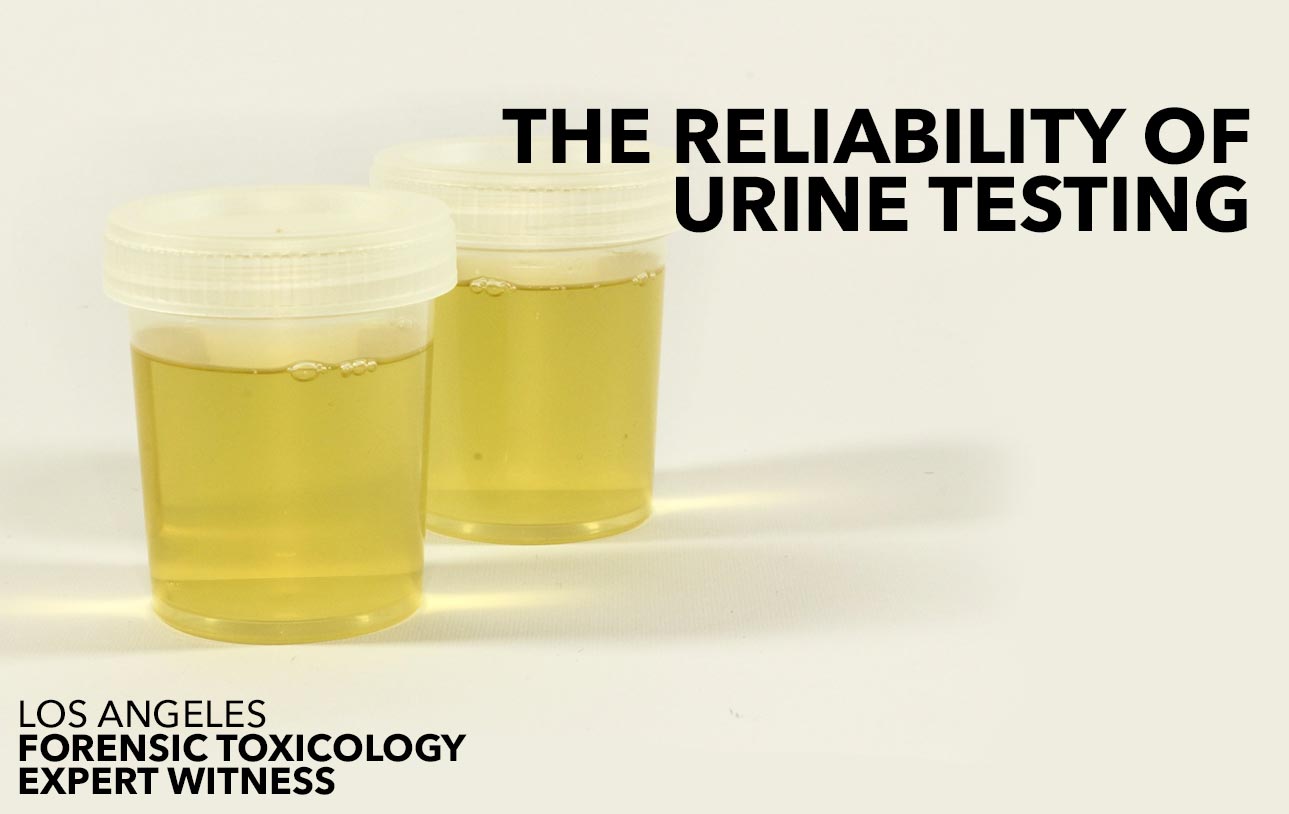
Updated August 29, 2026. Urine drug testing can be useful, but reliability depends on the collection, specimen validity checks, assay design, cutoff, confirmation method, and the question being asked. A urine result should not be interpreted without those details.
What does a urine drug test measure?
A urine drug test looks for specified drugs, metabolites, or other target compounds in urine. It does not measure how a drug affects the body’s immune system. Many initial screens use immunoassays, which rely on antibodies to recognize chemical structures. Results are typically classified as positive or negative relative to a preset cutoff.
A laboratory may then use a more specific chromatographic and mass-spectrometric method to identify and, when appropriate, quantify a particular compound. Screening and confirmation are different analytical steps. A result should state which step was performed.
How long can a drug be detected in urine?
There is no universal urine detection window. Detection depends on the drug and metabolite selected, dose, route, frequency and duration of use, time since exposure, urine concentration and pH, renal and metabolic variation, analytical sensitivity, and the reporting cutoff.
A published review reported that many drugs after a single dose may be detectable in urine for roughly 1.5 to 4 days, while chronic use may produce longer windows and some drugs can persist substantially longer. That range is a general observation, not a rule for a specific person or test. Controlled methamphetamine research also showed that lowering cutoffs extended terminal detection and increased the number of positive specimens. Detection time therefore cannot be separated from the method and cutoff.
A urine result ordinarily supports the presence of a targeted compound above the applicable threshold during an uncertain prior interval. It does not, by itself, establish the exact time of use, dose, route, or whether the person was impaired when the sample was collected.
Does every urine panel test for the same drugs?
No. Test menus vary by laboratory, program, and device. The American College of Medical Toxicology states that there is no single universal opioid test. Many clinical opiate immunoassays primarily target morphine and codeine, while separate assays may be required for fentanyl, buprenorphine, methadone, oxycodone, tramadol, and other structurally distinct opioids.
The phrase “negative drug screen” is incomplete unless the report identifies what was tested, the cutoff, and the method. A negative result for a limited panel does not exclude every drug. A positive immunoassay result is presumptive until confirmed by an independent chemical technique when the result will carry significant consequences.
Collection and specimen validity
Collection requirements are not universal. Federal workplace testing, clinical care, probation, athletics, and private employment may operate under different rules. The current federal workplace program has detailed requirements for collection, custody and control, laboratory testing, Medical Review Officer review, and reporting. Those federal rules should not be assumed to govern every non-federal test.
Specimen validity testing can help identify dilution, substitution, or adulteration, but it must be interpreted under the applicable program and laboratory criteria. Important records can include the custody-and-control form, collector notes, specimen temperature documentation when required, seal identifiers, accession records, creatinine, specific gravity, pH, oxidant or adulterant testing, instrument data, quality-control results, and laboratory standard operating procedures.
What can make a result unreliable or incomplete?
- Limited test menu: the drug of interest was not included or was poorly recognized by the assay.
- Cutoff effects: the compound was present below the reporting threshold.
- Cross-reactivity: another drug or metabolite triggered a presumptive positive on that specific immunoassay.
- Dilution or concentration: hydration and urine concentration affected the measured amount.
- Collection or identification error: documentation, labeling, sealing, transport, or accession records are incomplete or inconsistent.
- Degradation or storage issues: time, temperature, container, preservative, or handling affected specimen integrity.
- Interpretive overreach: a result showing prior exposure was presented as proof of dose, timing, or impairment.
Questions to ask before relying on a urine result
- What drug or metabolite was targeted?
- Was the result from an immunoassay screen, a confirmation method, or both?
- What manufacturer, instrument, calibration, cutoff, and reporting rule applied?
- Was the specimen valid under the governing criteria?
- Do the collection and chain-of-custody records match the specimen and report?
- Were all required controls acceptable?
- Could assay-specific cross-reactivity or incomplete drug coverage explain the result?
- What conclusion does the test support, and what conclusion does it not support?
Primary and official sources
- Verstraete AG. Detection times of drugs of abuse in blood, urine, and oral fluid. Therapeutic Drug Monitoring. 2004;26(2):200-205. doi:10.1097/00007691-200404000-00020.
- Oyler JM, Cone EJ, Joseph RE Jr, Moolchan ET, Huestis MA. Duration of detectable methamphetamine and amphetamine excretion in urine after controlled oral administration of methamphetamine to humans. Clinical Chemistry. 2002;48(10):1703-1714.
- Stolbach A, Connors N, Nelson L, Kulig K. ACMT Position Statement: Interpretation of Urine Opiate and Opioid Tests. Journal of Medical Toxicology. 2022;18(2):176-179. doi:10.1007/s13181-021-00864-1.
- Saitman A, Park HD, Fitzgerald RL. False-positive interferences of common urine drug screen immunoassays: a review. Journal of Analytical Toxicology. 2014;38(7):387-396. doi:10.1093/jat/bku075.
- Substance Abuse and Mental Health Services Administration. Federal Workplace Drug Testing FAQs and current mandatory-guideline resources.
Related reading: See False-Positive Urine Drug Screens: Immunoassay Limits and Confirmation, Rapid Urine Drug Tests in Court: 12 Records That Matter, Positive Drug Test vs. Impairment, and the Forensic Toxicology topic hub.
This page is general informational and marketing content. It is not legal advice, expert opinion, or a statement of scientific fact. Case-specific interpretation requires the complete laboratory record and consultation with a qualified forensic toxicologist or licensed attorney.