Guides to expert-witness selection, qualifications, reports, depositions, testimony, and forensic consulting.
Category: Expert Witness
Age, Balance, and Field-Sobriety Evidence: What Population Research Can Show
Age-related balance research helps frame evidence review, but population averages do not diagnose impairment or establish why one person swayed.
Postmortem Alcohol Evidence: A Litigation Records and Source-Attribution Checklist
A litigation-focused guide to postmortem alcohol evidence, including specimen source, preservation, alternative matrices, biomarkers, higher alcohols, laboratory records, and questions for experts.
Vitreous Alcohol Evidence in Court: Ratios, Prediction Intervals, and Laboratory Records
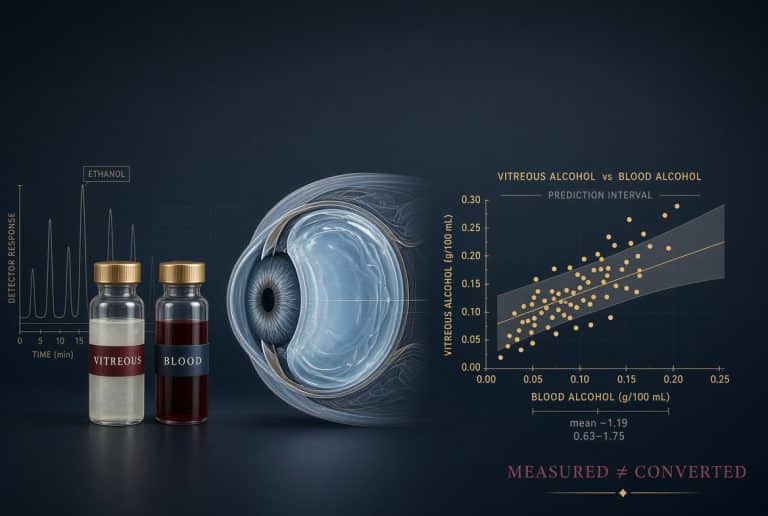
A litigation-focused guide to measured vitreous alcohol, estimated BAC, ratio uncertainty, EtG and EtS, collection evidence, and laboratory records.
MDMA and Ecstasy Evidence in Court: Identity, Purity, Dose, and Laboratory Records
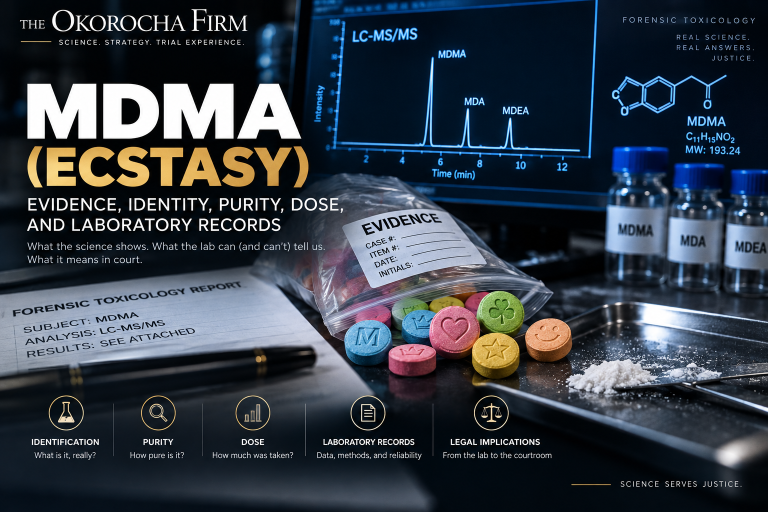
A litigation-focused guide to separating drug identity, product purity, dose, timing, effect, intent, and the laboratory records needed to evaluate each.
California Forensic Toxicology Expert Testimony: Evidence Code, Sargon & Kelly
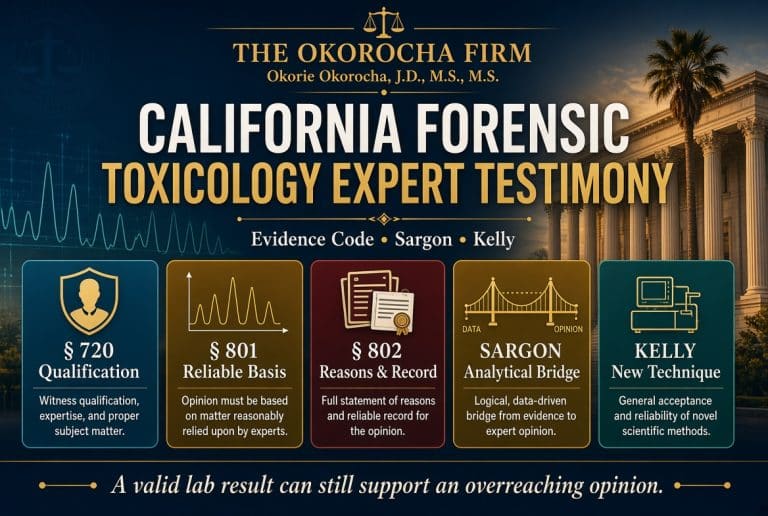
California framework for admitting and challenging forensic toxicology expert testimony under Evidence Code §§ 720, 801 and 802, including Sargon reliability review and Kelly issues for novel scientific techniques.
Cannabis DUI Evidence: Four Questions That Must Remain Separate
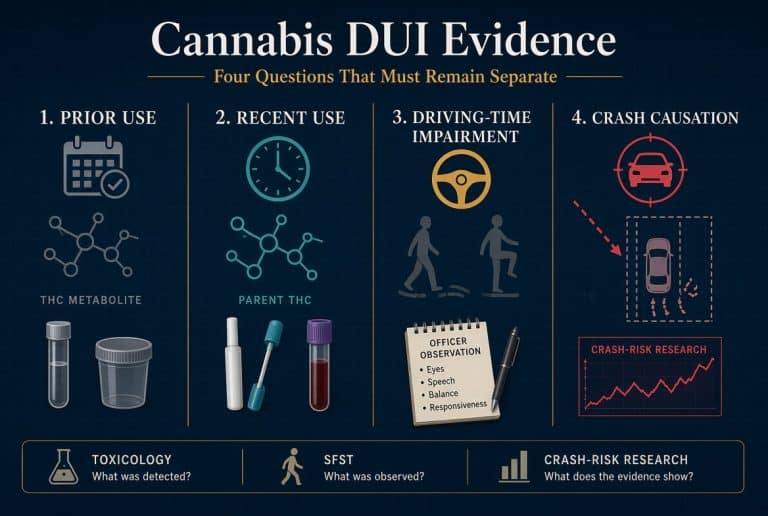
A cannabis DUI framework separating proof of prior use, recent use, driving-time impairment, and crash causation using toxicology, SFST, and crash-risk research.
A Negative Nitazene Test: What Counsel Should Establish Before Relying on It
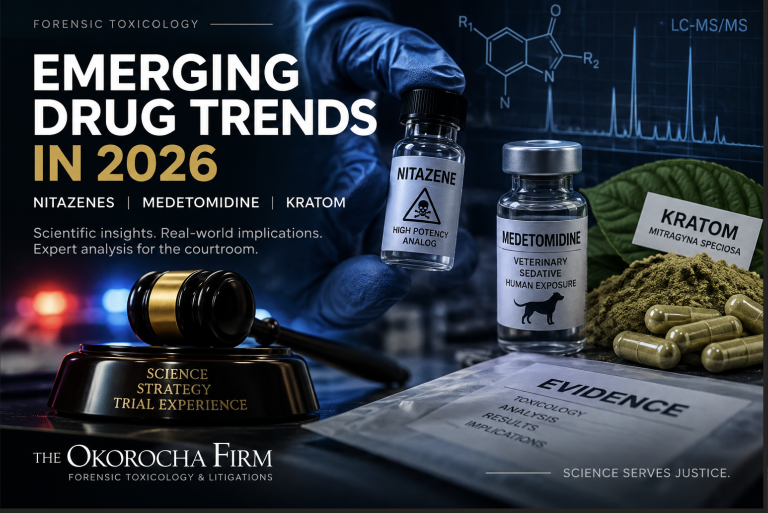
Review nitazene assay coverage, reporting limits, collection timing, and retained specimens before treating a negative result as evidence of no exposure.
Medetomidine or Medical Dexmedetomidine? Reviewing Source Attribution
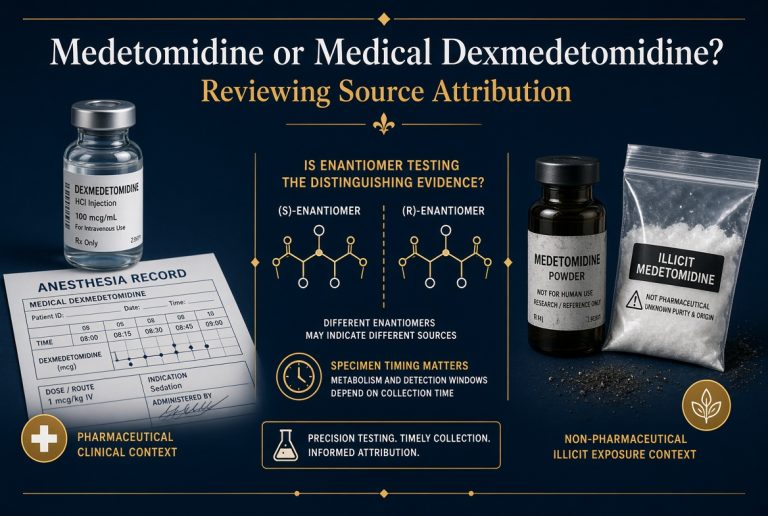
How medication records, specimen timing, and enantiomer testing affect attribution of a medetomidine finding to illicit exposure.
Does a Positive 7-OH Test Identify the Product Someone Took?
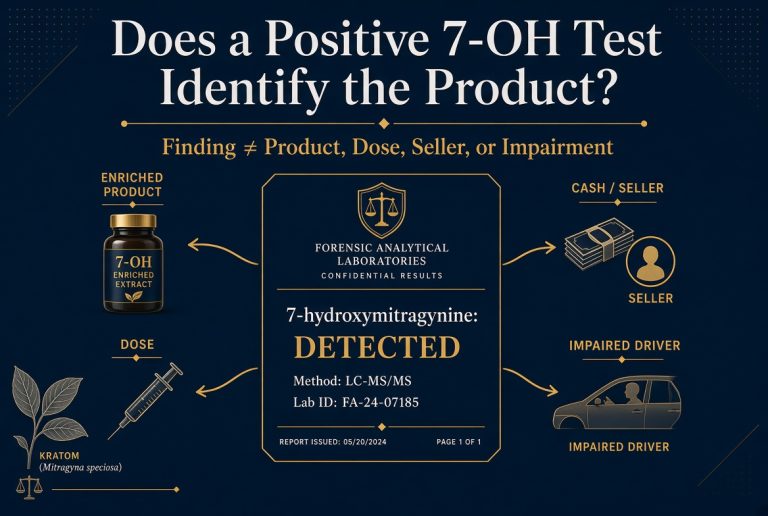
Distinguish a 7-hydroxymitragynine finding from proof of an enriched product, dose, impairment, or a particular seller.
Medetomidine Withdrawal Evidence: Why the Timeline Matters
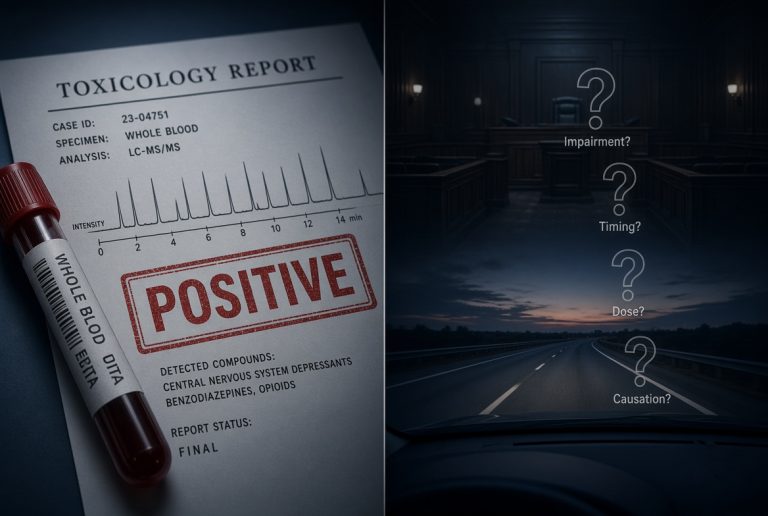
Review clinical phases, negative parent-drug results, co-withdrawal, and treatment records before assigning causation in medetomidine cases.
Emerging Drugs and “Fatal Ranges”: How to Evaluate Concentration Testimony
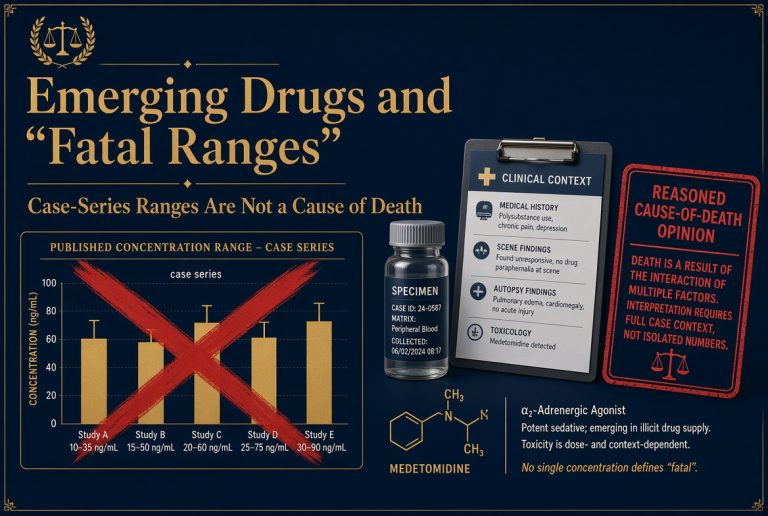
Why medetomidine case-series ranges cannot substitute for specimen-specific analysis, clinical context, and a reasoned cause-of-death opinion.
Drug Surveillance Statistics in Court: The Denominator Comes First
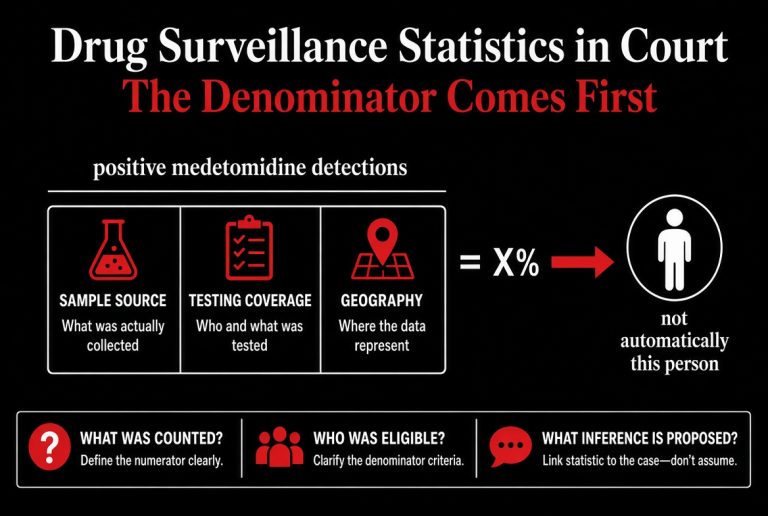
Evaluate medetomidine prevalence claims by sample source, testing coverage, geography, and the inference proposed for an individual case.