Scientific explanations, studies, and evidence relevant to toxicology and forensic practice.
Category: Science
Age, Balance, and Field-Sobriety Evidence: What Population Research Can Show
Age-related balance research helps frame evidence review, but population averages do not diagnose impairment or establish why one person swayed.
Postmortem Alcohol Evidence: A Litigation Records and Source-Attribution Checklist
A litigation-focused guide to postmortem alcohol evidence, including specimen source, preservation, alternative matrices, biomarkers, higher alcohols, laboratory records, and questions for experts.
Vitreous Alcohol Evidence in Court: Ratios, Prediction Intervals, and Laboratory Records
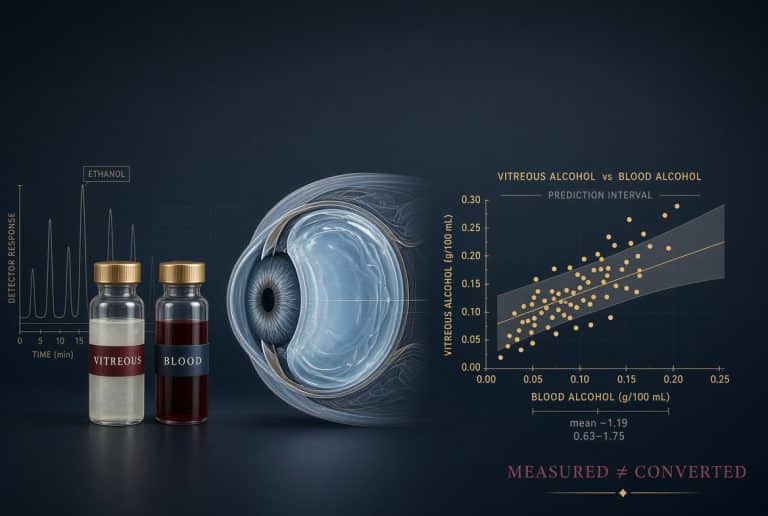
A litigation-focused guide to measured vitreous alcohol, estimated BAC, ratio uncertainty, EtG and EtS, collection evidence, and laboratory records.
MDMA and Ecstasy Evidence in Court: Identity, Purity, Dose, and Laboratory Records
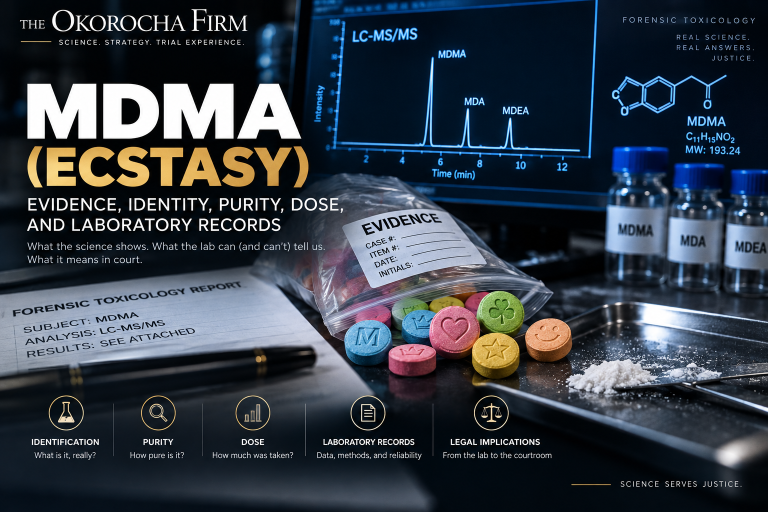
A litigation-focused guide to separating drug identity, product purity, dose, timing, effect, intent, and the laboratory records needed to evaluate each.
Cannabis DUI Evidence: Four Questions That Must Remain Separate
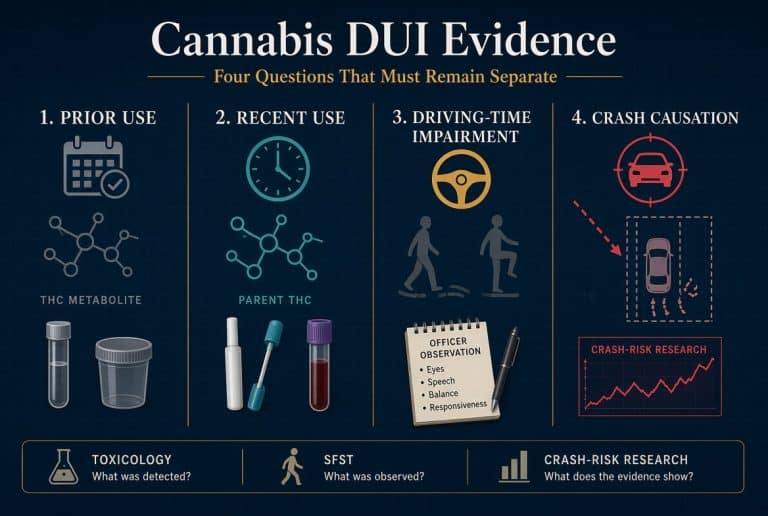
A cannabis DUI framework separating proof of prior use, recent use, driving-time impairment, and crash causation using toxicology, SFST, and crash-risk research.
A Negative Nitazene Test: What Counsel Should Establish Before Relying on It
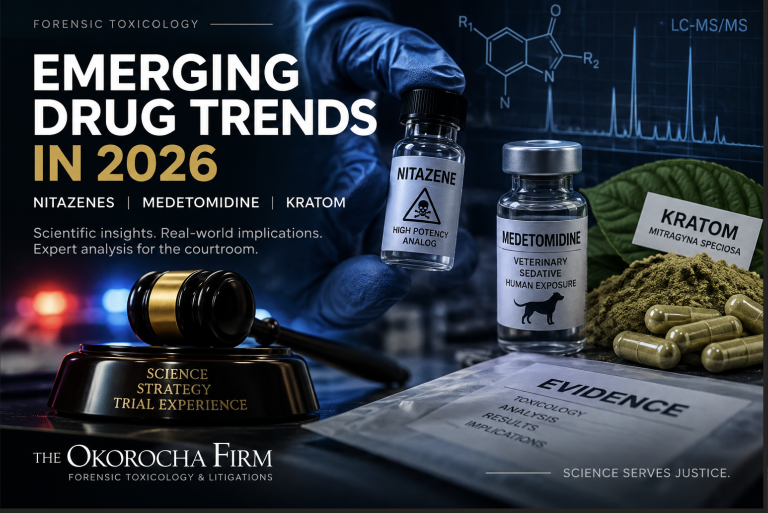
Review nitazene assay coverage, reporting limits, collection timing, and retained specimens before treating a negative result as evidence of no exposure.
Medetomidine or Medical Dexmedetomidine? Reviewing Source Attribution
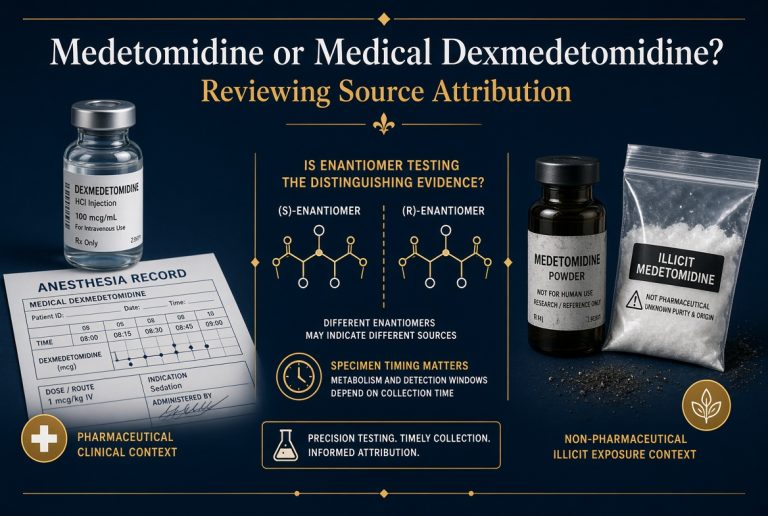
How medication records, specimen timing, and enantiomer testing affect attribution of a medetomidine finding to illicit exposure.
Does a Positive 7-OH Test Identify the Product Someone Took?
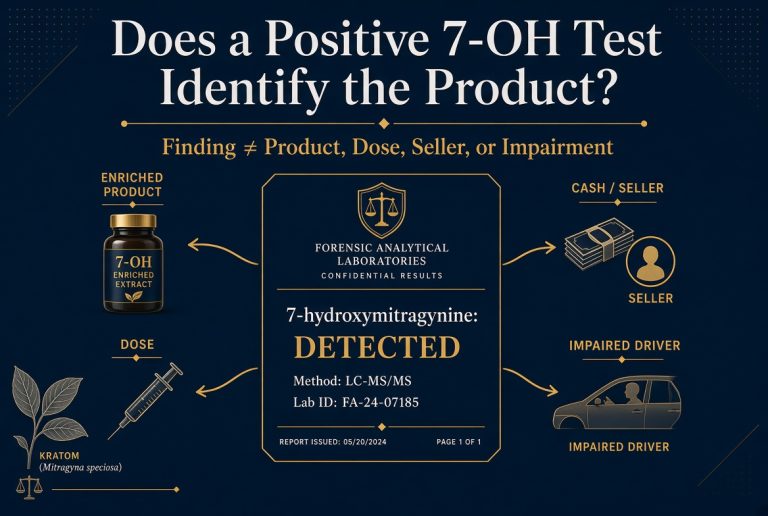
Distinguish a 7-hydroxymitragynine finding from proof of an enriched product, dose, impairment, or a particular seller.
Medetomidine Withdrawal Evidence: Why the Timeline Matters
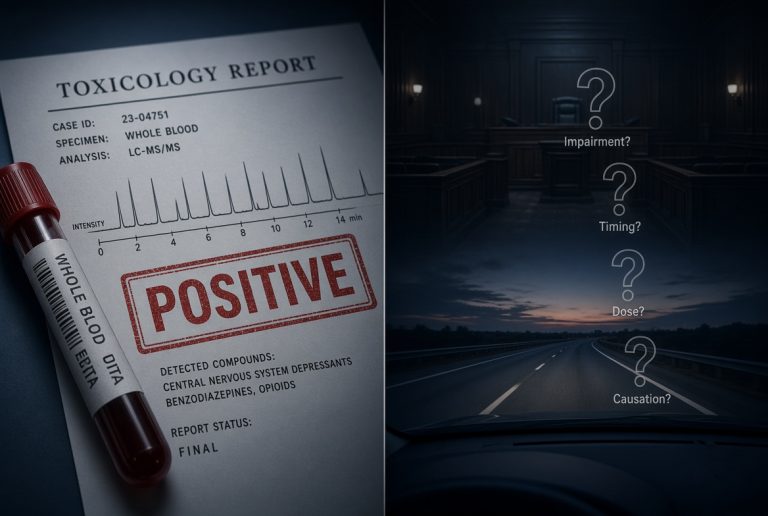
Review clinical phases, negative parent-drug results, co-withdrawal, and treatment records before assigning causation in medetomidine cases.
Emerging Drugs and “Fatal Ranges”: How to Evaluate Concentration Testimony
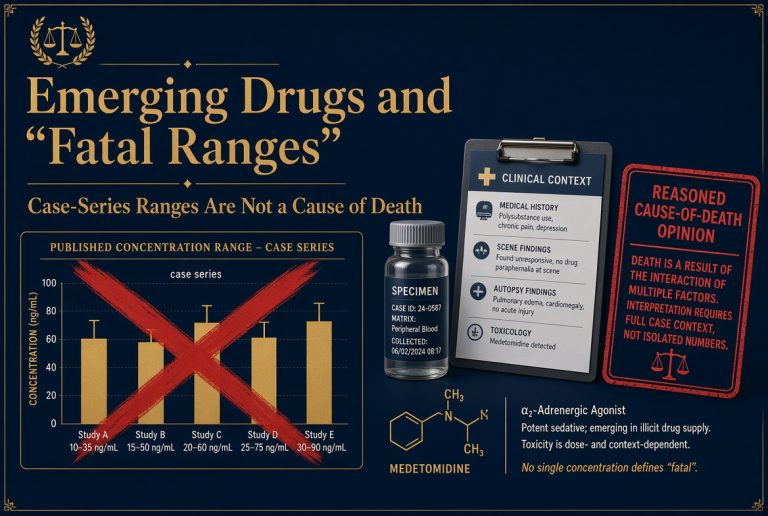
Why medetomidine case-series ranges cannot substitute for specimen-specific analysis, clinical context, and a reasoned cause-of-death opinion.
Drug Surveillance Statistics in Court: The Denominator Comes First
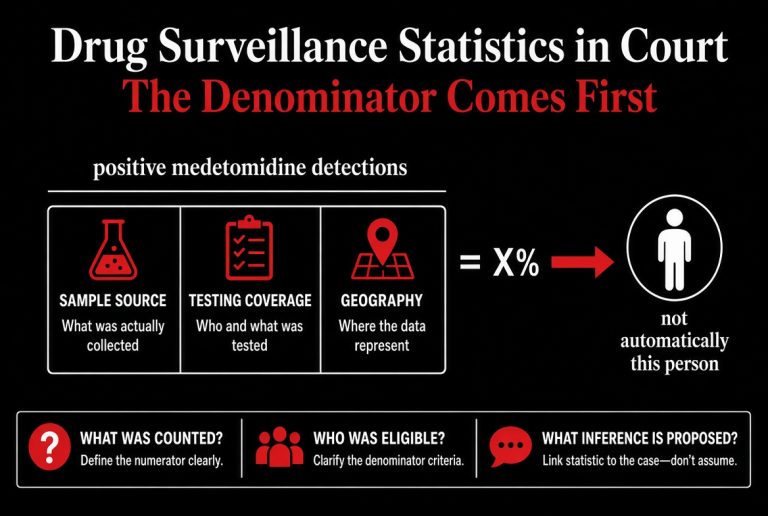
Evaluate medetomidine prevalence claims by sample source, testing coverage, geography, and the inference proposed for an individual case.
Postmortem Methamphetamine Evidence: A Litigation Checklist
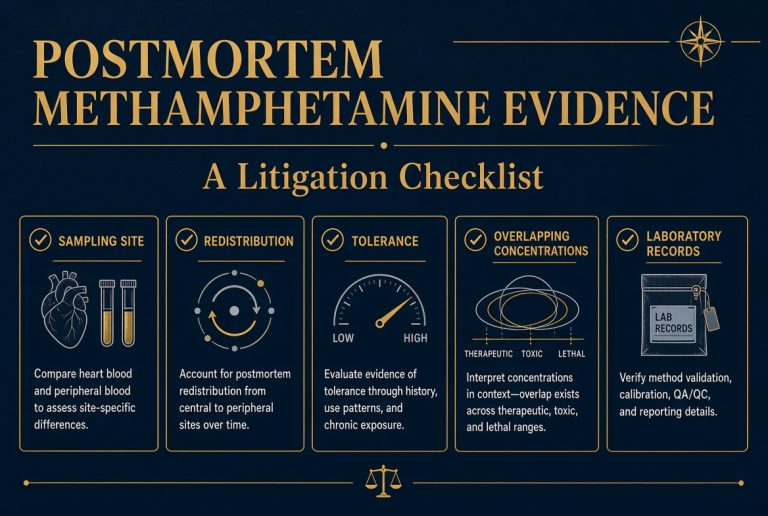
A litigation-focused checklist for evaluating postmortem methamphetamine evidence, including sampling site, redistribution, tolerance, overlapping concentrations, and laboratory records.