Plain-language analysis of court decisions, statutes, constitutional issues, and current legal developments.
Category: Law Updates
California Racial Justice Act in Juvenile Court (2026): JV-720 Forms, Procedure, and Service Rules
A 2026 practitioner guide to California Racial Justice Act claims in juvenile court, including JV-720 through JV-723, the July 1 form revisions, counsel, discovery, hearings, and AB 1071 service requirements.
People v. Chhuon & Pan (2026): RJA Cultural Stereotypes, Context, and Harmless Error
California Supreme Court guidance on RJA cultural-stereotype claims, context, defendant-directed bias, harmless error, and a significant 4-3 split.
People v. Haddock (2026): RJA Evidence and Discovery
People v. Haddock (2026) explains how racially charged evidence can support a California Racial Justice Act claim and clarifies the standards for prima facie review and discovery.
In re Pride (2026): RJA Counsel and Discovery Standards
In re Pride (2026) clarifies the low threshold for appointed counsel and the separate good-cause standard for discovery under California’s Racial Justice Act.
In re Haney (2026): Racial Justice Act Discovery Before a Habeas Petition
In re Haney clarifies that California Racial Justice Act habeas petitioners may seek Penal Code section 745(d) discovery before filing a petition and without first making a prima facie showing.
Montes v. Superior Court (2026): Jury-Selection Notes and Postconviction Discovery Under Penal Code § 1054.9
Montes v. Superior Court (2026) explains postconviction access to prosecution jury-selection notes under Penal Code § 1054.9 without a prima facie Batson/Wheeler showing.
People v. Williams (2026): Racial Justice Act Prima Facie Showings, Statistics, and Evidentiary Hearings
People v. Williams (2026) explains the prima facie threshold for Penal Code § 745 hearings and why generalized statistics or weak comparators may be insufficient.
California Racial Justice Act Habeas Petitions in 2026: Counsel, Prima Facie Review, and Record Development
A practical 2026 guide to California Racial Justice Act habeas procedure, including counsel, prima facie review, record development, service requirements, and preservation issues under Penal Code § 745.
California Jury Selection in 2026: Hazlett, Sanmiguel, the RJA, and CCP § 231.7

Hazlett and Sanmiguel clarify California jury-selection law in 2026: the RJA, Penal Code § 745, and CCP § 231.7 do different work.
Racially Discriminatory Language Under California’s Racial Justice Act: Bankston and Barrera (2026)
Bankston and Barrera explain how California Penal Code § 745 treats discriminatory language, coded racial appeals, context, juror status, and appellate prejudice.
California Racial Justice Act Retroactivity in 2026: Who Can File a Penal Code § 745 Claim?
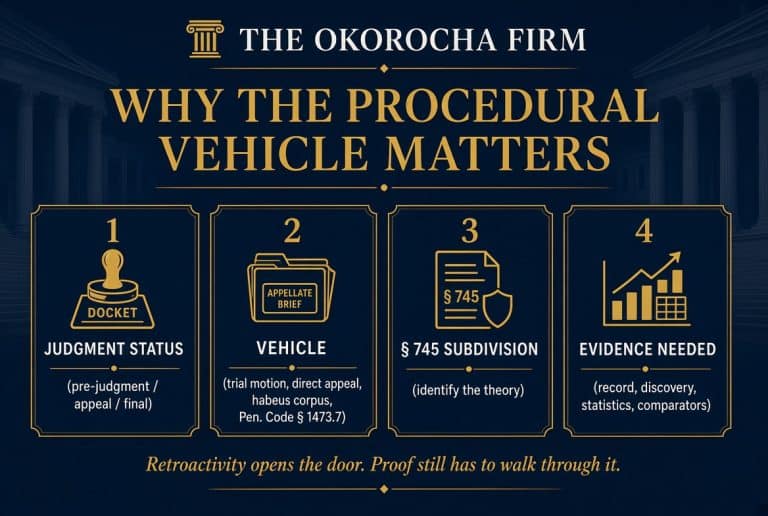
As of January 1, 2026, the California Racial Justice Act’s phased retroactivity for felony convictions is complete. This guide explains who can file, where, and how the procedural vehicles differ.
California Racial Justice Act Remedies in 2026: What Happens After a Penal Code § 745 Violation?
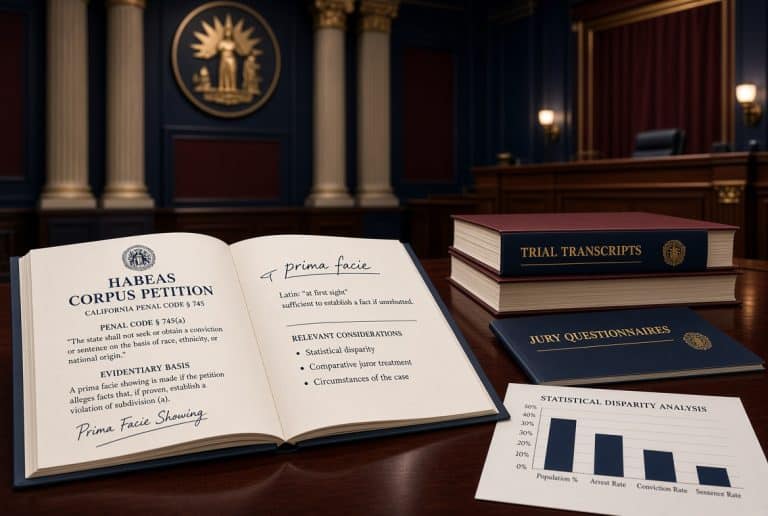
California Racial Justice Act remedies under Penal Code § 745 in 2026, including mistrial, new jury, charge reduction, vacatur, resentencing, and death-penalty limits.



