Why Doesn’t Blood Ferment in Living People?
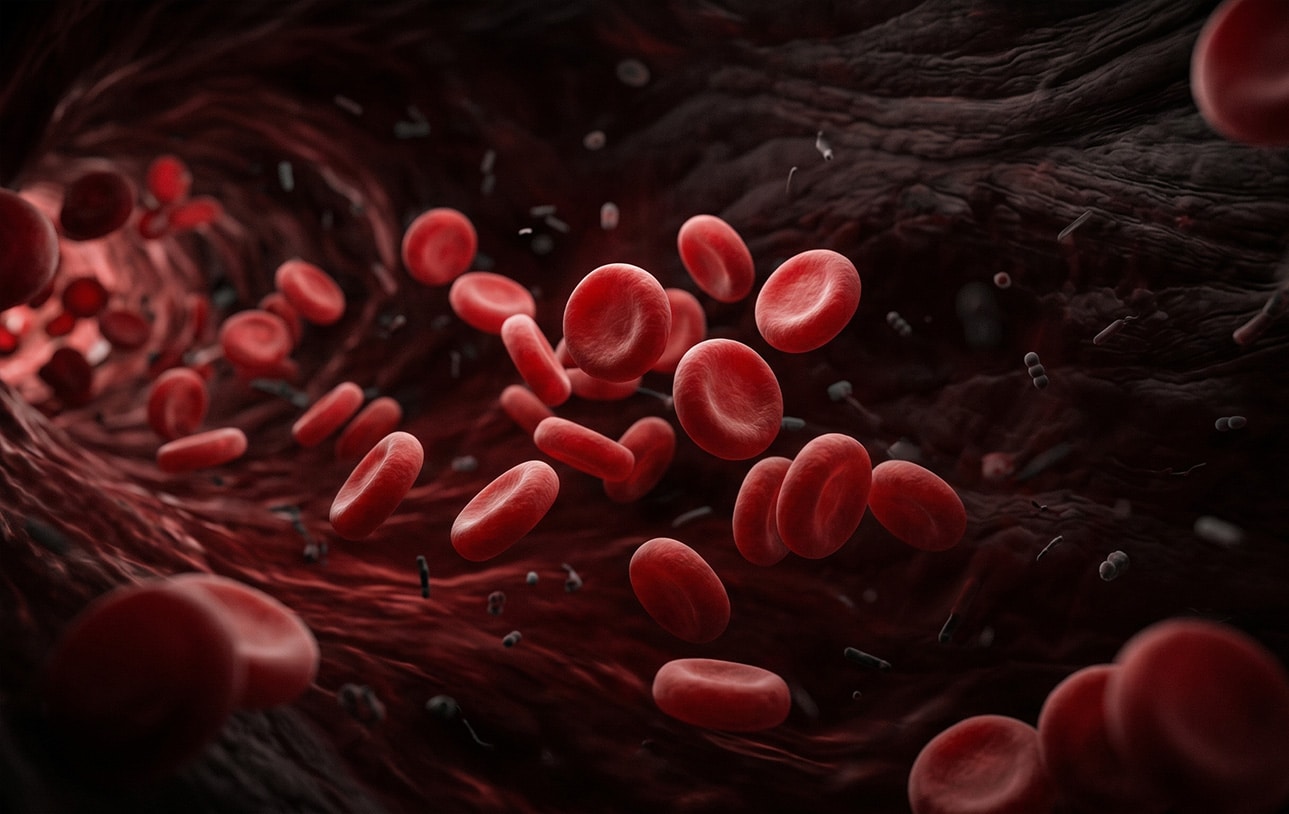
Short answer: Blood in a healthy living person does not behave like a fermentation vessel because it normally contains no stable, growing microbial community. Microbes that enter briefly are usually removed by immune defenses, the liver, and the spleen before they can establish an infection. Oxygen, blood flow, and glucose levels influence microbial growth, but none of them alone “sterilizes” blood—and some pathogens can ferment sugars even when oxygen is present.
Updated July 24, 2026.
What does “fermenting blood” actually mean?
Fermentation is a metabolic pathway cells use to obtain energy from compounds such as glucose without relying on oxygen as the final electron acceptor. It happens at the cellular level. It does not necessarily produce visible bubbles, alcohol, or the dramatic changes seen in brewing.
In medicine, clinicians do not describe a bloodstream infection as “blood fermentation.” They use terms such as bacteremia for bacteria detected in blood, fungemia for fungi in blood, and bloodstream infection when organisms are causing an infection. Sepsis is the body’s dangerous response to an infection; it is not simply another name for bacteria in the blood.
Is healthy blood sterile?
Healthy blood is conventionally treated as a sterile site, meaning viable microorganisms should not be persistently growing there. A large population study using sequencing data from 9,770 healthy people found no evidence for a consistent “core” blood microbiome. Most participants had no microbial species detected after contamination filtering, and the authors concluded that occasional findings were more consistent with transient, sporadic movement from other body sites.
“Sterile site” does not mean a microbe can never enter the circulation. Everyday events can cause brief bacteremia. In a randomized study, toothbrushing produced detectable endocarditis-associated bacteria in some blood samples. In most healthy people, these organisms are cleared without causing illness.
Why do microbes usually fail to grow in living blood?
1. Innate immune defenses act immediately
Complement proteins can mark or damage susceptible microbes. Neutrophils and monocytes recognize, engulf, and kill invaders. Antibodies can improve recognition of organisms previously encountered. These defenses overlap, so a microbe must evade several barriers—not just one—to remain in the circulation.
2. The liver captures blood-borne organisms
Blood from much of the body passes through the liver, where resident macrophages called Kupffer cells act as a rapid surveillance system. Intravital-imaging research has shown Kupffer cells catching circulating bacteria while platelets participate in the local defense response. This does not guarantee clearance of every pathogen, but it helps explain why a small, transient inoculum does not automatically become a sustained bloodstream infection.
3. The spleen provides additional filtration and immune clearance
The spleen is especially important for removing certain encapsulated bacteria. Experimental and human-tissue studies show that splenic cells capture and kill organisms that reach the blood. This is one reason people without a functioning spleen have a higher risk of overwhelming infection from specific pathogens.
4. Essential nutrients are restricted
Blood contains glucose and proteins, but microbes need more than calories. The body binds much of its iron to proteins such as transferrin, limiting access to a nutrient required by many pathogens. Researchers call this nutritional immunity. Successful pathogens have evolved ways to steal iron, which is precisely why iron restriction is a defense—not an absolute barrier.
5. Barriers limit how many microbes enter
Skin and mucosal surfaces separate the circulation from the densely colonized mouth, intestine, and external environment. When these barriers are intact, the bloodstream is not continuously seeded with the enormous microbial populations found in the gut or on skin.
Do oxygen and blood flow prevent fermentation?
Not by themselves. The earlier version of this article overstated both points. Fermentation does not require a stagnant vat, and blood flow alone cannot prevent microbial metabolism. Likewise, oxygen does not rule out fermentation: many bacteria are facultative anaerobes and can change their metabolism depending on local conditions.
Circulation still matters because it carries immune cells and soluble defenses, distributes organisms to clearance organs, maintains tissue oxygenation, and prevents the local environment from becoming the same kind of closed system used in food or beverage fermentation. Those effects support host defense, but they are not a stand-alone sterilizing mechanism.
What happens when microbes do multiply in blood?
A pathogen that evades clearance can produce a bloodstream infection. The clinical consequences depend on the organism, source, immune status, treatment, and whether the infection triggers organ dysfunction. The U.S. Centers for Disease Control and Prevention describes sepsis as the body’s extreme response to an infection and a life-threatening medical emergency.
A positive blood culture also requires interpretation. Contamination during collection can introduce skin organisms into a culture bottle, while true bacteremia may be intermittent. Clinicians consider the organism, number and timing of positive cultures, symptoms, likely infection source, and other laboratory findings.
Medical note: Fever, confusion, shortness of breath, clammy skin, extreme pain, or a rapid decline after an infection can be warning signs of sepsis. Seek emergency medical care; a blog post cannot diagnose it.
What changes after death?
After death, circulation stops, active immune surveillance fails, oxygen levels fall, tissues break down, and barriers between the gut and internal organs deteriorate. Microbial communities then change as decomposition progresses. Human-cadaver studies document postmortem succession in gut microbial communities, while animal research shows that gut bacteria can move into extra-intestinal tissues after death.
This process is better described as postmortem microbial growth, autolysis, and putrefaction than as the blood simply “turning into beer.” Timing varies with temperature, environment, body condition, cause of death, and other factors. Postmortem microbiology therefore requires careful sampling and interpretation.
Frequently asked questions
Can yeast ferment blood?
Some yeasts can metabolize glucose, but they should not be growing freely in the blood of a healthy person. Yeast detected in blood can represent candidemia or another serious fungal bloodstream infection and requires clinical evaluation.
Does high blood sugar make bloodstream infection possible?
High glucose does not turn blood into a fermentation vat. Diabetes can impair several host defenses and is associated with infection risk, but bloodstream infection still depends on organism entry, immune evasion, and host condition.
Can a blood sample change after collection?
Yes. Cells continue consuming glucose after collection, organisms can multiply in an improperly handled specimen, and collection contamination can alter results. Clinical laboratories use specified tubes, preservatives, temperatures, and time limits to protect specimen integrity.
Is bacteremia the same as sepsis?
No. Bacteremia means bacteria are present in blood. Sepsis is a life-threatening response to infection that can occur with or without a positive blood culture. The terms describe different findings.
Related reading
- What a forensic toxicologist does
- Forensic toxicology facts and common myths
- Major fields of forensic toxicology
Sources
- CDC: About Sepsis
- No evidence for a common blood microbiome in 9,770 healthy people
- Randomized study of bacteremia after toothbrushing and dental extraction
- Kupffer cells, platelets, and clearance of blood-borne bacteria
- Human spleen mechanisms for bacterial clearance
- Iron restriction in infection and immunity
- Postmortem succession of human gut microbial communities
- Experimental study of postmortem bacterial translocation
Related reading: Browse the Forensic Toxicology topic hub.