Suboxone and Tooth Decay: FDA Warning and Prevention
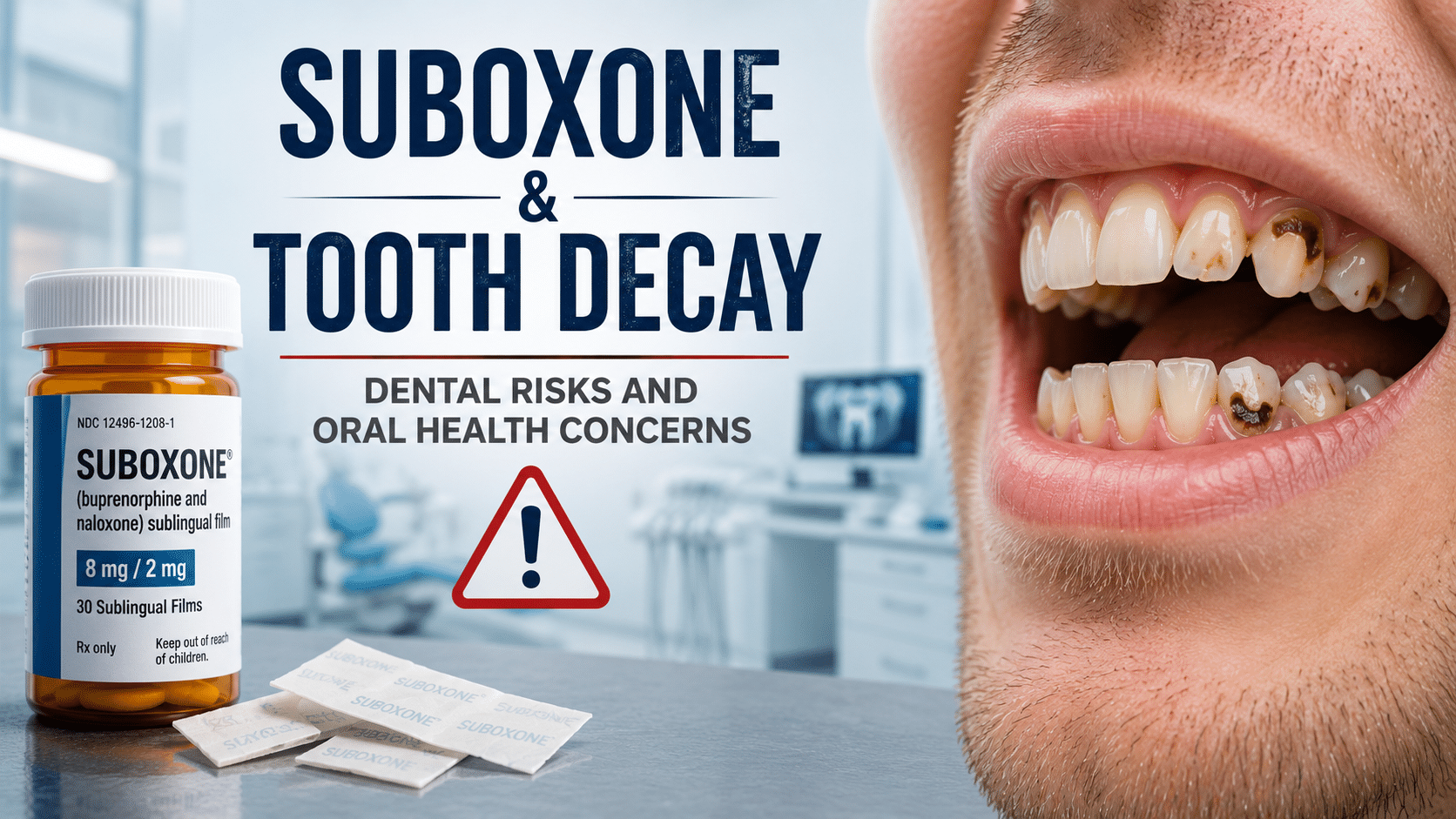
Short answer: Suboxone and other buprenorphine medicines that dissolve in the mouth have been linked to cavities, tooth erosion, infection, fractures, and tooth loss. The FDA emphasizes that buprenorphine’s benefits for opioid use disorder clearly outweigh this risk. Do not stop it on your own.
Reviewed and updated July 24, 2026.
Which buprenorphine products are involved?
The FDA warning applies to tablets and films placed under the tongue or against the cheek. It includes buprenorphine alone and buprenorphine-naloxone products such as Suboxone. FDA had not identified the same dental concern for injections or skin patches when it issued the warning.
Suboxone is a brand name, not the only product involved. The relevant feature is prolonged contact between a transmucosal medicine and the teeth and gums.
What dental problems have been reported?
FDA reviewed 305 reported cases through 2018, including 131 classified as serious. Reports described tooth decay, cavities, oral infection, erosion, broken teeth, fillings falling out, and tooth loss. Twenty-six cases involved people with no reported prior dental problems. The median time to diagnosis was about two years, although some problems appeared sooner.
Reports help identify a safety signal, but they do not measure how often the problem occurs among all patients. Oral health, dry mouth, diet, smoking, access to dental care, prior disease, and treatment duration may also affect risk.
FDA steps after each dose
- Allow the tablet or film to dissolve completely as prescribed.
- Take a large sip of water.
- Gently swish the water around the teeth and gums, then swallow.
- Wait at least one hour before brushing.
Brushing immediately may add mechanical stress while the mouth is returning to its normal environment. Follow the product instructions and any individualized advice from the prescriber or dentist.
Dental care before and during treatment
- Tell the prescriber about cavities, gum disease, dry mouth, or dental pain.
- Arrange a baseline dental evaluation and caries-risk assessment soon after starting.
- Tell the dentist that a transmucosal buprenorphine product is being used.
- Keep regular dental visits and follow a personalized preventive plan.
- Seek prompt care for pain, swelling, drainage, a broken tooth, or signs of infection.
Do not stop Suboxone because of this article
Stopping buprenorphine can trigger withdrawal and increase the risks of relapse, exposure to illicit opioids, overdose, and death. Contact the prescriber and dentist if dental problems develop. They can weigh treatment needs, dental care, and whether another formulation is appropriate.
FDA’s 2024–2025 labeling work separately clarified that some patients may need individualized maintenance doses above older “target” ranges. Dental risk is not a reason to change a dose without the treating clinician.
What can and cannot be concluded?
The FDA safety signal supports warning and prevention. It does not prove that every cavity in a person taking Suboxone was caused by the medicine. A case-specific assessment should consider timing, dose form, dental records, other risk factors, and competing explanations.
Primary sources
- FDA dental safety communication
- FDA transmucosal buprenorphine labeling update
- SAMHSA: buprenorphine treatment overview
This article is general information, not medical or dental advice. Do not stop or change buprenorphine without the prescribing clinician.
For additional evidence-based medication-risk analysis, browse the Science archive.
Related reading: For related context, read Rare GLP-1 Side Effects: Evidence and Warning Signs, Lamotrigine and Stevens-Johnson Syndrome: Warning Signs, Depo-Provera and Meningioma Risk: What Studies Show.