Speak with an expert today (424) 363-3347(For attorneys only)

Medetomidine

The Okorocha Firm Law + Science = Forensics
Forensic Pharmacology / Emerging Adulterants

Medetomidine: a veterinary sedative with a second life on the street

A potent, highly selective alpha-2 agonist built as a precise, reversible animal sedative is now surfacing in the illicit opioid supply, where its own antidote does not exist for people and naloxone does not reverse it.

Alpha-2 Agonist Imidazole Derivative Opioid Adulterant Toxidrome Review
The Selectivity Story

Medetomidine’s behavior is written into a single number: how strongly it prefers the alpha-2 receptor over the alpha-1 receptor. That preference far outstrips the other agonists a clinician or forensic analyst is likely to encounter.

Medetomidine
1620 : 1
Detomidine
260 : 1
Clonidine
220 : 1
Xylazine
160 : 1

Alpha-2 : alpha-1 selectivity ratios, rat brain membrane binding. Bars are scaled to the values. Source: Virtanen et al., 1988.1

1620
Alpha-2 : alpha-1 selectivity (vs. 160 for xylazine)
200–300×
Estimated potency vs. xylazine
2022
First confirmed in U.S. illicit supply (Maryland)
4–6 h
Withdrawal can begin after last use

Medetomidine is a highly potent, selective alpha-2 adrenergic receptor agonist that spent decades as a workhorse veterinary sedative and analgesic before entering the forensic conversation for an entirely different reason. Since roughly 2022 it has been recognized as an emerging adulterant in the illicit opioid supply, and its purified active enantiomer, dexmedetomidine, is separately approved for sedation in human intensive care. One molecule, three worlds.

Part I
The pharmacology

An imidazole with an unusual appetite for one receptor

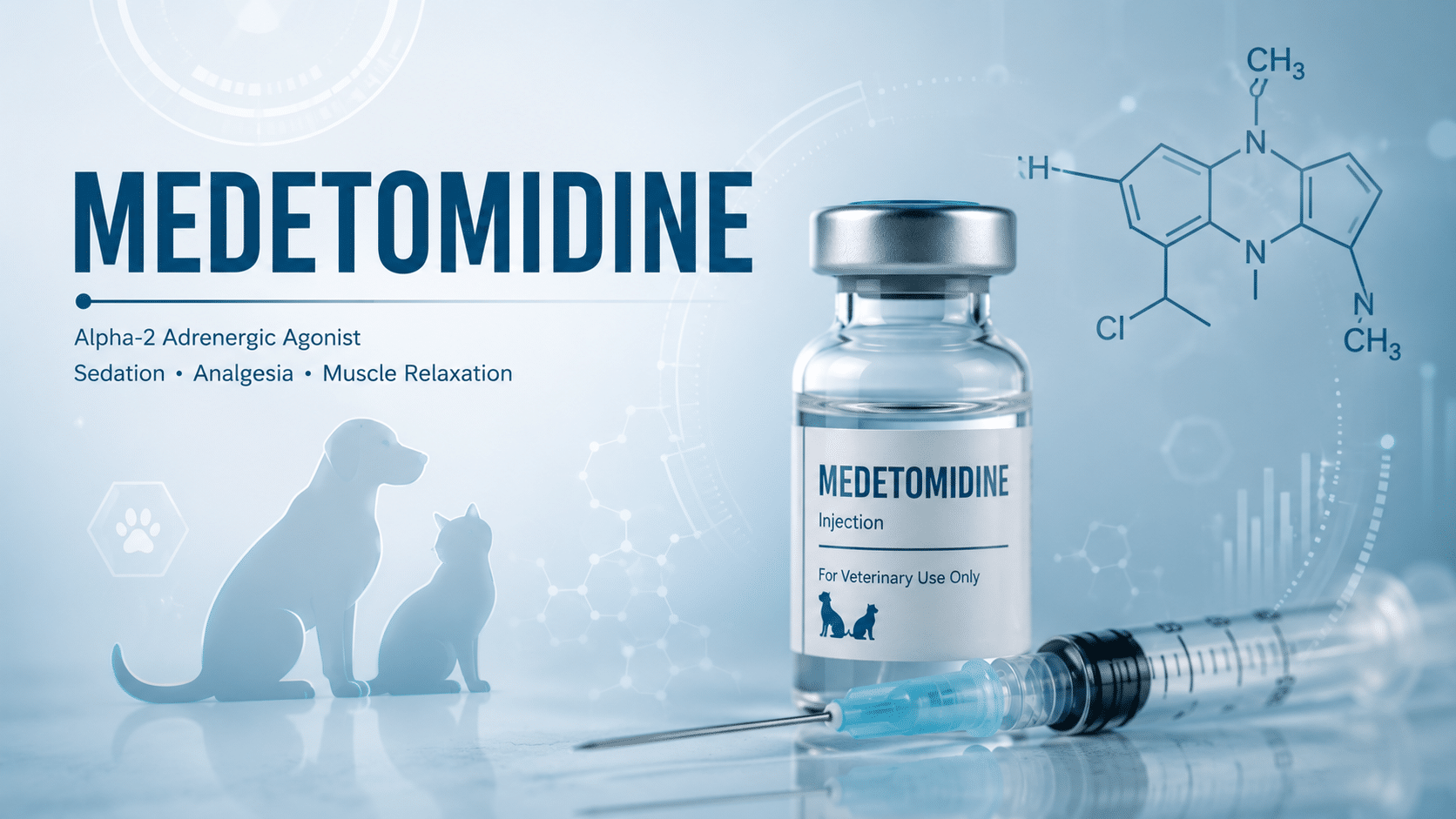
Medetomidine is a racemic mixture of two stereoisomers, levomedetomidine and dexmedetomidine, with the pharmacological activity residing almost entirely in the dexmedetomidine half. Chemically it is an imidazole derivative, (plus or minus)-4-[1-(2,3-dimethylphenyl)ethyl]-1H-imidazole, and that structure gives it a very high affinity for the alpha-2 adrenergic receptor.

In receptor binding studies, medetomidine shows an alpha-2 to alpha-1 selectivity ratio of about 1620, roughly six to ten times higher than the reference compounds measured alongside it: detomidine at 260, clonidine at 220, and xylazine at 160.1 That selectivity is the source of its signature profile: marked central sympatholysis, meaning sedation, analgesia, and bradycardia, at relatively low doses.2

Mechanism: turning down the sympathetic nervous system

Medetomidine acts as a full agonist at pre- and postsynaptic alpha-2 receptors across the central and peripheral nervous systems. Activation of the presynaptic receptors suppresses norepinephrine release, which reduces sympathetic outflow and produces central nervous system depression, bradycardia, and hypotension, sometimes after a brief initial hypertensive phase in some species.

Neurochemically, it drives a dose-dependent reduction in the release and turnover of noradrenaline, dopamine, and serotonin in the central nervous system, consistent with its sedative and anxiolytic effects. Unlike general anesthetics that work mainly through GABAergic or glutamatergic pathways, medetomidine’s relatively clean alpha-2 agonism produces sedation with comparatively little disruption of neurovascular coupling, a property researchers later exploited in brain imaging.

What the drug actually does to the body

Pharmacodynamics

The clinical picture reflects central alpha-2 mediated sympatholysis combined with some peripheral vascular effects:

  • Central nervous system: dose-dependent sedation, hypnosis at higher doses, anxiolysis, and analgesia.
  • Cardiovascular: bradycardia and hypotension, frequently preceded by a transient rise in blood pressure from peripheral vasoconstriction.
  • Other: hypothermia, reduced spontaneous motor activity, and lowered noradrenergic tone.

In animal models the drug sharply decreases spontaneous movement and potentiates barbiturate anesthesia, effects that track with its clinical role as a potent sedative and analgesic.

Fast in, several hours out

Pharmacokinetics and metabolism

In both animals and humans, medetomidine is typically given intravenously or intramuscularly, producing rapid systemic absorption and a fast onset of effect. It undergoes hepatic metabolism through phase I and phase II pathways, followed by renal excretion of the metabolites, with clinical effects generally lasting several hours. Critically, co-administration with opioids or other central nervous system depressants can extend sedation and cardiorespiratory depression well beyond the expected window.

Part II
The clinical tool

The veterinary sedative

In veterinary medicine, medetomidine is an approved sedative and analgesic, used routinely in small animals for procedures that require immobilization, for pre-anesthetic medication, and for minor surgery. It is marketed under trade names such as Domitor for dogs and cats, and is often combined with other agents, including opioids and ketamine, to achieve balanced anesthesia. Given by intramuscular or intravenous injection, it produces rapid, profound sedation with muscle relaxation and analgesia, and at higher doses can reach hypnotic or near-anesthetic depth that clearly separates it from weaker alpha-2 agonists.

The human enantiomer: dexmedetomidine

The dextrorotatory enantiomer, dexmedetomidine, is approved in human medicine for intensive care and procedural sedation, and is roughly twice as potent as the racemic mixture, so half the dose achieves comparable effect. Its defining clinical virtue is cooperative sedation with minimal respiratory depression, which makes it valuable in ventilated ICU patients and in procedures where spontaneous breathing must be preserved. Its hemodynamic effects, bradycardia and variable blood pressure, require monitoring, but its relative sparing of respiratory drive sets it apart from many GABAergic sedatives.

The antidote that exists only for animals

Reversal with atipamezole

A defining feature of medetomidine in veterinary practice is that it has a reliable antidote. Atipamezole, a selective alpha-2 antagonist, can be given before, alongside, or after medetomidine and predictably reverses both the central and the cardiovascular effects, restoring consciousness and normalizing hemodynamics.3 The catch is regulatory: atipamezole is licensed for veterinary use but is not approved for humans, which is why human intoxication is managed with supportive care rather than pharmacologic reversal.

In the clinic (animal)

Reversible

Atipamezole antagonizes the alpha-2 effect on demand, allowing controlled recovery and, in research, repeated imaging sessions.

On the street (human)

No antidote

No alpha-2 antagonist is approved for people. Naloxone reverses the opioid, not the medetomidine. Care is supportive only.

A quietly useful research tool

Neuroimaging applications

Medetomidine and dexmedetomidine are widely used in preclinical neuroscience, especially for functional MRI in rodents. They offer predictable, titratable sedation, relative preservation of neural activity patterns, and, through atipamezole, rapid reversibility for repeated sessions. By holding a stable yet reversible sedative state with limited impact on neurovascular coupling compared with traditional anesthetics, medetomidine has become a standard component of many rodent fMRI protocols and a subject of ongoing study into how anesthetics interact with the brain.

An unexpected detour: ship hulls

Outside pharmacology entirely, the free base of medetomidine has been incorporated into marine antifouling paints to keep barnacles from attaching to ship hulls. It works by disrupting barnacle settlement behavior rather than by broad toxicity, which has made it an environmentally preferable alternative to older antifouling agents. The coatings rely on low, sustained concentrations at the hull-water interface, a striking example of a central-nervous-system-active agonist repurposed for a completely different job.

Part III
The street drug

How a veterinary sedative reached the illicit supply

Medetomidine was first flagged in the U.S. drug supply around 2021 through community drug-checking programs, and by July 2022 it was identified in Maryland’s illicit opioid supply, frequently co-adulterated with xylazine.45 By mid-2023 it had spread to states including Missouri, Colorado, Pennsylvania, and California, and by early 2024 it was tied to overdose clusters in Philadelphia, Pittsburgh, and Chicago, a trajectory that closely tracked the early epicenters of the xylazine crisis.4 On the street it is sometimes called “rhino tranq.”6

The drivers are familiar: high potency, relatively low cost, and the fact that medetomidine is not a controlled substance and does not appear in prescription monitoring programs make it attractive to suppliers.7 The clinical stakes are what make the shift dangerous. Medetomidine is estimated to be 200 to 300 times more potent than xylazine and roughly ten times more selective for the alpha-2 receptor, so severe and prolonged sedation can follow very small doses; it is dosed in micrograms where xylazine is dosed in milligrams.47

What intoxication looks like

Medetomidine intoxication in humans resembles, but frequently exceeds in severity, the toxidrome seen with other alpha-2 agonists such as clonidine, xylazine, and guanfacine:

  • Profound and often prolonged sedation and unresponsiveness.
  • Bradycardia and hypotension, sometimes with labile blood pressure swinging between hypotensive and hypertensive states as intoxication and withdrawal phases alternate.
  • Worsened respiratory depression when combined with opioids such as fentanyl, even though medetomidine alone produces relatively less direct respiratory suppression than opioids do.

A central forensic problem: standard urine drug screens do not typically detect medetomidine, and its toxicity can persist after naloxone is given. Toxicological identification usually requires targeted analytical methods, such as specialized mass spectrometry panels used in public health or forensic laboratories, which means cases can go unrecognized without dedicated testing.8

The clinical bottom line

In a suspected mixed opioid and medetomidine overdose, treat the opioid first.

Guidelines emphasize giving naloxone for the opioid component, because fentanyl or other opioids usually drive the most immediately life-threatening respiratory compromise. Naloxone should not be withheld even when medetomidine is strongly suspected, though it is not expected to reverse the alpha-2 sedation itself.5

There is no approved alpha-2 antagonist for human use comparable to veterinary atipamezole, so management is otherwise supportive: airway protection and supplemental oxygen with early consideration of intubation for profound or persistent respiratory depression; intravenous fluids and vasopressors for hypotension and bradycardia that do not respond to conservative measures; and extended observation, because the sedation can outlast naloxone and can wax and wane in mixed intoxications.

A distinct and fast-moving withdrawal

As medetomidine has spread through the adulterated supply, clinicians have described a distinct and rapidly progressive withdrawal syndrome, notable for being the near-mirror image of the overdose picture: where intoxication drives heart rate and blood pressure down, withdrawal sends them up.9

4 to 6 hours

In regular users, withdrawal can begin this soon after last use, faster than many other sedative withdrawals.910

12 to 24 hours

Severe withdrawal often presents in this window, and symptoms can escalate from mild to critical within hours: anxiety, tremor, vomiting, hypertension, tachycardia, and delirium, sometimes with a waxing and waning encephalopathy.11

Days

Recovery under an alpha-2 agonist taper, often at doses higher than standard labeled use, with many patients requiring critical care.10

Laboratory findings can include lactic acidosis, hypokalemia, and QTc prolongation, and because the syndrome overlaps with other sedative or opioid withdrawals, careful assessment matters.9 Standard treatments such as benzodiazepines and opioids offer little relief. Management instead centers on early, aggressive antiemetic therapy with dopamine antagonists together with alpha-2 agonists: oral or transdermal clonidine, oral guanfacine, and, in severe cases, intravenous dexmedetomidine under ICU monitoring.9 Because several of the antiemetics used carry QTc-prolongation risk, ECG monitoring is advised.9

Why this matters for public health and the courtroom

The rise of medetomidine underscores how volatile street drug composition has become. Because the drug escapes routine urine screening and can produce deep, prolonged sedation that naloxone does not reverse, cases can be misattributed or left unexplained without specialized testing. Public health responses have leaned on enhanced surveillance, updated clinical guidance for emergency and primary care providers, and targeted communication with harm-reduction organizations.8 Notably, unlike xylazine, medetomidine has not so far been associated with the characteristic necrotic skin wounds, but it may cause more severe withdrawal and cardiorespiratory depression, so risk profiles and counseling messages need to be adjusted accordingly.6

For forensic and medicolegal analysis, the practical lesson is direct: a negative routine screen does not rule medetomidine out, the toxidrome can be misread as a simple opioid or xylazine picture, and the absence of a human antidote shapes both clinical outcome and the interpretation of cause and manner in a given case.

References

  1. Virtanen R, Savola JM, Saano V, Nyman L. Characterization of the selectivity, specificity and potency of medetomidine as an alpha-2-adrenoceptor agonist. Eur J Pharmacol. 1988;150(1-2):9-14. pubmed.ncbi.nlm.nih.gov/2900154
  2. Savola JM, et al. Medetomidine, a novel alpha-2-adrenoceptor agonist: a review of its pharmacodynamic effects. pubmed.ncbi.nlm.nih.gov/2571177
  3. Virtanen R. Pharmacological profiles of medetomidine and its antagonist, atipamezole. Acta Vet Scand Suppl. 1989;85:29-37. pubmed.ncbi.nlm.nih.gov/2571275
  4. Responding to medetomidine: clinical and public health needs (commentary). The Lancet Regional Health – Americas. 2025. sciencedirect.com/science/article/pii/S2667193X25000638
  5. Responding to Overdose and Withdrawal Involving Medetomidine (health alert). Philadelphia Dept. of Public Health, 2025. hip.phila.gov
  6. The Fight Against the Fentanyl Epidemic Just Got More Complicated With Medetomidine. DTPM, 2025. dtpm.com/articles/fentanyl-medetomidine
  7. Prevalent Adulterants Found in the Illicit Drug Supply. Aegis Sciences Corporation, 2025. aegislabs.com
  8. Medetomidine Infiltrates the US Illicit Opioid Market. PMC. 2024. pmc.ncbi.nlm.nih.gov/articles/PMC11537807
  9. Emergence of Medetomidine in the Illicit Drug Supply: Implications for Emergency Care and Withdrawal Management. Ann Emerg Med (ScienceDirect), 2026. sciencedirect.com/science/article/pii/S0196064425014349
  10. Presentation and management of acute medetomidine withdrawal. PubMed. 2026. pubmed.ncbi.nlm.nih.gov/42087295
  11. Medetomidine: What Providers Need to Know. Highmark Wholecare, 2026. providers.highmark.com

Editor’s note: verify each citation against the primary source and confirm currency before publication. The illicit-supply and clinical-management literature in this area is changing quickly.

The Okorocha Firm
Law + Science = Forensics
214 N. Main Street, Suite 296, El Segundo, CA 90245 (424) 363-3347 oo@ooesq.com @Toxlawyer
Okorie Okorocha, J.D., M.S. (Forensic Toxicology), M.S. (Pharmaceutical Sciences)
State Bar of California’s only Attorney Board Certified in both Criminal & Civil Trial Law

This article is provided for general educational and informational purposes on an emerging forensic toxicology topic. It is not medical advice, legal advice, or a substitute for individualized clinical or professional judgment, and it does not create any attorney-client relationship. Drug supply composition and clinical guidance in this area are evolving rapidly.

Spread the love


The National Black Lawyers

top 40 lawyers

civil trial law

Lawyers of Distinction

Loading...

Recent Blog Articles

The O.O. 2026 Mid-Year Street Drug Report

Source-grounded synthesis · evidence through July 12, 2026 Street-level illicit drug markets, and the limits of measuring them Prices, seizure volumes, and why no dataset measures what is actually sold in any state. Scope  United States, national + 50 states For  public health · criminology · forensic toxicology · policy…

Spread the love

Read More

Medetomidine

The Okorocha Firm Law + Science = Forensics Forensic Pharmacology / Emerging Adulterants Medetomidine: a veterinary sedative with a second life on the street A potent, highly selective alpha-2 agonist built as a precise, reversible animal sedative is now surfacing in the illicit opioid supply, where its own antidote does…

Spread the love

Read More

Nitazenes: Hundreds of times the Potency of Morphine

Nitazenes: An Old Drug Class Driving a New Wave of Synthetic Opioid Deaths | The Okorocha Firm N N Forensic Toxicology  /  Public Health Nitazenes: An Old Drug Class Driving a New Wave of Synthetic Opioid Deaths First synthesized in the 1950s and never approved for human use, the 2-benzylbenzimidazole…

Spread the love

Read More

Speak with an expert today!

Contact the offices of Okorie Okorocha for professional and reliable advice which you can trust.

Call (424) 283-0029 Contact Us