Rare GLP-1 Side Effects: Evidence and Warning Signs
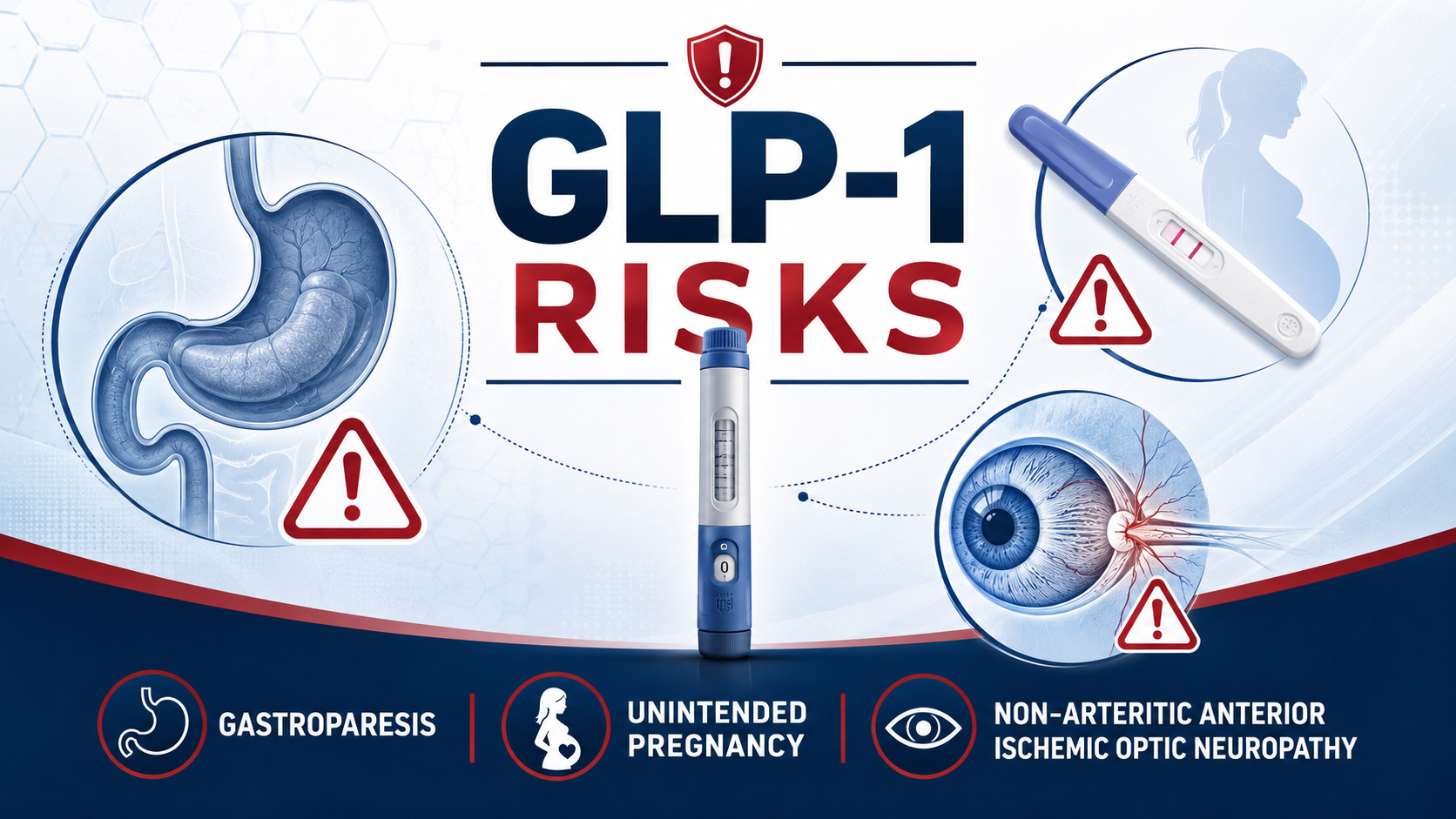
Short answer: Most side effects of GLP-1–based medicines are gastrointestinal, but uncommon serious problems can include pancreatitis, gallbladder disease, kidney injury from dehydration, severe allergic reactions, and complications from delayed stomach emptying. Risks and label language differ by drug and indication.
Reviewed and updated July 24, 2026.
“GLP-1” is not one product
Semaglutide, liraglutide, dulaglutide, and tirzepatide are different medicines. Tirzepatide activates both GIP and GLP-1 receptors. Product, dose, indication, medical history, and other drugs affect risk, so a class-wide headline cannot replace the current prescribing information for the exact medicine.
Pancreatitis
FDA labels warn that acute pancreatitis has been observed with GLP-1 receptor agonists, including rare severe forms. Persistent severe abdominal pain—sometimes radiating to the back and accompanied by vomiting—needs prompt medical assessment. Follow the product label and prescriber’s instructions if pancreatitis is suspected.
Gallbladder disease
Gallstones and gallbladder inflammation occur in a small minority of patients in trials. Rapid weight loss itself can increase gallstone risk. Symptoms can include upper abdominal pain, fever, jaundice, or clay-colored stools. Diagnosis requires clinical evaluation rather than an online symptom list.
Kidney injury from volume depletion
Repeated vomiting or diarrhea can cause dehydration and worsen kidney function. Risk may be greater in people with kidney disease or medicines that affect fluid balance. Inability to keep fluids down, very low urine output, fainting, or confusion warrants urgent care.
Severe gastrointestinal effects and delayed stomach emptying
These medicines slow gastric emptying. Current labels warn about severe gastrointestinal reactions and do not recommend some products for patients with severe gastroparesis. Rare postmarketing reports describe pulmonary aspiration during anesthesia or deep sedation despite usual fasting.
Tell the surgical and anesthesia team about the medicine before any procedure. Do not create a personal stop schedule from social media; current perioperative decisions depend on the drug, symptoms, procedure, and clinical guidance.
Allergic reactions and low blood sugar
Serious hypersensitivity can include swelling, trouble breathing, or widespread hives and requires emergency care. Hypoglycemia is more likely when a GLP-1 medicine is combined with insulin or a sulfonylurea; the combination may require monitoring or dose adjustment by the prescriber.
Thyroid C-cell tumor boxed warning
Semaglutide and tirzepatide obesity labels carry a boxed warning because these drugs caused thyroid C-cell tumors in rodents. It is unknown whether they cause medullary thyroid carcinoma in humans. They are contraindicated in people with a personal or family history of medullary thyroid carcinoma or Multiple Endocrine Neoplasia syndrome type 2.
What about suicidal thoughts?
In January 2026, FDA reported that its comprehensive review did not identify an increased risk of suicidal ideation or behavior with GLP-1 receptor agonists and requested removal of that warning from weight-management labels that contained it. New or worsening mental-health symptoms still deserve medical attention, but the current evidence does not support presenting suicidality as a proven GLP-1 adverse effect.
Other product-specific concerns
Labels may address diabetic retinopathy complications, pregnancy, interactions with oral medicines, or contraceptive absorption. Tirzepatide labeling advises users of oral hormonal contraceptives to use a non-oral method or add a barrier method for four weeks after initiation and after each dose escalation. Verify the exact current label.
Sources
This is general information. Seek emergency help for trouble breathing, severe persistent pain, fainting, or other alarming symptoms; contact the prescriber for personal advice.
For additional evidence-based medication analysis, browse the Science archive.
Related reading: For related context, read Lamotrigine and Stevens-Johnson Syndrome: Warning Signs, Depo-Provera and Meningioma Risk: What Studies Show, Ninth Circuit Open-Carry Decisions: What They Mean.