Kratom and 7-OH in 2026: Evidence, Risks and Regulation
Short answer: Kratom is a plant whose main alkaloid, mitragynine, acts on several biological systems, including opioid receptors. No kratom product is FDA-approved to diagnose, treat, cure, or prevent a disease. Concentrated 7-hydroxymitragynine products can present different and potentially greater risks than traditional leaf preparations.
Reviewed and updated July 24, 2026.
What is kratom?
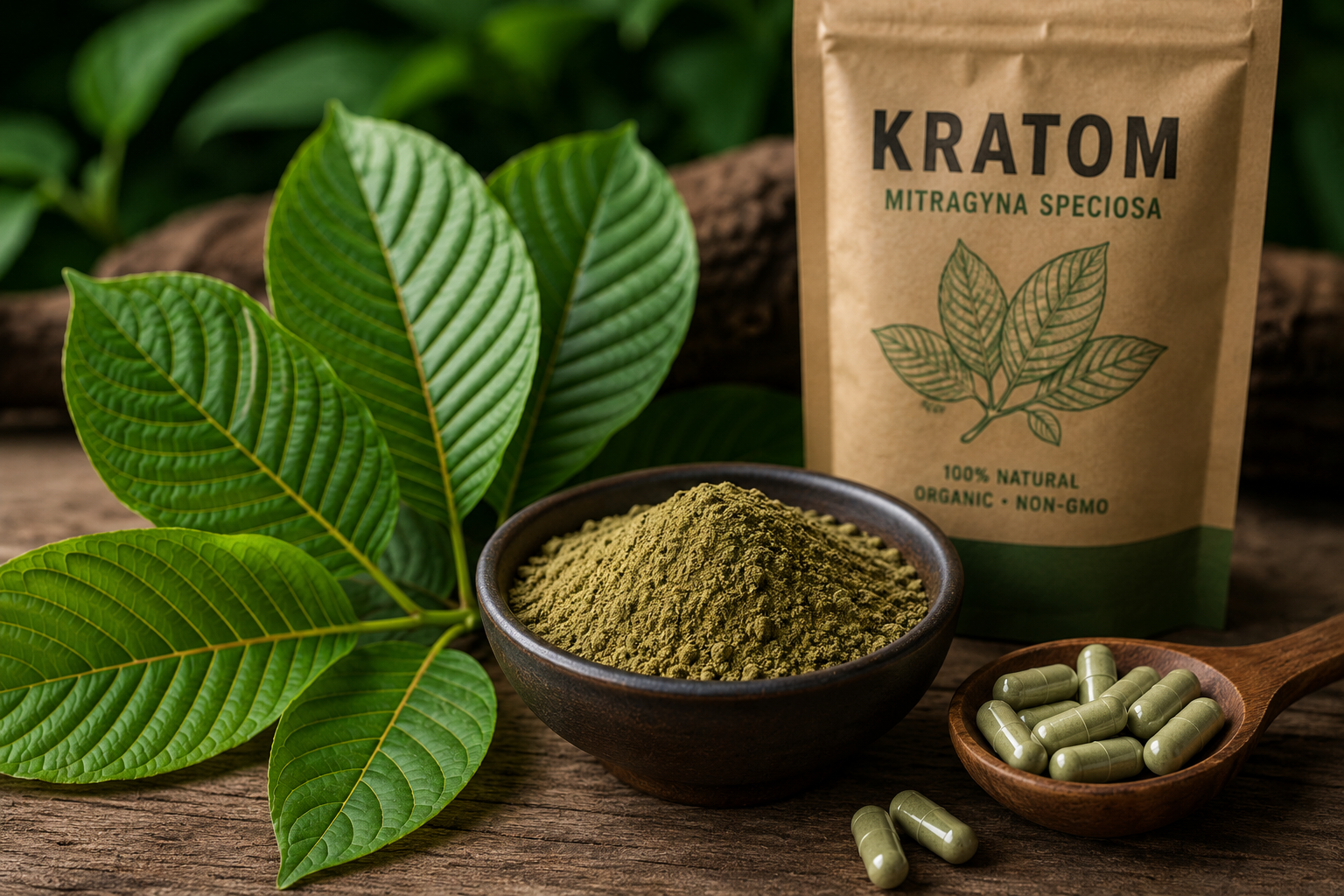
Kratom comes from Mitragyna speciosa, a Southeast Asian tree. Products sold in the United States include powders, capsules, drinks, extracts, and tablets. Their alkaloid content can vary substantially, which makes a product name or serving size an unreliable measure of exposure.
People report using kratom for energy, pain, mood, or opioid-withdrawal symptoms. Those reports are not the same as proof of safety or effectiveness. The FDA has not approved kratom or its alkaloids for medical use, and products sold as supplements do not go through the same premarket review as approved medicines.
Kratom leaf and concentrated 7-OH are not interchangeable
Mitragynine is the most abundant alkaloid in many leaf products. The body can convert a portion of it to 7-hydroxymitragynine, often shortened to 7-OH. Some newer products add or concentrate 7-OH far beyond the amount expected in natural leaf material.
FDA actions in 2025 and 2026 focused especially on concentrated 7-OH products marketed as tablets, gummies, shots, or supplements. Calling those products “kratom” can obscure a meaningful difference in composition and risk.
What are the known or suspected risks?
- Dependence and withdrawal: frequent use can lead to tolerance, craving, and withdrawal symptoms.
- Sedation and impaired judgment: effects may be stronger when products contain high alkaloid concentrations or are combined with other depressants.
- Seizures, liver injury, and cardiovascular effects: these have been reported, although an individual report does not always establish causation.
- Contamination or mislabeling: products may contain microbes, heavy metals, undeclared drugs, or alkaloid concentrations that differ from the label.
- Overdose from mixtures: severe and fatal cases often involve other substances, so toxicology context matters.
Can kratom treat opioid use disorder?
Kratom is not an FDA-approved treatment for opioid use disorder. Approved medications—buprenorphine, methadone, and naltrexone—have defined manufacturing standards, dosing information, safety monitoring, and clinical evidence. A person using kratom or 7-OH to avoid withdrawal should seek medical care rather than abruptly stopping without support.
What does “legal” mean in 2026?
Federal law, state law, local ordinances, and product-specific enforcement are different layers. FDA has stated that 7-OH products cannot lawfully be marketed as dietary supplements, and it has issued warning letters and import or seizure-related actions. State rules for kratom vary and can change. Check the current law where a product is sold and used rather than relying on a national list copied from an old article.
New research analysis: Kratom cardiac arrest and the limits of a mitragynine blood level examines the September 2026 case report, including why survival after resuscitation does not settle causation.
How toxicology results should be interpreted
A laboratory may test for mitragynine, 7-OH, or both. Detection shows that a compound was present above the method’s reporting threshold; it does not automatically establish the product used, the time of use, impairment, or cause of death. Interpretation requires the specimen, concentration, validated method, clinical or scene history, and co-detected drugs.
For the role of analytical results in legal and clinical questions, see what a forensic toxicologist does.
Risk-reduction questions to ask
- Does the label identify mitragynine and 7-OH amounts per serving?
- Is there independent, batch-specific testing for alkaloids and contaminants?
- Does the product make unsupported disease-treatment claims?
- Is it being combined with opioids, benzodiazepines, alcohol, or other sedatives?
- Are there signs of dependence, escalating use, or withdrawal?
Sources and limitations
Primary regulatory sources include the FDA kratom information hub, the agency’s action on concentrated 7-OH products, and its consumer warning. Product composition and laws change quickly. This article does not diagnose or recommend a treatment.
For additional source-grounded drug analysis, browse the Science archive.
Related reading: For related context, read Acetaldehyde in Blood-Alcohol Testing: What It Means, Ed Barley’s Alleged No-Shows Leave L.A. County Defenders Scrambling.