Alcohol Toxicology for Civil Lawyers: Evidence and Case Strategy
Article overview: In April of 2021 Okorie Okorocha wrote an article on Alcohol toxicology for civil lawyers for "Advocate"
In April of 2021 Okorie Okorocha wrote an article on Alcohol toxicology for civil lawyers for “Advocate”
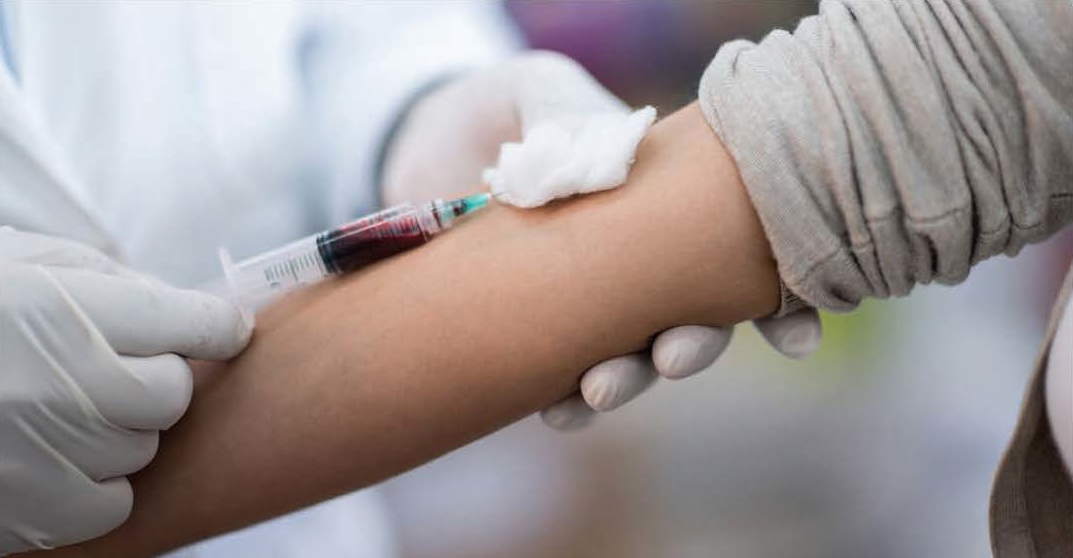
DON’T LET A HOSPITAL’S FAULTY BLOOD-ALCOHOL TEST DEVALUE YOUR CASE DUE TO
CONTRIBUTORY NEGLIGENCE (YOUR GUY WAS DRUNK!)
Read the entire article by clicking here
Why hospital blood-alcohol evidence can distort a civil case
A hospital alcohol result can become shorthand for contributory fault even when collection, method, timing and interpretation have not been tested. The linked Advocate article explains why civil lawyers should scrutinize the analytical foundation before allowing one BAC number to control valuation or liability.
For the underlying science, review alcohol-testing methods and limitations.
What should civil lawyers examine in a blood-alcohol result?
A blood-alcohol number should be evaluated as a complete evidence process, not as a standalone fact. Civil lawyers should identify why the test was ordered, what specimen was collected, when it was collected, which analytical method was used, and whether the result answers the legal question being asserted. A hospital result produced for patient care may not have the same collection, chain-of-custody, confirmation or reporting foundation as a forensic alcohol test.
Hospital BAC and forensic BAC are not interchangeable
Clinical laboratories often prioritize rapid treatment decisions. Forensic testing prioritizes evidentiary documentation, validated methods, traceable calibration, controls, specimen security and review. That difference does not automatically make a hospital result wrong, but it means counsel must obtain the method and supporting records before treating the number as equivalent to a forensic whole-blood alcohol result.
Civil alcohol-evidence checklist
- Testing purpose: determine whether the result was generated for medical treatment, screening or forensic use.
- Specimen: identify serum, plasma or whole blood, because the matrices are not numerically interchangeable without a defensible conversion.
- Collection and timing: obtain the draw time, alcohol-consumption timeline, tube type, preservative and storage history.
- Analytical method: request the instrument or assay, calibration, controls, reportable range, replicate data and measurement uncertainty.
- Chain of custody: determine who collected, handled, stored and tested the specimen.
- Interpretation: separate detection or concentration from impairment, causation, contributory fault and the person’s condition at an earlier time.
Why timing and absorption matter
A sample collected after an incident does not directly reveal the concentration at the moment of driving, injury or disputed conduct. Any backward or forward calculation depends on case-specific assumptions about drinking time, absorption, distribution and elimination. If the person was still absorbing alcohol, a simple linear extrapolation can be misleading.
For related analysis, review DUI breath versus blood testing, Alcohol Testing 101, and what absorption-phase BAC readings actually show.
Authoritative alcohol-testing references
- NHTSA: Alcohol Measurement Devices — evidential and preliminary breath devices, calibration and quality-assurance records.
- NIST OSAC Forensic Science Standards Library — current forensic standards for analytical methods, quality and interpretation.
Related reading: Browse the Forensic Toxicology topic hub.