Pink Cocaine (Tusi): What It Contains and Why It Is Risky
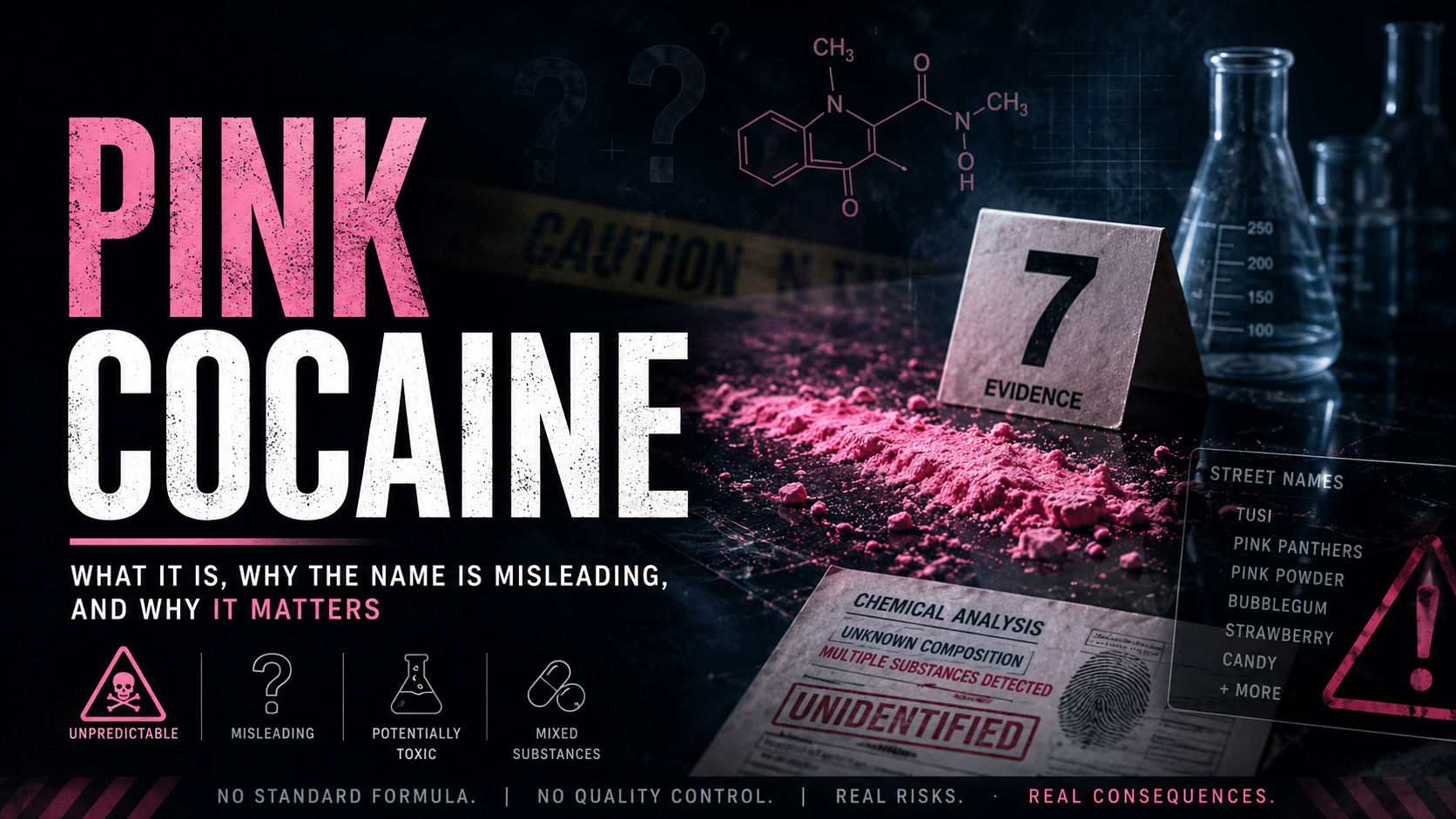
Short answer: “Pink cocaine,” often called tusi or tucibi, is not a standardized drug. It is usually a dyed mixture of other substances and often contains neither cocaine nor 2C-B. The greatest danger is that the ingredients and strength can change from batch to batch.
Reviewed and updated July 24, 2026.
Why the names are misleading
The word “tusi” traces to “2C,” a reference to the psychedelic 2C-B. Modern products sold under that name are generally mixtures created and branded by illicit manufacturers. Pink color, flavoring, or a logo does not identify the pharmacology.
DEA reports that, among 960 pink powders submitted to its laboratories since 2020, only four contained 2C-B. The remaining samples contained other substances. That surveillance is not a random sample of every product in circulation, but it shows why the street name cannot be treated as an ingredient list.
What has been found in tusi?
DEA and international drug-monitoring programs commonly report combinations built around ketamine and MDMA. Other findings have included methamphetamine, cocaine, fentanyl, xylazine, caffeine, and additional novel psychoactive substances.
- Ketamine can cause dissociation, impaired coordination, vomiting, and loss of consciousness.
- MDMA or stimulants can raise heart rate and temperature and contribute to agitation or seizures.
- Opioids such as fentanyl can suppress breathing and cause fatal overdose.
- Xylazine or other sedatives can prolong sedation and complicate emergency care.
A mixture can produce competing stimulant, dissociative, and depressant effects. The person may not recognize an opioid overdose because the product was not sold as an opioid.
Why visual inspection cannot identify a batch
Color, smell, texture, price, and packaging are not reliable chemical tests. Two bags from the same seller may have different contents. Even a drug-checking result applies only to the small portion tested and may miss unevenly distributed ingredients.
Overdose warning signs
Call emergency services for unresponsiveness, slow or absent breathing, blue or gray lips, seizure, chest pain, very high temperature, severe agitation, or sudden collapse. Give naloxone when opioid exposure is possible; naloxone will not reverse ketamine or stimulants, but it can reverse an opioid component and will not harm someone who has not taken an opioid.
Forensic testing and interpretation
Presumptive color tests cannot characterize a complex mixture. Confirmatory analysis may use gas or liquid chromatography with mass spectrometry. Laboratories should report the compounds actually detected rather than treating “pink cocaine” as a single analyte.
A positive result must be interpreted with specimen type, concentration, timing, symptoms, and other drugs. The presence of a compound does not automatically establish impairment or cause of death. Learn more about forensic toxicology fields and methods.
Risk-reduction information
- Avoid using alone and carry naloxone.
- Do not assume a previous batch predicts the next one.
- Avoid combining with alcohol, opioids, benzodiazepines, or other sedatives.
- Use community drug checking where available, while recognizing its limits.
- Seek urgent medical care rather than waiting for mixed symptoms to resolve.
The changing composition of tusi is part of the broader trend covered in the 2026 street-drug report.
Primary sources
- DEA: Pink Cocaine
- United Nations Office on Drugs and Crime: Tusi
- PubMed review: tusi composition, analytical challenges and health implications
This article provides general public-health information and does not endorse illegal drug use.
For additional evidence-based drug analysis, browse the Science archive.
Related reading: For related context, read Ninth Circuit Open-Carry Decisions: What They Mean.