Category: Forensic Toxicology
Nail Drug Testing in Court: Records and Scientific Limits
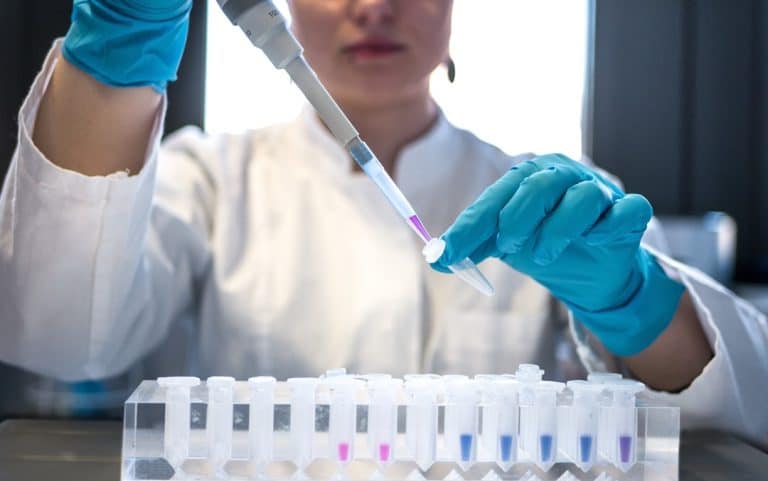
Learn what nail drug testing may show, why contamination and timing matter, and which laboratory records lawyers should request before interpreting a result.
Breath-to-Blood Conversion: Scientific Limits and Records
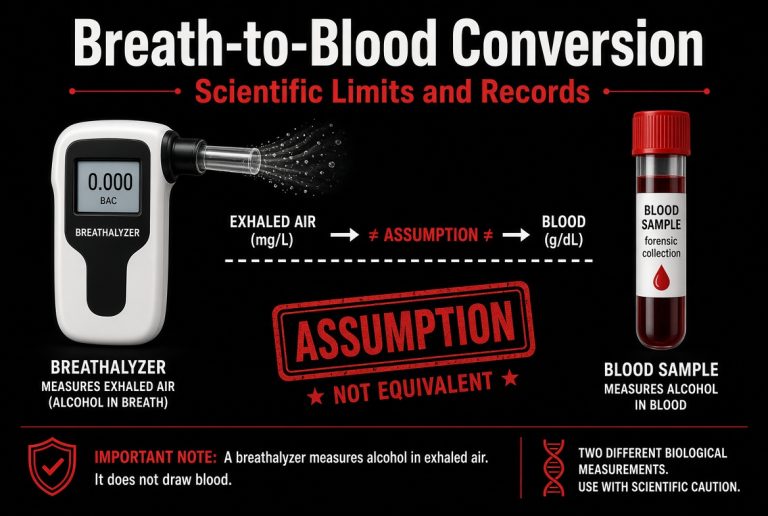
A breath-alcohol instrument measures alcohol in a breath sample. It does not draw or analyze blood. When a breath result is discussed as though it were a blood-alcohol concentration, a conversion assumption connects two different biological measurements. That distinction is not merely semantic. It affects how a result should be…
Breath-Test Records Needed for Scientific Review

A breath-test ticket is only the summary. Learn which instrument, calibration, reference-material, operator, sequence, and audit records support scientific review.
Presumptive Amphetamine Urine Screens: What a Positive Immunoassay Does and Does Not Prove
A forensic review of presumptive amphetamine urine screens, cross-reactivity, confirmation, methamphetamine enantiomers, and limits on impairment claims.
Methamphetamine Driving Cases: Records and Scientific Questions
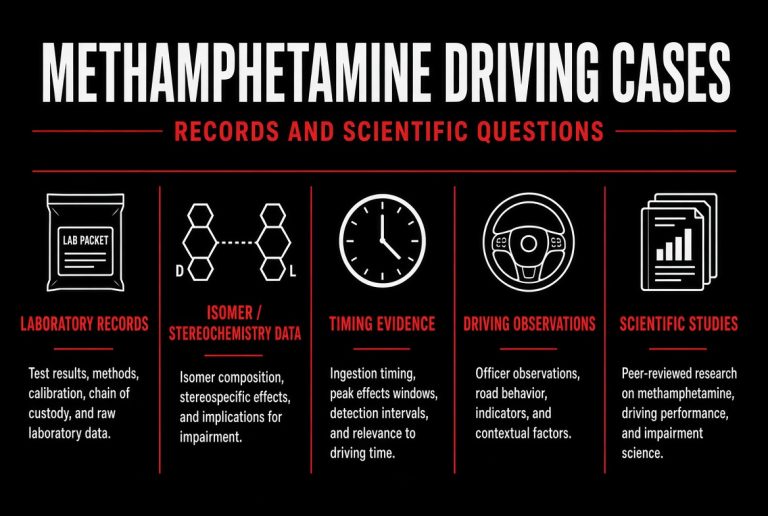
Learn which laboratory records, isomer data, timing evidence, observations, and scientific studies matter in a methamphetamine driving case.
False-Positive Amphetamine Urine Screens: What Lawyers Should Request
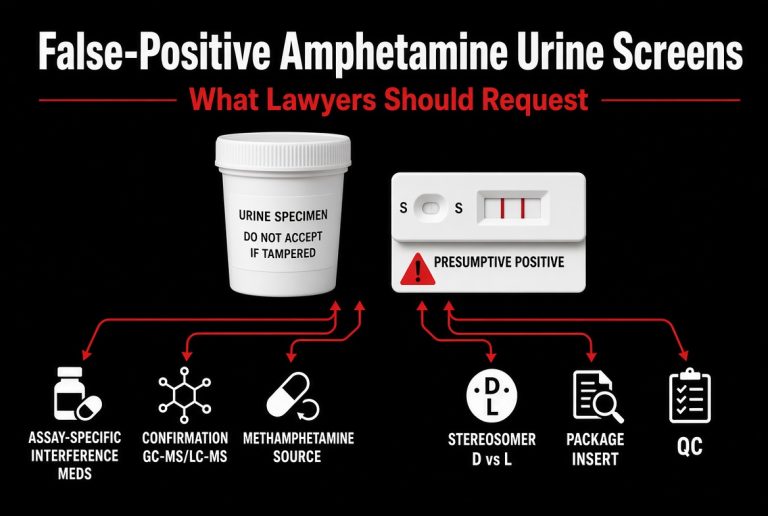
A litigation-focused guide to presumptive amphetamine urine screens, assay-specific medication interference, confirmation, methamphetamine source and stereoisomer questions, and records counsel should request.
Methamphetamine Toxicology Lawyer and Expert Case Review
Legal and scientific review of methamphetamine evidence involving driving, postmortem redistribution, laboratory methods, and expert testimony.
Rule 702 and Forensic Toxicology Expert Testimony
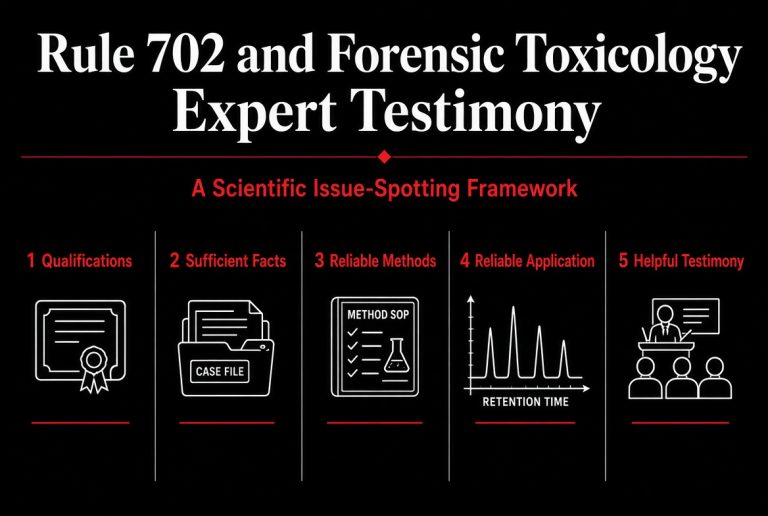
A scientific issue-spotting framework for qualifications, sufficient facts, reliable methods, reliable application, and helpful forensic toxicology testimony.
How to Review a Toxicology Laboratory Packet
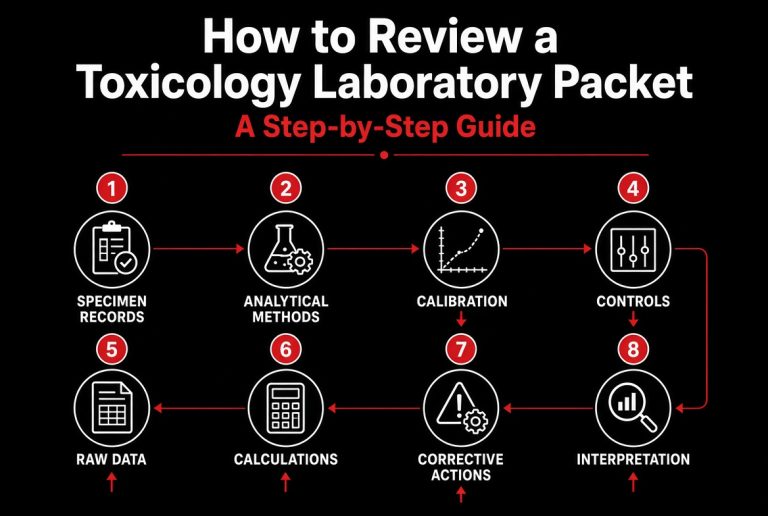
A step-by-step guide to reviewing specimen records, analytical methods, calibration, controls, raw data, calculations, corrective actions, and interpretation.
Positive Drug Test vs. Impairment: What It Proves
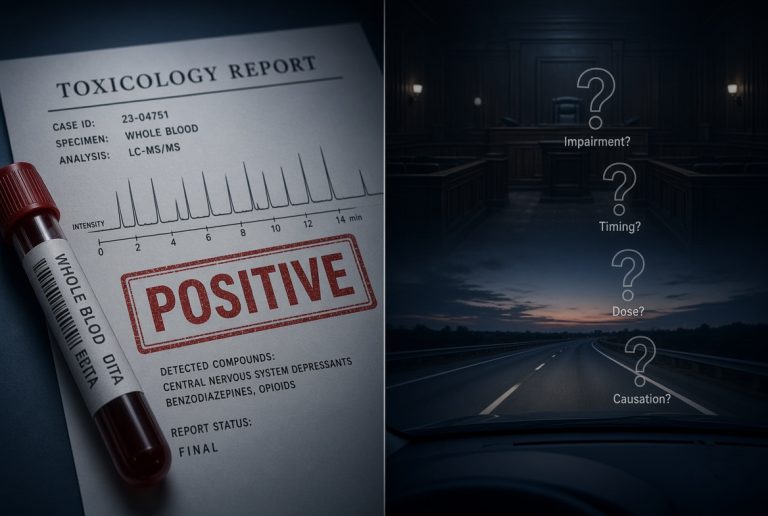
A positive toxicology result can establish detection or exposure, but impairment, timing, dose, and causation require additional scientific and case evidence.
Forensic Toxicology Case Review Checklist
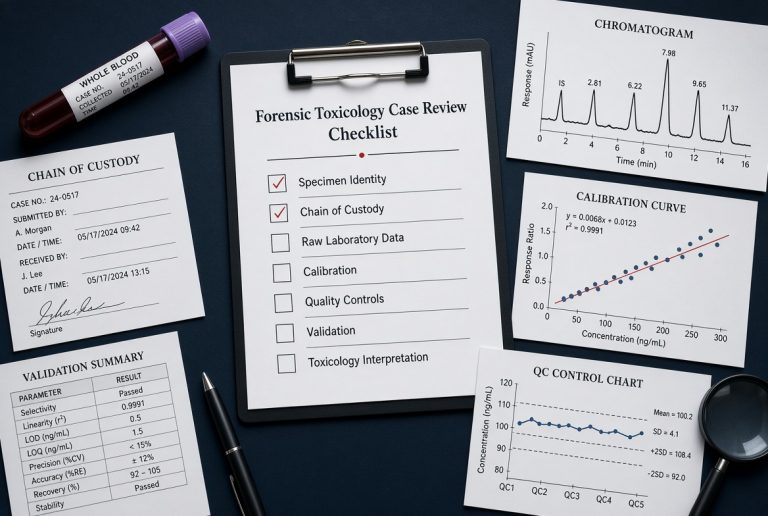
A practical records checklist for reviewing specimen identity, chain of custody, raw laboratory data, calibration, quality controls, validation, and toxicology interpretation.
In-Custody Deaths, Toxicology, and the End of Excited Delirium in California
California bars excited delirium as a diagnosis and civil evidence. Learn what AB 360 means for in-custody death toxicology and section 1983 causation.



