Can Blood Tests Determine a Person’s Age?
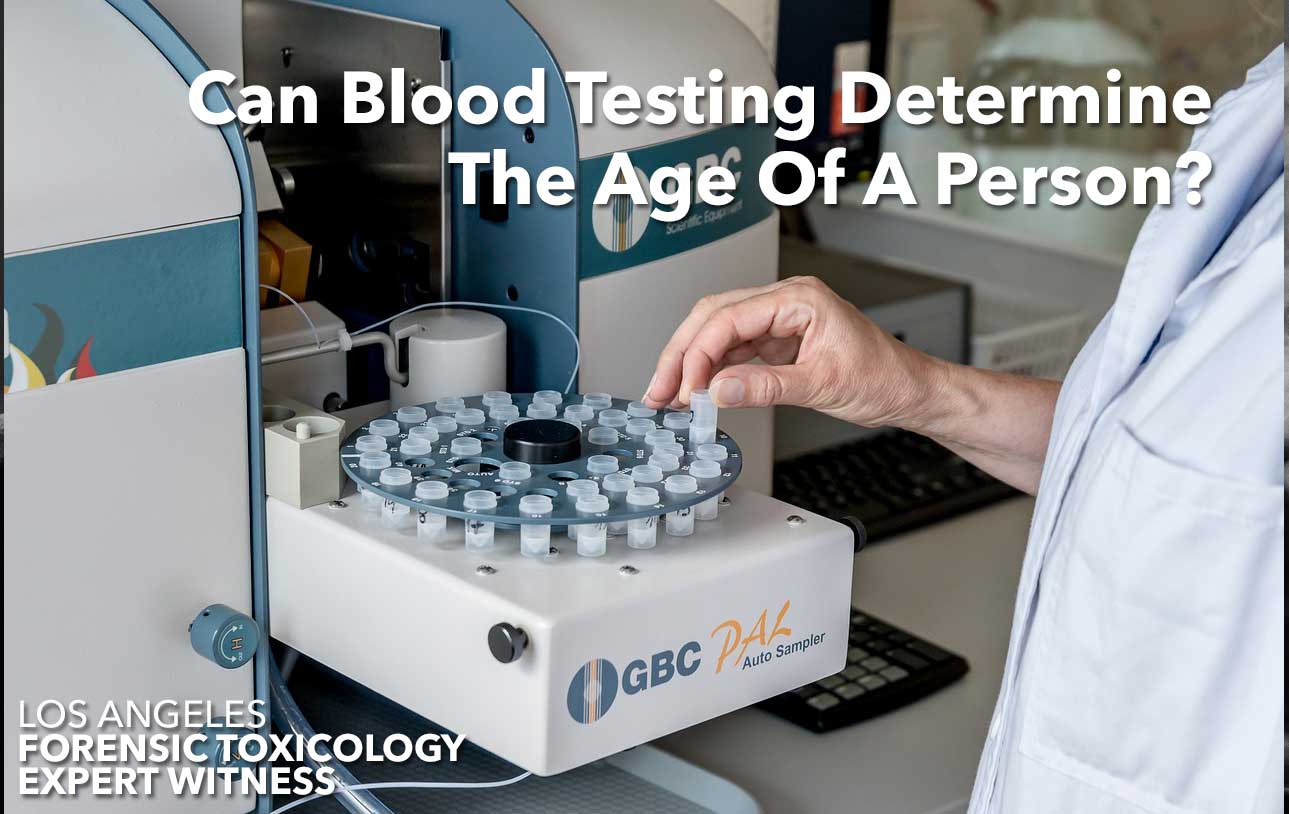
Article overview: Forensic Science has progressed over the years, with the advancements in blood testing proving to be extremely useful in many cases. Although TV shows today, such as CSI or True Detective, make blood testing and DNA analysis seem unsurpassable, the current forms of blood testing have had their…
Forensic Science has progressed over the years, with the advancements in blood testing proving to be extremely useful in many cases. Although TV shows today, such as CSI or True Detective, make blood testing and DNA analysis seem unsurpassable, the current forms of blood testing have had their limitations. Up until now, blood testing that makes use of DNA analysis could only determine ethnicity and sex – recently research experts found a form of blood testing to determine the age of a person. Additionally, previous forms of blood testing could take several days to yield results and sometimes leads to the sample being completely destroyed.
How Can We Determine The Age Of A Person Using A Blood Sample?
In order for the age of a person to be estimated using a blood sample, you would need to identify a component of the sample that would change throughout a person’s life. One of the components of blood that can change over time is the structure of hemoglobin which is what gives blood its red color. A new technique has been developed to provide information about the molecular structure and chemical component of a material, called Raman Spectroscopy. Research experts have therefore decided to test out this technique by analyzing blood components, such as hemoglobin, to try and determine a person’s age.
In order to test this new technique on blood samples, research experts had to perform Raman spectroscopy on various blood sample donations from humans. They divided the samples into three different age categories: newborns (babies less than one year old), adolescents (between the ages of 11 and 13), and mature adults (between the ages of 43 and 68). After conducting their experiments, research experts were able to differentiate between all age groups with close to a 100% accuracy rate.
How Effective Is Using A Blood Testing Technique To Determine The Age Of A Person?
These experts have found this technique to be very effective, unlike previous blood tests, this method is non-destructive to the blood sample and does not need several days to yield results as it requires little preparation. This new method of blood testing definitely has its benefits and could become a great addition to the available on-site forensic tests. It is also possible that if more time and resources are put into further development of this blood testing method, experts will then be able to better refine the methodology to provide more specific age results, rather than just being able to identify a difference in a range of ages.
Even though this newly discovered blood testing technique which can identify the age range of a person does seem rather groundbreaking, it is still not without its limitations. Some of these limitations outlined by these research experts say that the blood sample will need to be tested within two days of it being found. This can be problematic since some crime scenes are found well after 2 days. Another limitation to this new blood testing technique, is that experts are still unsure of how large of a blood sample they would need in order to conduct the test.
With all new experiments, there are always going to be successes and failures. These new blood testing techniques are not exactly foolproof and do still require a lot of further testing however, the current advancements in forensic science are astounding and the fact that science is advancing is all that matters. With anything in life, there is always going to be room for improvement.
For a jury to understand the credibility of blood testing counsel needs the expert opinion of an expert forensic toxicologist. Give Okorie Okorocha a call today on (800) 285-1763, to get him on your team.
Related reading: For related context, read The Opioid Epidemic: A Toxicology Report, New Drug-Testing Protocols: A Forensic Toxicologist’s Analysis, How Drug-Testing Laboratories Preserve Sample Integrity. Browse the Forensic Toxicology topic hub.