Sweat Patch Drug Test: How It Works, Accuracy & Limits
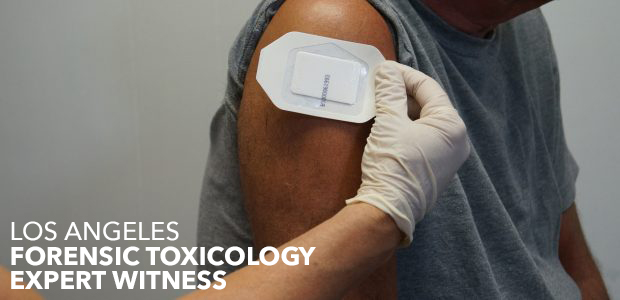
Short answer: A sweat patch drug test—sometimes called a drug patch for probation—can monitor cumulative drug exposure while it is worn, often for about a week. It is useful because collection is continuous and relatively noninvasive, but it cannot reliably identify the exact dose, exact time of use, or impairment. Application, patch condition, skin contamination, analytical cutoffs, and confirmatory testing all affect interpretation.
Updated July 27, 2026. Testing rules and laboratory methods vary by program and jurisdiction.
How a sweat patch drug test works
A collection pad is placed on cleaned skin and covered by a protective adhesive membrane. Water and other volatile components of sweat pass through the membrane, while nonvolatile material—including some drugs and metabolites—may accumulate in the pad. After the wear period, a trained collector removes and seals the patch for laboratory analysis.
The analytes and reporting cutoffs depend on the device, laboratory, and testing program. A screening result should not be treated as a final identification. Nonnegative screens ordinarily require a specific confirmatory method such as gas or liquid chromatography with mass spectrometry.
What is the sweat-patch detection window?
The patch provides a cumulative collection window covering the time it remains on the skin. Many programs use approximately seven days, although wear periods can vary. Controlled research has detected cocaine exposure for days after a single administration, but large differences among people and doses prevent a patch concentration from establishing the exact dose or time of use.
A positive result supports exposure during or near the wear period when the collection and analysis are valid. It does not, by itself, prove that the person was impaired at any particular moment.
Advantages of sweat patch testing
- Continuous collection: One patch can monitor a multi-day interval rather than a single collection moment.
- Observed application and removal: The collector can document the patch seal and condition at both ends of the wear period.
- Relatively noninvasive: The method avoids repeated urine or blood collections.
- Tamper evidence: Removal, lifting, or damage may be visible. That makes tampering more detectable, although no collection system is literally tamper-proof.
- Useful in longitudinal monitoring: The patch can complement other specimens in treatment, probation, or other compliance programs.
Limitations and sources of uncertainty
A concentration is not a dose or timestamp
Sweat production, skin physiology, drug properties, metabolism, patch location, and wear duration vary. Research supports qualitative monitoring, but a reported concentration generally should not be converted into a precise amount used or a precise time of use.
Contamination must be evaluated
Proper skin cleaning and the protective membrane are intended to reduce external contamination. Interpretation should still consider the condition of the skin, the application procedure, environmental exposure, material trapped at the adhesive edge, and whether a drug-specific metabolite supports ingestion. A positive parent drug alone may raise different questions than a parent-and-metabolite pattern.
Patch condition and collection technique matter
Poor adhesion, lifting, damage, excessive hair, skin irritation, sweating patterns, incorrect placement, and incomplete chain-of-custody documentation can affect whether a specimen is suitable. The laboratory and program should have criteria for rejecting or qualifying a compromised patch.
Different specimens answer different questions
Sweat, urine, oral fluid, blood, and hair have different collection windows and analytical behavior. Disagreement does not automatically mean one result is false. For example, urine may be negative after its detection window has closed while a week-long sweat patch remains positive. Conversely, low excretion into sweat or patch problems may produce a negative result despite exposure.
In one study of patients in methadone treatment, weekly sweat-patch and frequent urine results showed meaningful disagreement. The authors reported that sweat extended the detection period but was less sensitive than urine collected three times weekly for detecting opiate use in that population. Those study-specific percentages should not be treated as a universal error rate.
Is sweat patch testing federally authorized for workplaces?
Not under the current federal workplace mandatory guidelines. As of July 2026, SAMHSA states that urine and oral fluid are the authorized specimen types for federal workplace programs. Sweat may be used in other settings under different laws, contracts, court orders, or program rules.
Questions to ask when reviewing a sweat-patch result
- Who applied and removed the patch, and were they trained?
- Was the skin cleaned according to the validated procedure?
- How long was the patch worn, and was the seal intact?
- Were any lifting, damage, irritation, or collection irregularities documented?
- Which drug or metabolite was screened, and at what cutoff?
- Was the result confirmed with a specific mass-spectrometric method?
- Do parent-drug, metabolite, and case-history findings fit together?
- Were chain of custody, quality controls, uncertainty, and laboratory accreditation documented?
- Would an alternate specimen help resolve a disputed result?
Frequently asked questions
What is a drug patch for probation?
A probation drug patch is a wearable sweat-collection device used to monitor exposure to the drugs included in the ordered laboratory panel during the wear period. The order, collection procedure, cutoff, confirmation method, and chain of custody determine how the result should be interpreted.
Does a drug patch detect alcohol?
Not necessarily. A drug patch tests only the substances included in the ordered panel. Alcohol should not be assumed to be included; the program order and laboratory report should be checked. Some monitoring programs use separate alcohol-testing technology.
Can secondhand exposure cause a positive sweat patch?
External contamination is a legitimate issue to evaluate, but it should not be assumed to explain every positive result. The answer depends on the analyte pattern, collection procedure, membrane integrity, confirmation method, and surrounding evidence.
Can drinking water defeat a sweat patch?
Hydration does not dilute a sweat-patch specimen in the same way it can dilute urine. However, sweat rate and individual physiology still contribute to variation.
Can a positive patch prove impairment?
No. The patch may support exposure during a cumulative window, but it does not establish impairment at a specific time.
Should a disputed patch be reviewed by a toxicologist?
A review can be useful when the result carries legal or employment consequences, conflicts with other evidence, or involves collection, contamination, cutoff, confirmation, or chain-of-custody questions.
Primary and authoritative sources
- SAMHSA: federal workplace drug-testing FAQs
- Burns and Baselt (1995): controlled cocaine monitoring with a sweat patch
- Kintz et al. (2000): sweat and urine monitoring of opiate use
- Winhusen et al. (2003): sweat-patch reliability and validity in cocaine trials
- Saito et al. (2016): cannabis-use surveillance by sweat analysis
For additional context, compare the different limitations described in hair drug testing after cosmetic treatment, or review our forensic toxicology expert-witness services.
Related reading: For related context, read What Causes a False Positive Drug Test Result. Browse the Forensic Toxicology topic hub.