Teasing Out The Details
Article overview: This article explains Teasing Out The Details and the scientific, legal or practical evidence readers should understand.
SEO structure updated July 24, 2026.
The world of toxicology is diverse and it can be extremely intimidating at first glance. It is full of complex terms, ideas and concepts which can make it especially difficult for courtrooms to decipher reports given to them by a toxicologist. In cases such as this, it is so important to have a toxicology lawyer on hand to help the jury and courtroom understand the ins and outs of a toxicology report. For those unfamiliar with the basics of toxicology, this article will give you all you need to know while breaking down the basics of a toxicology report.What is toxicology?
In simple terms, toxicology refers to the study of the effects that chemicals, drugs, poisons and other dangerous substances can have on living organisms. The role of a toxicologist is to examine samples of blood, urine, or any other bodily fluid or tissue samples in order to determine whether or not an individual has previously used or is currently under the influence of narcotic substances; including prescribed medication. In cases where a toxicologist is called to present their findings in court as an expert witness, they will use their knowledge in order to unpack the details of the toxicology report to explain and resolve legal questions around poisons and toxins. In many cases, toxicology lawyers are required to examine samples from a corpse in order to determine the cause of death. In which case, the toxicologist will typically use samples of body fluids and stomach contents along with a chosen coroner’s findings in order to prepare the report for court.What is a toxicology report?
By definition, a toxicology report details the detection, isolation and identification of poisons, chemicals and toxins in any given sample. While each report will vary according to the samples taken and toxins tested, in most cases, the report will include the following:- The list of samples being tested i.e. hair, urine, blood etc.
- The methods used for testing the samples.
- The patient data including any relevant medical information such as medical conditions or prescribed medication.
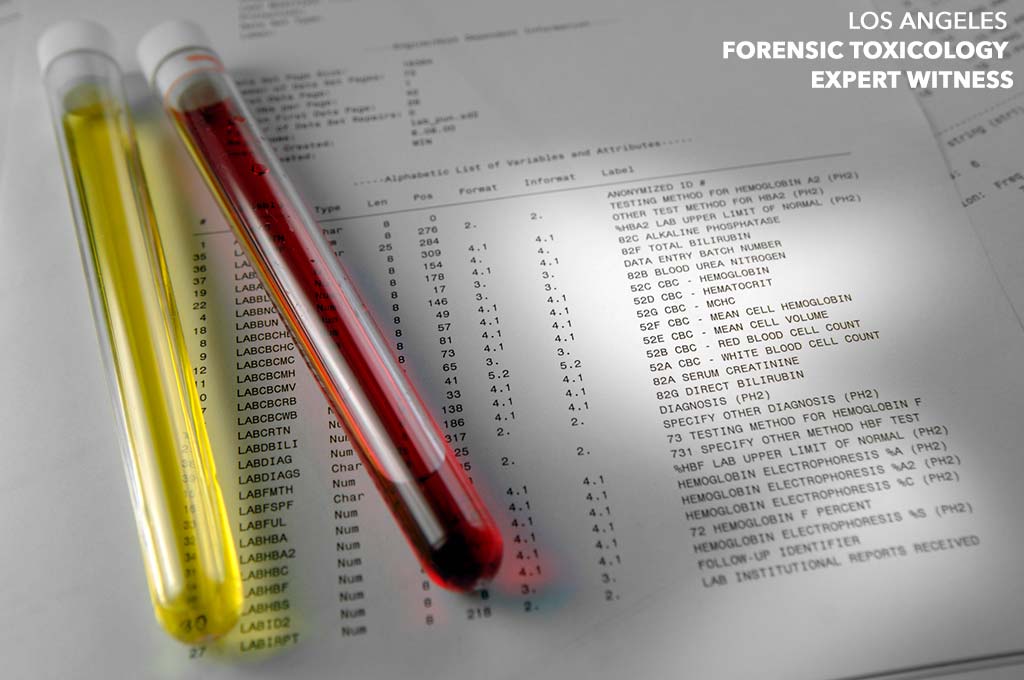
- Laboratory results which indicate which drug or chemical was tested for and whether or not the drug or chemical was present in the given toxicology sample. These results are often presented in a table or graph format.
- Finally, the report may include an explanation – in simple and clear terms – that explain the outcomes of the findings.
Related reading: For related context, read Dram It Out, Drug Facilitated Crimes Series – Data Collection. Browse the Forensic Toxicology topic hub.