Drug Facilitated Crimes Series – Result Interpretation
Article overview: This article explains Drug Facilitated Crimes Series – Result Interpretation and the scientific, legal or practical evidence readers should understand.
Experts such as Okorie Okorocha are necessary professionals during drug facilitated crimes (DFCs). These include cases such as robbery and assault. DFCs have become more and more prevalent in society. This increase means that forensic toxicologists and expert witnesses are now more important than ever. Even just one facet of a DFC, such as interpreting results, can require a whole team of experts. The scientific field of forensic toxicology is particularly involved in examining any existence of foreign substances (especially drugs) within the body. A forensic toxicologist would assist in the medical and/or legal investigation of death, drug use or poisoning. They work with numerous types of samples which can bear numerous results. Analysis depends on what sort of sample is being examined as well as what sort of substance/chemical is being examined.Blood
The result of a blood sample is often the deciding factor in a court case. A positive identification in blood could be evidence of exposure to a chemical yet the sample must be taken within 48 hours of the incident. This does not provide a great amount of time and drawing blood is a rather invasive procedure. The results of a blood sample can also provide insight into the symptoms of a certain drug. This is particularly useful in cases where a victim was unconscious or experienced anterograde amnesia.Urine
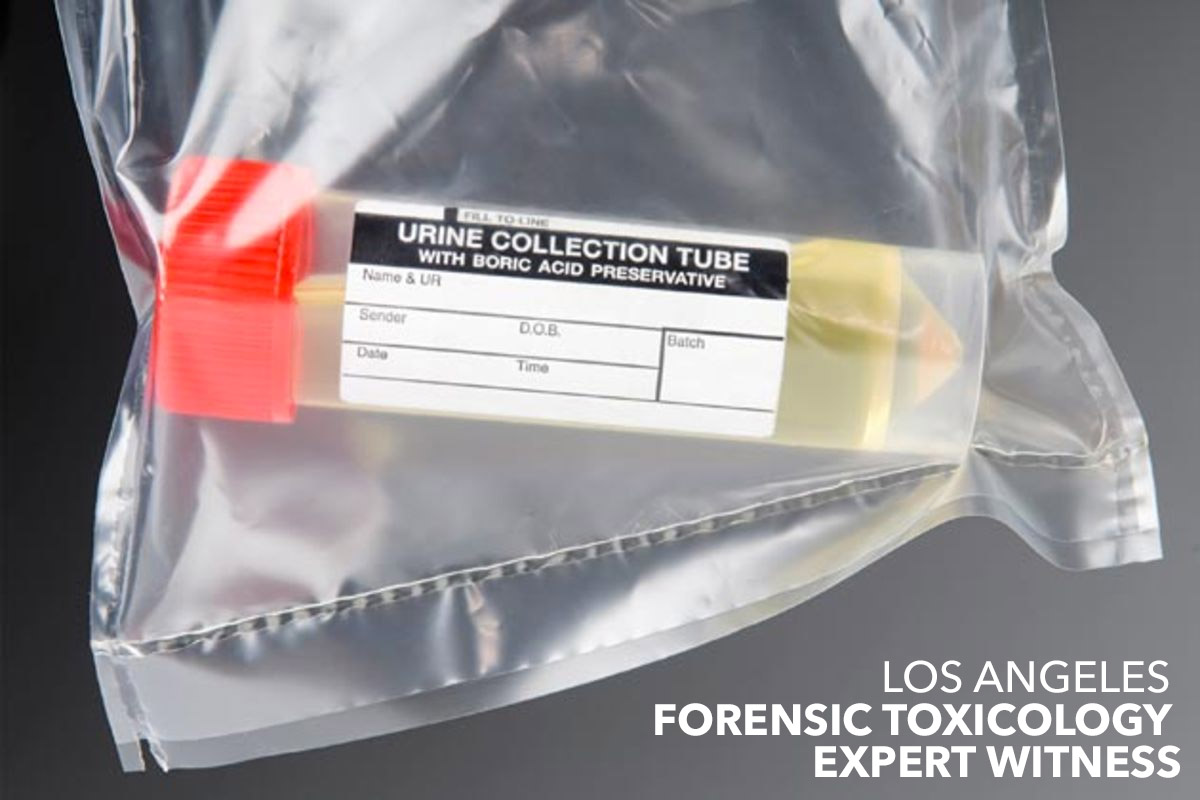
Urine is often used to determine whether or not a chemical has been ingested. Urine can indicate exactly what that chemical is as well as how much of it is present. It can generally reveal the presence of a potential chemical in the body within a period of one to five days after the chemical entered the body. This means that obtaining a urine sample can be done after a longer period than a blood sample. However, the time frame also depends on the type and the dose of the drug. Similarly, when examining results, one cannot just assume that a lower concentration of a drug is a sure indication of a lower dose used, for example. Different drugs can show up in different levels and amounts in the urine. The concentration of the chemical in the sample might not be linked to the dose and effect of the drug when it was consumed.Hair
Analysing hair samples can point to whether exposure to the drug was chronic and regular or as once-off at the time of the incident in question. This type of sample is preferably used in conjunction with other samples/evidence. It is hard for hair testing to provide accurate results. When analysing the sample, the forensic toxicologist must keep in mind the fact that speed of hair growth can differ from person to person. Hair samples generally need to be taken about seven days after the alleged DFC.Some further issues
A bodily sample is often the only evidence to work with. However, quality control can be difficult, as can accurate result interpretation. For example, if a blood sample is left unpreserved, it can start decomposing which leads to a false result. There can sometimes be room for a different interpretation. Certain drugs require certain factors of interpretation when results have positive findings. For example, the concentrations of GHB (gamma-Hydroxybutyric acid), commonly a date rape drug, is known to increase in vitro. This happens in both urine and blood samples once they have been taken and stored. The analysis of results is a tricky task which involves many variables. A private forensic toxicologist may be called in for an expert testimony with regards to samples and results. The content of this article is provided by Connectica, LLC and has not been reviewed by a toxicology expert witnessAuthoritative sources and further reading
- United Nations guidance for forensic analysis in drug-facilitated crimes
- PubMed review of GHB hair testing and interpretation
- NIST Seized Drugs and Toxicology Scientific Area Committee
Related reading: For related context, read Drug Facilitated Crimes Series – Analytical Considerations Part 3., Understanding Forensic Toxicology: Key Concepts and Applications, Blood Testing – Trial by Vial. Browse the Forensic Toxicology topic hub.