A Bedtime THC/CBD Pilot Found Mostly Null Next-Day Tests Alongside Small Residual Signals
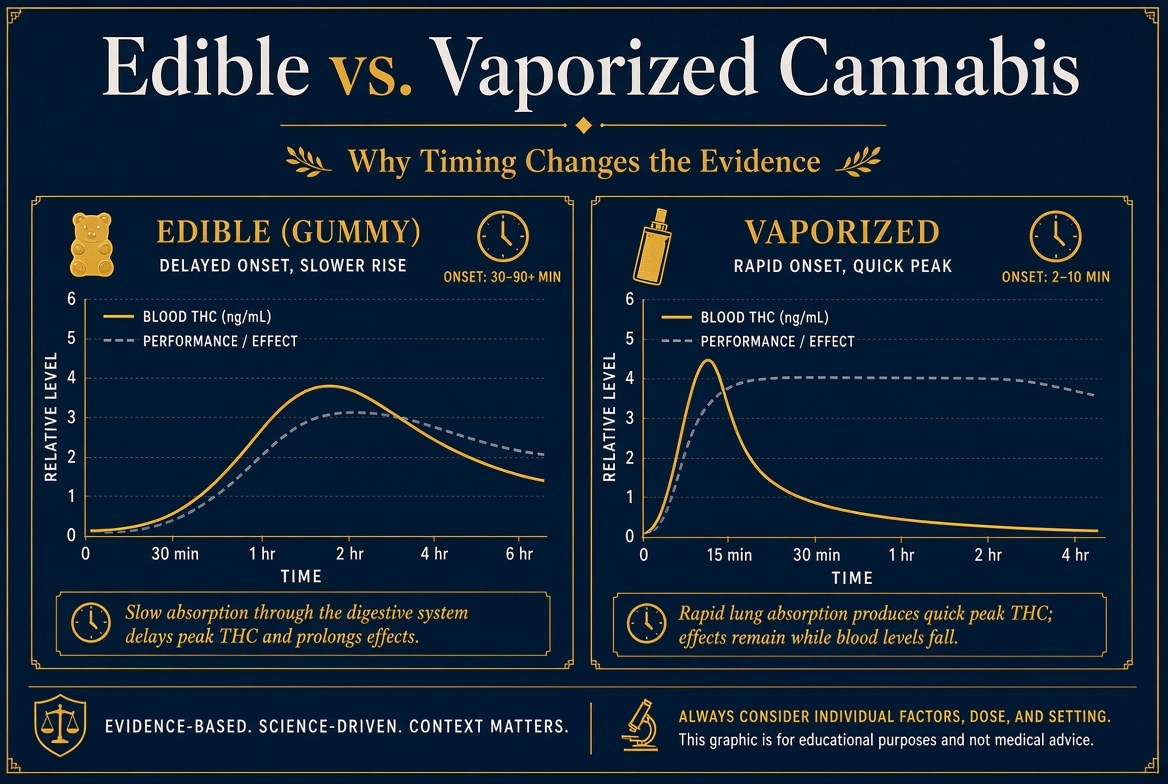
An insomnia pilot found no significant next-day difference on most measured tasks after bedtime THC/CBD. A small Stroop accuracy difference and increased subjective sedation were also reported, so describing every outcome as normal would omit evidence.
One dose in a selected population
Twenty adults with insomnia who infrequently used cannabis completed a randomized, blinded crossover comparison of 10 mg THC plus 200 mg CBD with placebo. This paper reported secondary next-day outcomes from a larger insomnia study.
Cognitive, psychomotor and simulator measures began at least nine hours after treatment. The experiment did not test every point during the night or identify recovery from an earlier peak.
Most comparisons were null, not all
The authors reported no differences on 27 of 28 cognitive, psychomotor and simulator tests. Accuracy was modestly lower on the easier congruent Stroop color task; the harder incongruent comparison did not show the same effect.
Sedation ratings were slightly higher at ten hours without significant changes in every alertness or sleepiness rating. Subjective sedation and objective performance therefore deserve separate reporting.
Isolated findings require proportion
With many outcomes and a small pilot sample, isolated significant results may arise by chance. They still should not disappear from a summary emphasizing null findings. A small selected difference likewise does not establish generalized next-day impairment.
There was no matched THC-only condition. The study cannot determine from this comparison whether CBD prevented an effect.
No universal morning-after rule
The sample was predominantly female and the dose was fixed and acute. Repeated nightly use, higher THC doses, interacting medications and other populations remain separate questions.
Simulator performance is not collision risk, and a group null finding does not certify an individual driver. The defensible conclusion is a largely null next-day pattern with small residual signals under this particular regimen.
For the separate forensic question, see our discussion of cannabinoid concentrations and evidence of impairment.
Primary research
Evaluating possible ‘next day’ impairment in insomnia patients administered an oral medicinal cannabis product by night: a pilot randomized controlled trial. Psychopharmacology (2024). DOI: 10.1007/s00213-024-06595-9.



