Does Vaporizing THC Avoid Its Acute Cardiovascular Effects? A Human Comparison
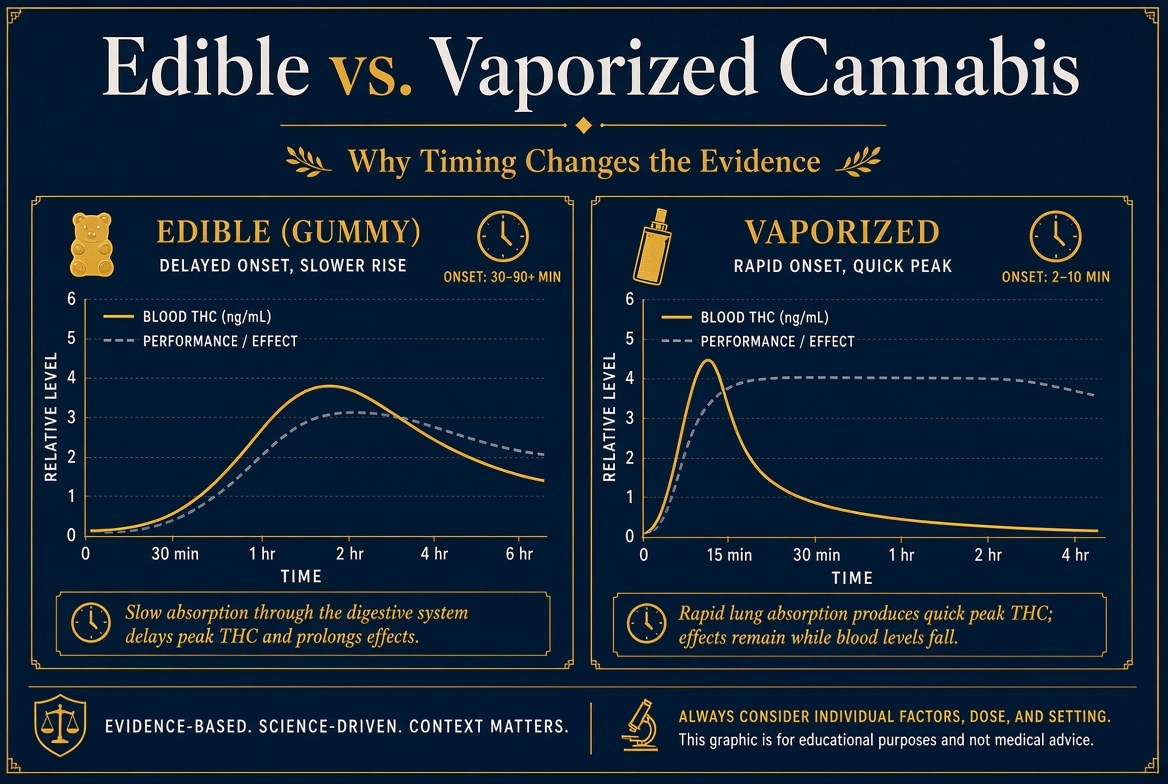
Vaporization did not eliminate the acute heart-rate and blood-pressure effects observed with THC-dominant cannabis. A small human comparison found those responses after both smoking and vaporization, while other cardiovascular endpoints required more cautious interpretation.
Three exposure conditions
Cheung and colleagues studied 22 young, healthy cannabis users before and after smoked THC-dominant cannabis, vaporized THC-dominant cannabis, and vaporized CBD-dominant cannabis. Assessments included pulse-wave velocity, brachial artery dilation, and echocardiography.
The study examined acute physiological changes. It was not a trial measuring long-term rates of heart attack, stroke, or cardiovascular mortality.
Some results were clearer than others
Heart rate and mean arterial pressure increased in both THC conditions, without corresponding significant changes in the CBD-dominant condition. Inhalation method did not remove those cannabinoid-dependent responses.
Arterial-stiffness and diastolic-function findings were associated with heart-rate changes. The authors caution that significant overall effects did not always yield significant post-hoc comparisons. The study should not be summarized as proving equally strong impairment of every cardiovascular measure in every condition.
What does this mean for a product claim?
Removing combustion does not, on these data, remove all physiological effects of THC. Conversely, this experiment does not establish that smoking and vaporization have identical overall health risks; it addressed selected short-term outcomes.
The sample excluded people with important chronic disease, and some vascular imaging data were unusable. Generalizing to older patients or those with cardiovascular illness requires additional evidence. Neither an elevated heart rate nor a THC concentration independently diagnoses intoxication-related driving impairment. The appropriate inference concerns the particular cardiovascular responses actually measured.
Related reading: the limits of interpreting THC blood concentrations.
Primary research
Christian P. Cheung; Alexandra M. Coates; Ryleigh E. Baker; Jamie F. Burr. Acute Effects of Cannabis Inhalation on Arterial Stiffness, Vascular Endothelial Function, and Cardiac Function. Journal of the American Heart Association: Cardiovascular and Cerebrovascular Disease (2024). DOI: 10.1161/JAHA.124.037731.



