Hundreds of Plasma Specimens Still Came From Six THC Participants
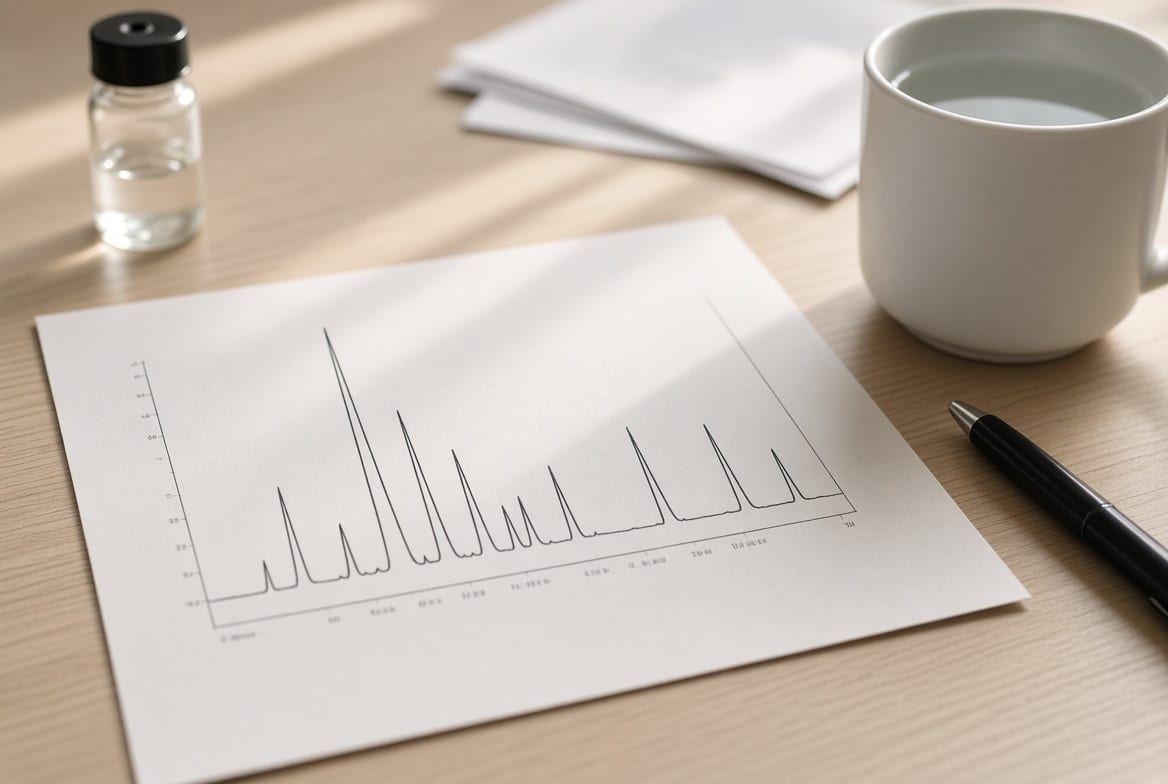
The study’s 264 plasma specimens did not represent 264 independent cannabis users. Repeated sampling increased information about each participant’s profile while leaving the human sample small.
The denominator depended on the question
The intensive inpatient study enrolled six established cannabis users and repeatedly measured cannabinoids during and after oral dronabinol dosing. Some paired analytical comparisons used hundreds of specimens, while selected day-seven summaries used eighteen specimens. Those counts describe measurements nested within a handful of people.
Repeated observations are valuable without being new participants
Dense sampling can characterize timing, variability and within-person differences more clearly. It does not provide the same population coverage as recruiting an equally large number of independent participants. Dependence between repeated measurements also matters when assessing statistical uncertainty; a specimen count alone is not a complete description of precision.
Do not inflate generalizability
The publication supports detailed pharmacokinetic observations under a high-frequency dosing protocol. It cannot establish how all cannabis users respond, especially people without tolerance or with different formulations and schedules. Report both participant and specimen counts before presenting a significance result as broad human evidence. The plasma measurements also remain separate from a validated assessment of driving performance.
Related analysis: the repeated oral-THC plasma profiles.
Research cited
Schwilke and colleagues (2009). THC, 11-Hydroxy-THC, and THC-COOH Plasma Pharmacokinetics during and after Continuous High-Dose Oral THC. DOI: 10.1373/clinchem.2008.122119.



