Naloxone Reversed Morphine and THC Movement Suppression Differently in Rats
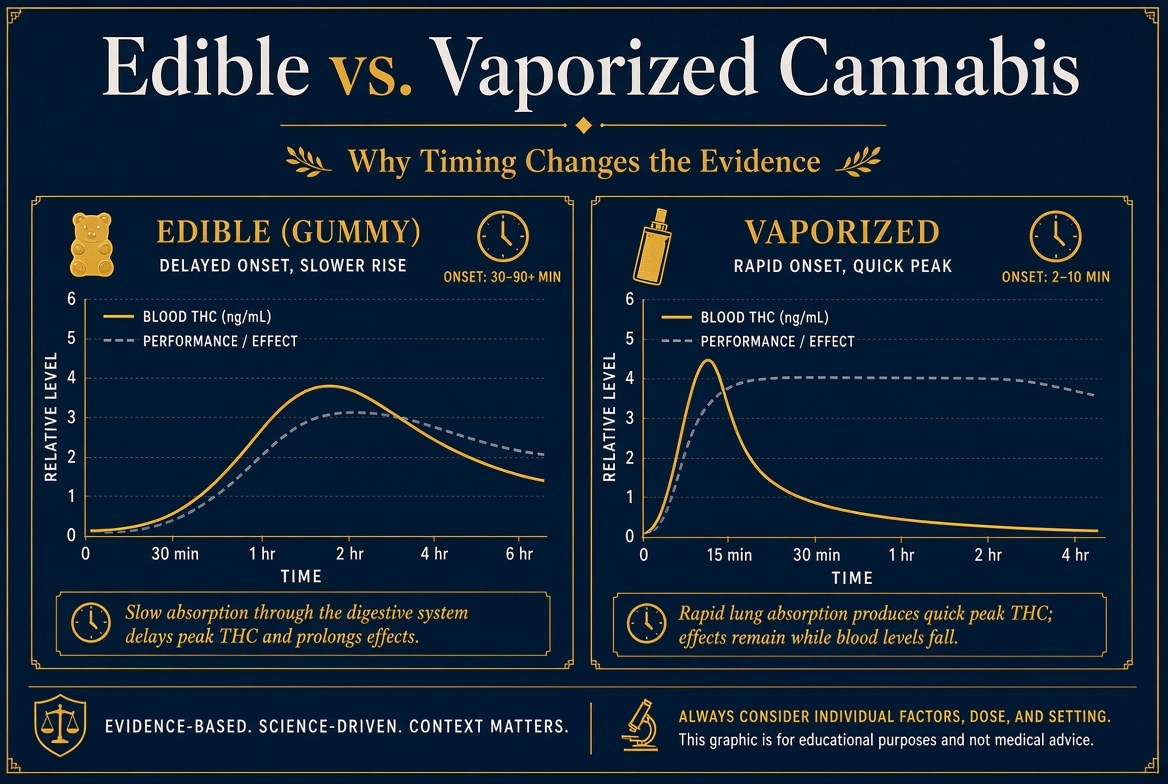
THC Vaporized and THC edibles

In a 1982 rat study, naloxone completely reversed acute morphine-related movement suppression but only partly reversed THC-related suppression. Similar behavior did not mean identical pharmacological control.

Acute and repeated conditions were compared

High doses of either morphine or THC initially reduced locomotor activity. By the third treatment day, tolerance to that inhibitory effect developed. Partial cross-tolerance to THC-related suppression was also observed. These findings concern movement under the specified dosing conditions, not every action of either drug.

The antagonist response depended on exposure history

Naloxone had different effects in the tolerant groups: a slight activity reduction in THC-tolerant rats and increased activity in morphine-tolerant rats. The change cannot be summarized as a uniform stimulation or reversal of sedation independent of the preceding drug.

Partial reversal does not prove a shared primary receptor

The study is consistent with interaction between systems, but a behavioral antagonist comparison does not establish that THC and morphine act through the same receptor. Indirect pathways can affect a shared outcome, and the supplied abstract does not isolate a complete mechanism.

This historical experiment contributes a direct comparison of drug history and antagonist response. It does not establish naloxone as a clinical antidote to cannabis effects or supply guidance for intoxicated patients. Species, dose-related movement suppression and partial versus complete reversal are central to its interpretation.

Related: interpreting cannabis tolerance claims.

Research cited

Tulunay FC; Ayhan IH; Sparber SB. The effects of morphine and delta-9-tetrahydrocannabinol on motor activity in rats. Psychopharmacology (1982). doi:10.1007/BF00433741. Findings discussed from the study abstract.


Spread the love


The National Black Lawyers

top 40 lawyers

civil trial law

Lawyers of Distinction

Loading...

Recent Blog Articles

How Do Naturalistic Human Observations Differ From Mouse Tests of Visual Prediction?

A supplied preprint combined observational human comparisons with controlled mouse experiments. Those evidence streams can inform one another without carrying the same causal weight. Recent use was observed in people West and colleagues compared visual responses in recent psychedelic users and controls. Dose and potency could not be directly established….

Spread the love

Read Article: How Do Naturalistic Human Observations Differ From Mouse Tests of Visual Prediction?

Does a Link Between Psilocybin Use and Nature Relatedness Establish Cause?

A statistical association between past psilocybin use and feeling connected to nature does not establish that taking psilocybin caused that connection. What was compared Forstmann and colleagues reanalyzed five datasets comprising 3,817 participants. Among psychedelic-experienced participants, psilocybin experience was the most reliable substance-use predictor of self-reported nature relatedness. The analyses…

Spread the love

Read Article: Does a Link Between Psilocybin Use and Nature Relatedness Establish Cause?

What Did Mental Health Professionals Report After a Breathwork Workshop?

Ulrike Lueken and colleagues asked 48 mental health professionals to take part in a high-ventilation breathwork workshop and rate their experience. The participants reported altered states and also gave their judgments about possible therapeutic uses and risks. Those ratings describe the views of the workshop group. They do not measure…

Spread the love

Read Article: What Did Mental Health Professionals Report After a Breathwork Workshop?

Speak with an expert today!

Contact the offices of Okorie Okorocha for professional and reliable advice which you can trust.

Call (424) 363-3347 Contact Us

