A New Urine HHC Method Was Validated With Spiked Samples, Not Confirmed HHC Users
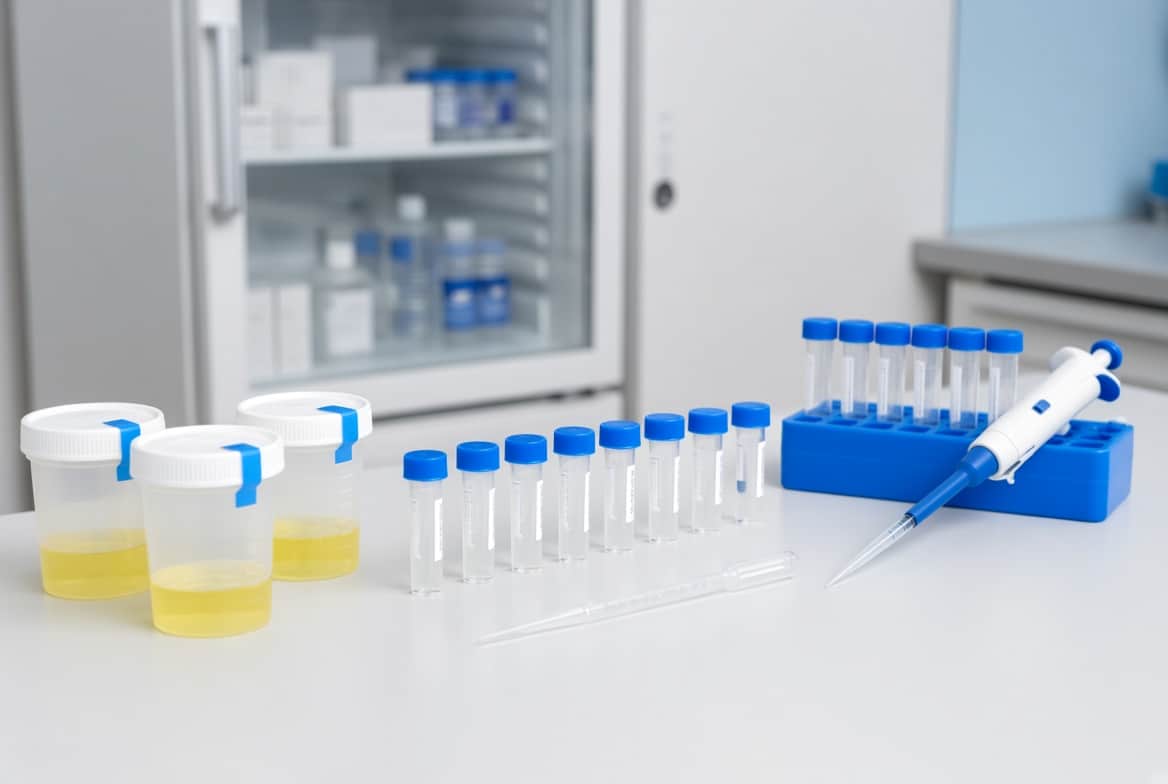
A method can perform well in fortified urine without having been demonstrated in urine from confirmed HHC users. A microextraction study made that distinction explicit while validating THC-COOH and selected HHC-metabolite measurements.
What the procedure tested
The researchers combined air-assisted liquid–liquid microextraction with LC–MS/MS. They optimized solvent conditions and evaluated calibration, sensitivity, precision, accuracy, recovery and matrix effects.
The study aimed to reduce solvent consumption and avoid halogenated extraction solvents. Those are workflow and environmental advantages, not independent proof of clinical or forensic interpretation.
Authentic specimens supported only part of the panel
The method was applied to authentic THC-COOH-positive urine, with good agreement against the laboratory’s routine confirmatory method. Authentic HHC-positive specimens were not available.
The HHC components were therefore supported by fortified-matrix validation. Such experiments are important, but authentic specimens may contain conjugates, other metabolites and interferences that a selected spiking experiment does not fully reproduce.
The hydrolysis question remained qualified
Authentic HHC-glucuronide standards were unavailable, preventing direct experimental confirmation of hydrolysis efficiency for those targets. The absence of residual THC-COOH-glucuronide signals supported the laboratory’s procedure for that available comparison, rather than proving complete hydrolysis for every HHC conjugate.
The method also used one labeled internal standard across multiple analytes because matching standards were unavailable. That approach requires attention to analyte-specific performance and should not be mistaken for identical behavior of every target.
What validation supports
The authors reported satisfactory analytical performance and a favorable, though not completely green, environmental assessment. They specifically called for further evaluation with confirmed HHC-user specimens.
A laboratory adopting the method should preserve that distinction. The paper does not establish an HHC detection window, a consumed dose or a relationship between urinary metabolites and impairment. It supports a promising analytical workflow with an acknowledged authentic-sample validation gap.
For context, see our discussion of THC concentrations and the separate question of impairment.
Primary research
Pamela Cabarcos-Fernández and colleagues. A Sustainable Air-Assisted Liquid–Liquid Microextraction Procedure Coupled to Liquid Chromatography–Tandem Mass Spectrometry for the Determination of 11-Nor-9-carboxy-Δ9-tetrahydrocannabinol and Hexahydrocannabinol Metabolites in Urine. Journal of Xenobiotics (2026). DOI: 10.3390/jox16040143.



