Cannabinoid–Opioid Genetic Associations Are Not a Personal Addiction Test
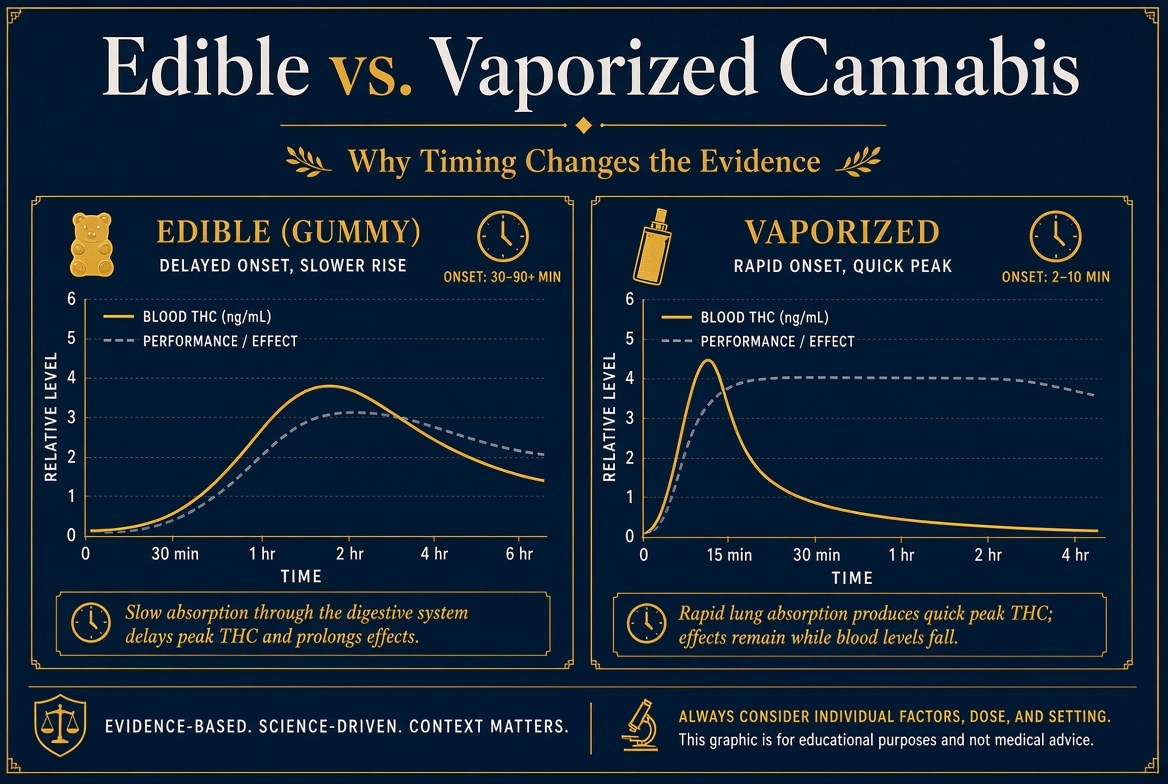
THC Vaporized and THC edibles

A 2010 review discussed genetic associations involving cannabinoid and opioid receptor systems alongside behavioral interaction models. An association with an addiction-related phenotype does not independently establish a predictive test for an individual.

Several evidence levels were considered

The review described receptor co-localization, signaling overlap and animal alcohol-related behaviors. Those observations can motivate genetic questions but do not establish that a particular variant causes every relevant behavior or explains a person's substance use.

Variant associations require a defined comparison

The source discussed selected receptor-gene variants and associated phenotypes. A reported association needs its population, outcome and study design attached. It cannot become a deterministic diagnosis or a measure of current impairment merely because a plausible biological pathway exists.

The combined-system evidence had gaps

The authors noted a lack of studies examining haplotypes across both systems. That gap limits an integrated genetic interpretation. The review did not establish clinical sensitivity, specificity or a decision threshold for predicting addiction from those variants.

Interpreting the evidence

This historical synthesis supports separating mechanistic plausibility, population association and personal prediction. It does not validate a genetic screening panel or permit conclusions about dependence, responsibility or impairment from receptor-gene information alone.

Related reading: interpreting cannabis tolerance claims.

Research reference

López-Moreno JA; López-Jiménez A; Gorriti MA; de Fonseca FR (2010). Functional interactions between endogenous cannabinoid and opioid systems: focus on alcohol, genetics and drug-addicted behaviors. Current drug targets. doi:10.2174/138945010790980312.

This analysis draws on the supplied review abstract.

Spread the love


The National Black Lawyers

top 40 lawyers

civil trial law

Lawyers of Distinction

Loading...

Recent Blog Articles

How Do Naturalistic Human Observations Differ From Mouse Tests of Visual Prediction?

A supplied preprint combined observational human comparisons with controlled mouse experiments. Those evidence streams can inform one another without carrying the same causal weight. Recent use was observed in people West and colleagues compared visual responses in recent psychedelic users and controls. Dose and potency could not be directly established….

Spread the love

Read Article: How Do Naturalistic Human Observations Differ From Mouse Tests of Visual Prediction?

Does a Link Between Psilocybin Use and Nature Relatedness Establish Cause?

A statistical association between past psilocybin use and feeling connected to nature does not establish that taking psilocybin caused that connection. What was compared Forstmann and colleagues reanalyzed five datasets comprising 3,817 participants. Among psychedelic-experienced participants, psilocybin experience was the most reliable substance-use predictor of self-reported nature relatedness. The analyses…

Spread the love

Read Article: Does a Link Between Psilocybin Use and Nature Relatedness Establish Cause?

What Did Mental Health Professionals Report After a Breathwork Workshop?

Ulrike Lueken and colleagues asked 48 mental health professionals to take part in a high-ventilation breathwork workshop and rate their experience. The participants reported altered states and also gave their judgments about possible therapeutic uses and risks. Those ratings describe the views of the workshop group. They do not measure…

Spread the love

Read Article: What Did Mental Health Professionals Report After a Breathwork Workshop?

Speak with an expert today!

Contact the offices of Okorie Okorocha for professional and reliable advice which you can trust.

Call (424) 363-3347 Contact Us


