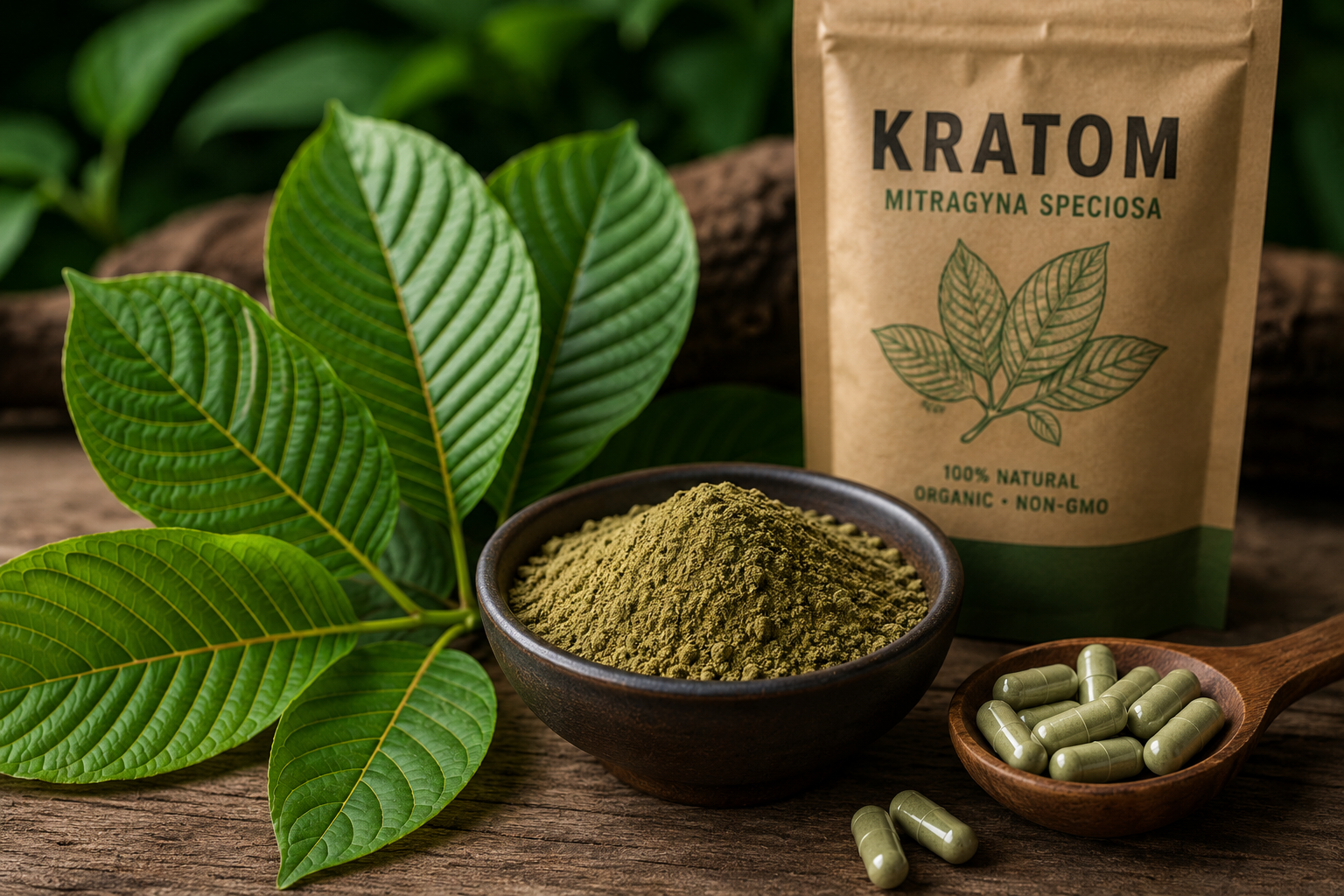
Kratom: Evidence, Risks, and Regulation in 2026

Forensic Toxicology · Public-Health Review
Kratom: Evidence, Risks, and Regulation in 2026
Introduction: A Plant at the Center of a Policy Debate
Few botanical substances have moved as quickly from the margins of Western awareness to the center of public-health and legal controversy as kratom. Derived from the leaves of a Southeast Asian tree, kratom has been consumed for generations in its region of origin, yet it now sits at the intersection of the opioid crisis, dietary-supplement regulation, drug-scheduling law, and a burgeoning commercial market for potent chemical derivatives. The debate around it is unusually polarized: some frame it as a natural aid for pain and opioid withdrawal, others as a dangerous, unregulated opioid in disguise. The truth, as reflected in the peer-reviewed and regulatory record, is more nuanced and more contingent on which form of the substance one is discussing.
This article examines kratom as it stands in mid-2026, drawing exclusively on documented sources. A central theme throughout is that “kratom” is not a single product. Traditional chewed leaf or brewed decoction, standardized powders and capsules, concentrated extracts, and — most consequentially for recent policy — isolated or semisynthetic 7-hydroxymitragynine (7-OH) products differ enormously in potency, risk, and legal treatment. Conflating them obscures the evidence and distorts the policy discussion. Wherever the record permits, the analysis below keeps these categories separate and flags where surveillance data cannot.
A second recurring theme is the mismatch between the strength of claims made about kratom — in either direction — and the strength of the underlying evidence. Enthusiastic assertions of benefit and alarmed warnings of harm both frequently outrun the controlled human data that would justify them. The goal here is to represent what is actually known, what is plausibly suggested, and what remains genuinely uncertain, so that researchers, clinicians, lawyers, and policy scholars can reason from a common factual baseline.
Botanical Identity and Taxonomy
Kratom is the common name for Mitragyna speciosa, an evergreen tree in the coffee family, Rubiaceae, that can grow to roughly 25 meters in height and is native to Southeast Asia, including Cambodia, Thailand, Indonesia, Malaysia, Myanmar, and Papua New Guinea (Wikipedia: Mitragyna speciosa). Its dose-dependent combination of stimulant-like and sedative-analgesic effects, examined in the pharmacology section below, arises from its specific alkaloid content rather than from its taxonomic placement in the coffee family. The tree thrives in the humid, tropical conditions of the region, and its leaves have long been harvested from both wild and cultivated stands.
The species entered the Western scientific record in the nineteenth century. It was first described botanically in 1839 by the Dutch botanist Pieter Willem Korthals, who initially assigned it the name Stephegyne speciosa; the now-accepted name Mitragyna speciosa was fixed by George Darby Haviland in 1859 (Wikipedia: Mitragyna speciosa). That formal taxonomic history, however, postdates centuries of indigenous use, and the botanical naming reflects European documentation rather than the origins of human engagement with the plant.
Ethnobotany and Traditional Use
The traditional use of kratom is deeply embedded in the working life of parts of Southeast Asia. Laborers and farmers in Thailand and Malaysia historically chewed fresh leaves or brewed them as a tea to combat fatigue, increase work capacity, and manage pain, and the plant was used as a substitute for opium — a practice documented in Malaysia as early as 1836 and in nineteenth-century Thailand (Wikipedia: Mitragyna speciosa). This substitution role is historically significant: kratom’s association with opioid-like effects and with managing opioid-related states is not a modern Western invention but a longstanding feature of its regional use.
Local nomenclature reflects this cultural embedding. The plant is known by names including ketum, kratom, and biak, and a regional recreational preparation known as the “4×100” cocktail mixes kratom with other ingredients (Wikipedia: Mitragyna speciosa). The “4×100” preparation is notable because it exemplifies polysubstance use — a pattern that recurs throughout the toxicological literature and that complicates the attribution of harms to kratom alone.
The U.S. National Institute on Drug Abuse (NIDA) characterizes kratom as an herbal substance that “can produce opioid- and stimulant-like effects” and acknowledges its history in traditional medicine, while emphasizing that it has not been proven safe or effective for any medical purpose (NIDA: Kratom). This framing — recognizing traditional use without endorsing efficacy — captures the appropriate posture toward ethnobotanical evidence: long-standing human use is meaningful context, but it is not equivalent to controlled demonstration of safety or benefit.
From Leaf to Laboratory: The Diversification of Products
A crucial development for understanding contemporary kratom is that modern Western preparations differ substantially from the traditional chewed leaf or decoction. Powders, capsules, concentrated extracts, and — since roughly 2024 — semisynthetic products isolating specific alkaloids have entered commerce, a shift that lies at the heart of the 2025–2026 regulatory debate (Wikipedia: Mitragyna speciosa). The traditional user chewing a handful of fresh leaves and the modern consumer taking a concentrated 7-OH tablet are, pharmacologically, engaging with very different substances. This product diversification is arguably the single most important factor in the current policy landscape, and it recurs throughout the sections that follow.
Phytochemistry: The Alkaloids of Kratom
Kratom leaves are chemically complex, containing more than 50 alkaloids; research has focused principally on two: mitragynine and 7-hydroxymitragynine (7-OH) (FDA and Kratom). Mitragynine is the dominant alkaloid. The WHO Expert Committee on Drug Dependence (ECDD) reports that it can constitute up to roughly two-thirds of the alkaloid content, while 7-OH is a minor constituent at approximately 1% or less of total alkaloids (WHO ECDD Pre-Review Report). This proportional relationship is essential to interpreting the pharmacology and the regulatory debate: in the natural leaf, the more potent alkaloid is present only in trace amounts.
The variability of alkaloid content across kratom material is substantial. Quantitative surveys of dried leaf report mitragynine spanning a wide range, on the order of 0.7% to nearly 39% by weight across samples, alongside minor alkaloids such as paynantheine, speciociliatine, and speciogynine (PMC: Alkaloid quantification). This more-than-fiftyfold range in the primary active compound underscores why standardization is a persistent challenge: two products both labeled “kratom” may deliver markedly different doses of the principal alkaloid.
The natural scarcity of 7-OH deserves particular emphasis given its central role in recent policy. A 2025 review reported that 7-OH occurs naturally at only about 0.011%–0.039% w/w in dried leaf (roughly 0.114–0.393 mg/g) and is not measurable in fresh leaves, forming largely as an oxidation product of mitragynine (PMC: 7-OH Evolution Review). In other words, in fresh leaf the compound that most concerns regulators is essentially absent, arising only through oxidation of mitragynine during drying, storage, and processing. The FDA has warned that some products marketed as “spiked” or “enhanced” leaf may contain 7-OH at levels up to 500% higher than would naturally occur (FDA: Concentrated 7-OH Opioid Products). This gap between the trace natural presence of 7-OH and its artificially elevated concentration in certain products is the pharmacological fault line running through the entire debate.
This natural variability — driven by cultivar, geography, harvest, drying, storage, and processing — means product labels frequently do not match content, a recurring theme in the quality-control literature and one revisited in the section on product quality below. For now, the key point is that kratom’s chemistry is neither uniform nor easily predicted from a product’s name or appearance.
Pharmacology: Mechanisms, Dose-Dependence, and Metabolism
The pharmacology of kratom explains both its appeal and its risks, and it reinforces why the distinction between leaf, extract, and isolated 7-OH matters so much. Mitragynine and 7-OH both bind mu-opioid receptors; mitragynine additionally interacts with serotonergic, dopaminergic, noradrenergic, and kappa-opioid systems, which is thought to underlie its mixed stimulant/opioid-like profile (FDA and Kratom). This reported multi-target activity is one factor cited to help account for the plant’s characteristic combination of energizing and analgesic effects.
Both principal alkaloids behave as partial mu agonists with a bias toward G-protein signaling over beta-arrestin recruitment (WHO ECDD). This “biased agonism” has attracted scientific interest because beta-arrestin recruitment has been associated in some models with the respiratory depression that makes conventional opioids lethal; a G-protein-biased partial agonist could, in principle, offer analgesia with a different side-effect profile. This is a mechanistic hypothesis of interest, however, not a demonstrated clinical advantage, and it should not be read as evidence of safety.
Potency Relationships Among the Key Compounds
The relative potency of the alkaloids is where the leaf-versus-isolate distinction becomes quantitative. In vitro binding data indicate that 7-OH is markedly more potent at the mu receptor than mitragynine, with reported Ki values on the order of about 78 nM for 7-OH versus about 709 nM for mitragynine (PMC: Receptor binding data). The WHO ECDD summarized the comparative pharmacology in more detail: 7-OH has roughly 5–23 times greater binding affinity and 5–20 times greater intrinsic activity than mitragynine, while morphine has roughly 8–10 times greater affinity and about 3 times greater intrinsic activity than 7-OH (WHO ECDD).
These figures place the compounds on a potency continuum: mitragynine is the least potent at the mu receptor, 7-OH is substantially more potent, and morphine is more potent still by these particular measures. That ordering, combined with the fact that 7-OH is present at only trace levels in natural leaf, is precisely why concentrating or isolating 7-OH transforms the risk profile. A product that delivers a large dose of the more potent alkaloid is, functionally, a different drug from the traditional leaf.
Research also indicates that 7-OH functions as an active metabolite of mitragynine, with therapeutic and abuse-relevant effects likely driven in part by the body’s slow conversion of mitragynine to 7-OH (PMC: 7-OH active metabolite; NIDA news release, June 2026). This “metabolic prodrug” relationship is scientifically important: when a person consumes leaf-based kratom, some of the mu-opioid effect may arise from mitragynine’s gradual conversion to 7-OH within the body. It is a plausible inference — not one directly established by the cited sources — that endogenous conversion from ingested leaf would follow a different exposure time-course than directly ingesting a concentrated 7-OH dose; the pharmacokinetics of concentrated-7-OH products in humans remain poorly characterized.
Dose-Dependence and Pharmacokinetics
Kratom’s effects are strongly dose-dependent, which is central to understanding both its traditional stimulant role and its higher-dose opioid-like use. At lower doses, traditionally under about 5 grams of plant material, kratom tends to produce stimulant-like effects, while higher doses, roughly 5–15 grams, produce more opioid-like sedation and analgesia; traditional daily mitragynine intake has been estimated at roughly 76–434 mg (PMC: Clinical Implications review). This biphasic dose-response is a defining feature of the substance and helps explain the divergent reasons people report for using it, from combating fatigue to managing pain.
Human pharmacokinetic data report a Tmax of roughly 0.84–2.0 hours and a mitragynine half-life reported up to about 23 ± 16 hours (WHO ECDD). The relatively long and variable half-life has implications for accumulation with repeated dosing and for the timing of withdrawal. On the metabolic side, 7-OH is formed via CYP3A4 and CYP2D6 and can rearrange to mitragynine pseudoindoxyl (PMC: 7-OH Evolution Review), an enzymatic pathway that also creates the potential for drug interactions.
Drug Interactions and Preclinical Toxicity
The interaction potential is not merely theoretical. Mitragynine inhibits CYP2C9, CYP2D6, and CYP3A at low micromolar concentrations in vitro (WHO ECDD), and a clinical interaction study found that kratom increased midazolam exposure roughly 2.2–2.7-fold, consistent with CYP3A inhibition (PubMed: Clinical DDI study). Because CYP3A metabolizes a large fraction of commonly used medications, this magnitude of inhibition suggests a real potential for clinically meaningful interactions, particularly in people taking multiple drugs.
Preclinical lethality data provide context but must be interpreted cautiously. Rodent studies report a mitragynine LD50 of approximately 500 mg/kg in mice and greater than 800 mg/kg in rats — high relative to typical human exposures — but such animal data translate imperfectly to human risk (WHO ECDD). These values indicate that mitragynine is not acutely lethal at low doses in rodents, but they say little about chronic effects, human-specific responses, polysubstance scenarios, or the concentrated-7-OH products that dominate current concern.
Prevalence, Demographics, and Motivations for Use
Understanding who uses kratom and why is essential to a proportionate assessment of its public-health significance. The most recent national survey estimate comes from the 2024 National Survey on Drug Use and Health (NSDUH): among people aged 12 or older, an estimated 1,851,000 (0.6%) used kratom in the past year and 5,381,000 (1.9%) reported lifetime use, essentially stable versus 2023 (1,630,000 past-year, or 0.6%; 5,142,000 lifetime, or 1.8%) (SAMHSA: 2024 NSDUH Detailed Tables). These figures indicate that kratom use in the United States, while non-trivial in absolute terms, involves a small percentage of the population and has been relatively stable year over year.
Historical and international comparisons add perspective. An earlier 2019 U.S. estimate placed past-year use at about 0.7% (95% confidence interval 0.6–0.8%), while a 2016 Thailand study reported 14.3% lifetime use, reflecting kratom’s deeper cultural integration in its region of origin (WHO ECDD). The order-of-magnitude difference between U.S. and Thai lifetime prevalence reinforces that kratom’s role in Southeast Asia is culturally and historically distinct from its more recent emergence in Western markets.
Surveillance of Harms
While overall use has been stable, surveillance of harms shows sharp growth. A CDC Morbidity and Mortality Weekly Report (MMWR) published March 26, 2026 analyzed National Poison Data System (NPDS) records for people aged 12 and older and found 14,449 kratom exposures from 2015 through 2025, rising from 258 in 2015 to 3,434 in 2025 — an increase of roughly 1,200% (CDC MMWR, March 2026). The contrast between stable prevalence and rapidly rising poison-center exposures is striking and may reflect changing product potency, particularly the emergence of concentrated products, rather than a proportional increase in the number of users.
The demographic profile of these exposures is informative. In that dataset, 62% of exposures involved a single substance and 38% multiple substances; 65% or more of cases were male; the most common age group was 20–39, with the sharpest relative rise among those aged 40–59 (CDC MMWR, March 2026). Independently, America’s Poison Centers reported 3,803 kratom or derivative reports in 2025 and 3,190 as of June 30, 2026 (a trend up roughly 67.8%), with adults 20–39 comprising 48.4% and men 65.3%; among kratom-alone cases, 44.5% were serious and 25.9% resulted in hospitalization (America’s Poison Centers). The finding that a substantial fraction of even kratom-alone cases were serious is notable, though poison-center data reflect reported exposures rather than a representative sample of all use.
As for motivation, people commonly report using kratom to self-treat pain, anxiety, depression, fatigue, and drug cravings and withdrawal — especially related to opioid use (NIDA: Kratom). These self-reported motivations are important context for the harm-reduction debate: many users are not seeking intoxication for its own sake but are attempting to manage symptoms or substitute for other substances, which shapes how prohibition might affect their behavior.
Possible Benefits: Separating Evidence from Claims
The purported benefits of kratom are frequently asserted but thinly evidenced, and it is essential to grade the quality of the underlying research rather than accept claims at face value. The evidence base for kratom’s benefits is limited and weighted toward low-tier study designs. To date, the strongest single study is a small randomized controlled trial by Vicknasingam and colleagues (N=26 regular users) in which a kratom decoction increased pain tolerance one hour after intake, with no adverse effects reported — but this is preliminary and not generalizable (PMC: Clinical Implications review; PMC: Pain tolerance RCT). A single trial with 26 participants, conducted among people already using kratom, cannot establish efficacy for a general population, but it does represent the highest tier of evidence currently available for any kratom benefit.
For the other commonly claimed benefits, the evidence is weaker still. Most benefit claims for opioid-withdrawal relief, mood, anxiety, and energy rest on cross-sectional observational studies, self-report surveys, case reports, and animal work rather than controlled human trials (PMC: Clinical Implications review). These study types are valuable for generating hypotheses and describing patterns of use, but they cannot control for confounding, placebo effects, or self-selection, and they do not support causal claims of efficacy.
NIDA states plainly that researchers “have not proven kratom to be safe or effective for any medical purpose,” while noting that research on potential therapeutic effects is ongoing (NIDA: Kratom). This is the appropriate summary of the current state: interest and anecdote are substantial, controlled evidence is minimal, and the absence of proven efficacy is not the same as proven inefficacy — it reflects a genuine gap in the research.
A Turning Point in Clinical Research
A notable 2026 development may begin to close that gap, though importantly for isolated mitragynine rather than for whole-leaf kratom or 7-OH. NIH announced that its Investigational New Drug (IND) application for isolated mitragynine took effect with the FDA, clearing the way for the first randomized, double-blind, placebo-controlled phase I safety study of mitragynine as a potential treatment for opioid use disorder — a formulation developed by the University of Florida, NCATS, and NIDA under the NIH HEAL Initiative (NIDA news release, June 2026). NIDA Director Nora Volkow called it “a major step toward expanding treatment options,” while the release stressed that mitragynine in isolation “has yet to be studied in humans” (NIDA news release, June 2026). This trial is a phase I safety study, not a demonstration of efficacy, and it concerns a purified, standardized compound rather than the variable botanical product available commercially. It nonetheless marks a shift toward evaluating kratom’s chemistry under rigorous, regulated conditions.
The following table summarizes the hierarchy of evidence for the principal claimed benefits, making explicit the strength and limitations of each.
Evidence-Hierarchy Table
| Claimed benefit | Highest-quality evidence available | Strength / caveat |
| Acute pain tolerance | One small RCT (N=26), pain tolerance ↑ at 1 h (PMC) | Preliminary; single small trial; not generalizable |
| Opioid withdrawal / craving relief | Observational studies, surveys, case reports (PMC review) | No controlled human trials; self-report dominant |
| Mood / anxiety / depression | Self-report surveys, anecdote (NIDA) | Not proven; confounded by self-selection |
| Energy / fatigue (low dose) | Traditional use, surveys, dose-response reports (PMC review) | Mechanistically plausible; not clinically validated |
| Mitragynine for OUD (future) | Phase I IND cleared 2026; preclinical only (NIDA) | Not yet tested in humans |
Acute Adverse Effects and Organ Toxicity
The documented harms of kratom span several organ systems, and the strength of evidence varies by category. The FDA has associated kratom with serious adverse events including liver toxicity, seizures, and substance use disorder (FDA and Kratom). These are the headline concerns, and each merits separate examination because the quality and quantity of supporting evidence differ.
Hepatotoxicity
Liver injury is among the better-characterized kratom harms. Kratom-associated drug-induced liver injury (DILI) is typically cholestatic or mixed, with onset roughly 1–8 weeks after initiation (average latency about 21–22 days) and severity that can be marked — bilirubin exceeding 20 mg/dL in some cases — usually resolving after discontinuation (PMC: Kratom liver injury). The characteristic latency and the tendency to resolve on stopping the substance are clinically useful features, suggesting an idiosyncratic reaction rather than a predictable dose-related toxicity for most cases.
The authoritative NIH resource on drug-induced liver injury, LiverTox, assigns kratom a Likelihood Score of B — a “highly likely” cause of clinically apparent liver injury — with roughly two dozen published cases and comparable numbers in the FDA database; in the Drug-Induced Liver Injury Network (DILIN), 8 of 404 cases were attributed to kratom, with 7 of 8 judged causal (LiverTox: Kratom). A Likelihood Score of B places kratom among substances for which the causal relationship to liver injury is well supported, even if the absolute number of cases is modest. The WHO ECDD counted at least 92 liver-toxicity cases, generally resolving within a month, with one reported liver transplant (WHO ECDD). The single reported transplant indicates that although most cases resolve, severe outcomes are possible.
Cardiotoxicity and QT Prolongation
The cardiac evidence combines mechanistic in vitro findings with clinical observations and case reports, and it is more mixed than the hepatic picture. In vitro, mitragynine inhibits the hERG potassium channel and can prolong the action potential duration in human stem-cell-derived cardiomyocytes, raising a theoretical torsades de pointes risk (PLoS ONE: Cardiotoxicity). hERG inhibition is a recognized marker of arrhythmia potential, so this finding is a legitimate mechanistic red flag, though in vitro results do not automatically translate to clinical harm.
The clinical picture is more reassuring in some respects but not uniformly so. A Frontiers in Pharmacology review noted that tachycardia and hypertension are the most common acute cardiovascular effects and cited a clinical study finding that regular kratom consumption (mean mitragynine intake about 434 mg) appeared to increase QTc intervals but did not induce a prolonged QTc or torsades in that cohort (Frontiers in Pharmacology review). The WHO ECDD cited a Malaysian study reporting an odds ratio of 8.61 for sinus tachycardia among users (WHO ECDD). Case reports, however, describe more severe arrhythmic events, including an acquired type 1 Brugada pattern with chronic high-dose use and a case of ventricular fibrillation during exercise associated with combined kratom and caffeine use in an adolescent (HeartRhythm Case Reports; OUP: VF case report). Taken together, the cardiac evidence suggests that common effects are relatively mild (tachycardia, hypertension) but that rare, serious arrhythmic events can occur, sometimes in the context of high doses or combination with other stimulants.
Respiratory Effects
Respiratory depression, the mechanism by which opioids most often kill, is highlighted specifically for concentrated 7-OH products rather than traditional leaf. The FDA’s report on concentrated 7-OH lists fatal respiratory depression among the side effects of those products (FDA: Concentrated 7-OH report). This is another instance where the form of the substance matters critically: the respiratory risk that dominates opioid mortality is emphasized for the potent isolate, consistent with 7-OH’s higher mu-opioid potency.
Pregnancy and Neonatal Effects
Effects on pregnancy and the newborn are a further area of concern. The FDA reports neonatal abstinence syndrome in infants exposed in utero, with signs including jitteriness, irritability, and muscle stiffness (FDA and Kratom). Neonatal abstinence syndrome is the same class of withdrawal presentation seen with prenatal opioid exposure, and its occurrence with kratom is consistent with the substance’s mu-opioid activity crossing the placenta. This is a documented harm, though the available evidence is largely from case reports rather than systematic study.
The following table consolidates the principal risk domains, the key finding in each, and the supporting source.
Risk-Factor Table
| Risk domain | Key finding | Source |
| Liver injury | LiverTox Score B; latency ~1–8 wks; usually reversible | LiverTox |
| Seizures | Listed FDA serious adverse event | FDA |
| Cardiac / QT | hERG inhibition in vitro; tachycardia common; rare TdP/Brugada cases | PLoS ONE; HeartRhythm |
| Respiratory depression | Highlighted for concentrated 7-OH products | FDA 7-OH report |
| Neonatal | Neonatal abstinence syndrome reported | FDA |
| Drug interactions | CYP3A/2D6/2C9 inhibition; midazolam AUC ↑2.2–2.7× | PubMed DDI |
| Contamination | Heavy metals, Salmonella | FDA heavy metals |
| Concentrated 7-OH | Higher potency, dependence, overdose potential | PMC 7-OH review |
Dependence, Tolerance, and Withdrawal
Given kratom’s mu-opioid activity, its potential to produce dependence and withdrawal is unsurprising, and it is among the more consistently documented harms. Regular kratom use can lead to tolerance, physical dependence, and a withdrawal syndrome. Observational data from Malaysia (Singh and colleagues) found that among regular users, roughly 45% met criteria for severe or moderate dependence, and withdrawal symptoms were common (PMC: Clinical Implications review). A prevalence of moderate-to-severe dependence approaching half of regular users is substantial, though it is drawn from a specific population of regular users and should not be generalized to all who try kratom.
The character of kratom withdrawal mirrors that of opioids. A systematic review of kratom withdrawal documents an opioid-like withdrawal syndrome — including muscle aches, irritability, insomnia, and craving — upon cessation (PubMed: Kratom withdrawal systematic review). This phenomenology is consistent with the substance’s pharmacology and helps explain why some users find it difficult to stop and why kratom is sometimes described both as a tool for managing opioid withdrawal and as a source of its own withdrawal.
Diagnostic Ambiguity and Treatment
An important complication is that “kratom use disorder” is not a formally codified DSM diagnosis, and researchers apply adapted substance-use-disorder criteria. A survey of 2,798 users cited by the WHO ECDD estimated 9.5% with mild, 1.8% with moderate, and 0.6% with severe kratom use disorder (WHO ECDD). These figures, notably lower than the dependence rates in the Malaysian regular-user sample, illustrate how prevalence estimates depend heavily on the population studied and the criteria applied — a diagnostic ambiguity that hampers both research and clinical practice.
Treatment approaches reflect this immaturity of the field. Management is not standardized; it is largely supportive and extrapolated from opioid-use-disorder practice, and evidence for specific pharmacotherapies is limited (WHO ECDD). In the absence of dedicated trials, clinicians must reason by analogy to opioid dependence, which may or may not be optimal given kratom’s distinct multi-receptor pharmacology.
Mortality and the Interpretation of Toxicology Data
Perhaps no aspect of the kratom debate is more prone to misinterpretation than mortality, because deaths associated with kratom overwhelmingly involve other substances. Interpreting kratom mortality therefore requires care. The FDA states that rare deaths have occurred “usually in combination with other drugs,” and that kratom’s contribution is often unclear (FDA and Kratom). This caveat is not a dismissal of risk but a caution against attributing deaths to kratom when multiple substances are present.
The most recent surveillance data illustrate the polysubstance pattern in detail. The 2026 CDC MMWR analysis identified 233 kratom-associated deaths, representing 3.2% of 7,287 serious outcomes; 184 (79%) involved multiple substances, with opioids implicated in 62%, benzodiazepines in 20%, stimulants in 20%, and ethanol in 19% of deaths — and the authors caution that NPDS data cannot distinguish leaf from concentrated 7-OH products (CDC MMWR, March 2026). The finding that nearly four in five deaths involved other substances, most often opioids, means that the marginal contribution of kratom to these deaths is difficult to isolate.
Earlier data tell a consistent story. A CDC MMWR review of 27,338 overdose deaths (from the State Unintentional Drug Overdose Reporting System, SUDORS) found 152 kratom-positive (0.56%), of which 91 (59.9%) were kratom-involved and only 7 were “kratom-only,” with the report noting that other substances could not be fully ruled out; fentanyl was a cause of death in 65.1% of the kratom-positive deaths (CDC MMWR, 2019). The number of deaths in which kratom was the sole detected substance was small — seven, and the report noted that other substances could not be fully ruled out even in those cases — while fentanyl dominated the polysubstance context. This rarity of confirmed kratom-only fatalities should not be read as establishing a low absolute risk: postmortem toxicology may not detect or test for all substances, kratom’s contribution can be under-ascertained where it is not specifically sought, and, as discussed below, the absence of validated reference concentrations makes attribution inherently uncertain. Similarly, the WHO ECDD reported that in a 156-death review, other drugs were present in 95.6% of cases (WHO ECDD).
Beyond the polysubstance problem, postmortem toxicology carries inherent interpretive limits. Postmortem interpretation is complicated by the lack of established reference concentrations, possible postmortem redistribution, and the confounding presence of polysubstances. High-profile deaths reported in 2026, involving kratom together with other drugs, illustrate the polysubstance pattern (LA Times, April 2026). The absence of validated reference ranges means that a given postmortem kratom concentration cannot reliably be classified as therapeutic, toxic, or lethal, which is a fundamental barrier to attributing causation. The responsible reading of the mortality data is thus that kratom can contribute to deaths, particularly in combination with opioids and other depressants, and that clean “kratom-only” fatalities are seldom confirmed in the available surveillance — a pattern that reflects both the polysubstance reality and the limits of detection and attribution rather than a demonstrated measure of how safe or dangerous kratom is on its own.
Product Quality, Adulteration, and the Rise of 7-OH Products
Because kratom is not regulated as a drug in the United States, product quality is a persistent concern that compounds the substance’s intrinsic risks. Kratom products in the U.S. are not FDA-approved and quality is inconsistent. FDA testing in 2019 of 30 products found significant levels of lead and nickel (FDA: Heavy metals analysis). Heavy-metal contamination is a chronic-exposure hazard distinct from the pharmacological effects of the alkaloids, and it stems from the unregulated nature of the supply chain rather than from kratom’s chemistry per se.
The scale of the contamination problem can be considerable. A separate elemental-impurities assessment of 68 products concluded that at a 25 g/day dose, 70.6% would exceed the permissible daily lead limit (PubMed: Elemental impurities). That nearly three-quarters of products would exceed the lead limit at a heavy-use dose is a meaningful finding for regular, high-dose consumers, for whom cumulative metal exposure is a genuine concern. Microbial contamination has also been documented: a 2018 multistate Salmonella outbreak linked to kratom sickened 28 people across 20 states with 11 hospitalizations and no deaths, and 42 of 81 sampled products (52%) tested positive for Salmonella (FDA: Gottlieb Salmonella statement).
The 7-OH Product Explosion
The most consequential quality issue in 2024–2026 is the emergence of concentrated and semisynthetic 7-OH products, which represents a qualitative shift in the kratom market rather than a mere quality-control lapse. A 2025 review documented that such products — tablets, gummies, shots, and nasal sprays — appeared around 2024 and expanded through 2025; a web audit in late 2024 and early 2025 identified 304 distinct products, over 80% of which were 7-OH-only, with 69% offering child-appealing flavors and 63% using bright colors (PMC: 7-OH Evolution Review). The prevalence of child-appealing flavors and bright colors has been a particular focus of regulatory concern, echoing debates over the marketing of other consumer nicotine and cannabinoid products.
The potency and clinical consequences of these products distinguish them sharply from traditional leaf. That same review reported that, in laboratory assays, 7-OH’s measured potency approached that of fentanyl and oxycodone and generally exceeded morphine, and it cited clinical cases including a 38-year-old who escalated to 240 mg/day and a 29-year-old who required CPR and naloxone after ingesting roughly 190 mg (PMC: 7-OH Evolution Review). These are in vitro and preclinical potency comparisons, not measures of clinical equipotency; they describe relative receptor activity in assays rather than establishing that a given human dose of 7-OH is therapeutically or toxicologically equivalent to a specific dose of fentanyl or oxycodone. A case requiring naloxone — the opioid-overdose reversal agent — is direct evidence that concentrated 7-OH can produce classic opioid overdose, a risk profile far removed from traditional leaf consumption.
Regulators have echoed these concerns in strong terms. The FDA’s own report characterizes concentrated 7-OH as “far more dangerous than traditional kratom leaf products,” citing one study finding 7-OH about 13 times more potent than morphine in assay measures, and lists side effects including withdrawal, insomnia, anxiety, seizures, and fatal respiratory depression, noting products sold as pills, gummies, candies, and even ice cream cones at vape shops, gas stations, and corner stores (FDA: Concentrated 7-OH report). The explicit FDA distinction between concentrated 7-OH and traditional leaf is a defining feature of the 2025–2026 policy posture. No standardized, mandatory federal testing regime exists for kratom; state Kratom Consumer Protection Acts attempt to fill this gap with third-party testing and 7-OH caps, as discussed in the sections on law that follow.
United States Federal Law and Regulation (Through July 11, 2026)
The federal legal status of kratom is nuanced and, as of mid-2026, in active flux — but with a critical distinction between the plant and its concentrated derivatives. Kratom is not a federally scheduled controlled substance as of July 11, 2026, though its concentrated derivatives are the subject of active scheduling action. The DEA has listed kratom as a “drug of concern” (NIDA: Kratom). The FDA maintains that kratom cannot be lawfully marketed as a drug, dietary supplement, or food additive, deeming it adulterated under the Federal Food, Drug, and Cosmetic Act (FDA and Kratom). This means that even though kratom is not a scheduled substance, its sale as a consumable product exists in a legal gray zone under food and drug law.
The regulatory history helps explain the current posture. In 2016, the DEA published a notice of intent to temporarily place mitragynine and 7-OH in Schedule I, then withdrew it after public and Congressional pushback (Federal Register: 2016 temporary placement notice; Ohio State Moritz DEPC). That withdrawal established a precedent of political sensitivity around kratom scheduling and demonstrated the mobilization of a consumer constituency. In 2021, the WHO ECDD reviewed kratom and concluded that there was insufficient evidence to warrant critical review or international scheduling, keeping it under surveillance (NIDA: Kratom). The international body thus declined to recommend control, a position that has informed the U.S. debate.
Escalating Federal Action on 7-OH, 2025–2026
The period from 2025 into 2026 saw a marked intensification of federal action, targeted specifically at concentrated and semisynthetic 7-OH rather than at natural leaf. The DEA continued to list kratom as a drug of concern while it remained uncontrolled under the CSA (DEA Kratom Drug Fact Sheet, January 2025). Between June and July 2025, the FDA issued seven warning letters to marketers and distributors for the unlawful use of 7-OH as a drug, dietary supplement, or food additive (Federal Register: DEA notice of intent, July 6, 2026; FDA warning letter example). On July 29, 2025, the FDA formally recommended that the DEA control certain concentrated 7-OH products under the CSA, stating that it was “specifically targeting 7-OH, a concentrated byproduct of the kratom plant” and was “not focused on natural kratom leaf products” (FDA press announcement, July 29, 2025; FDA: Concentrated 7-OH report). The FDA’s own primary record dates this recommendation to July 29, 2025; earlier secondary reports of a June 2025 date do not match the agency’s announcement and appear to be erroneous.
Enforcement followed the regulatory recommendations. In December 2025, the DEA, DOJ, and U.S. Marshals seized approximately $1 million of 7-OH products from three Missouri firms (FDA press announcement). This seizure signaled a willingness to act against the 7-OH market ahead of formal scheduling.
The most significant recent development came at the start of July 2026. On July 1, 2026, the DEA filed two Notices of Intent to temporarily place substances in Schedule I: one addressing 7-OH above a specified threshold, and a second addressing three related substances — mitragynine pseudoindoxyl, MGM-15, and MGM-16 (DEA press release, July 1, 2026). The DEA stated that the action “does not apply to botanical kratom products that contain naturally occurring 7-OH below the specified threshold” and instead “targets synthesized products and those containing elevated concentrations of 7-OH” (DEA press release, July 1, 2026). The notice of intent for 7-OH, published in the Federal Register on July 6, 2026 (Vol. 91, No. 127), sets the threshold at more than 0.050% 7-OH by dry weight for botanical material, or, for synthetic or processed products, more than 0.050% by weight or volume or more than 1.00 mg of 7-OH per unit; it states the temporary order will not be issued before August 5, 2026 and may remain effective for up to two years (Federal Register: DEA notice of intent, July 6, 2026; Federal Register: related-substances notice, July 6, 2026). The threshold-based approach is significant because it operationalizes the leaf-versus-isolate distinction in law: products below the threshold, including typical natural leaf, would fall outside the temporary scheduling, while concentrated products above it would be controlled (Reuters, July 1, 2026).
The rationale and surrounding politics have been documented. HHS Secretary Robert F. Kennedy Jr. characterized 7-OH, MP, MGM-15, and MGM-16 as “dangerous opioids,” and HHS reported finding no approved or investigational NDAs for 7-OH (HHS/FDA statement). HHS pharmacovigilance figures rose to 86 cumulative 7-OH adverse events by early 2026 (a majority serious, including 9 deaths), and DEA forensic toxicology reported 85 cases since 2019, 55 of them fatal (BehavioralWire). The 2026 federal action deliberately distinguishes concentrated and semisynthetic 7-OH from natural leaf, and HHS and the FDA publicly commended the DEA’s move rather than treating leaf and isolate as equivalent (HHS/FDA statement). This targeted posture illustrates that the current policy is directed at the potent concentrated derivatives rather than at the botanical leaf.
United States State Law: A Patchwork of Bans and Consumer Protections
Below the federal level, the states have taken divergent approaches, and any summary must be understood as a snapshot subject to frequent change. State law is a patchwork and this account should not be treated as exhaustive or fully current, as statutes change frequently. According to a secondary 2026 state-law tracking source — used here for its consolidated overview rather than as statutory verification, and not exhaustive — roughly eight states impose full bans: Alabama (2016), Arkansas (2016), Connecticut (effective March 25, 2026), Indiana, Louisiana (August 2025), Tennessee (effective July 1, 2026, under “Matthew Davenport’s Law”), Vermont, and Wisconsin (Restoration Recovery: Kratom laws 2026). Several of the older bans among these states — including Alabama, Arkansas, Indiana, Tennessee, Vermont, and Wisconsin — are corroborated by a Maryland state law-enforcement bulletin (Maryland DRE bulletin), and California’s prohibition on selling kratom and 7-OH for human consumption is confirmed by the state health department (California CDPH). These full-ban states treat kratom as prohibited outright, a markedly stricter posture than the federal “not scheduled” status. Readers should confirm any specific state’s status against the current statute rather than relying on this summary.
Many other states have moved in the opposite direction, toward regulation rather than prohibition. A number have enacted Kratom Consumer Protection Acts (KCPAs) — reported by the same secondary tracking source (non-exhaustive) to include Arizona, Colorado, Georgia, Kentucky, Maryland, Nebraska, Nevada, New York (2026), Oklahoma, Oregon, Rhode Island (which reversed a prior ban effective April 1, 2026), South Dakota, Texas, Utah, and Virginia (Restoration Recovery: Kratom laws 2026); the specific provisions of any given state’s act should be verified against its statute. Rhode Island’s reversal of a prior ban is notable as an example of a state shifting from prohibition to regulation, illustrating that the direction of state policy is not uniformly toward stricter control.
The content of KCPAs reflects an attempt to address the product-quality and potency concerns discussed earlier. These statutes typically require a minimum purchase age of 21; labeling of mitragynine and 7-OH content, lot number, and warnings; a cap on 7-OH (commonly no more than 2% of total alkaloids); prohibition of synthetic alkaloids; and third-party testing for heavy metals, pesticides, and microbes (Restoration Recovery: Kratom laws 2026). The 2% cap on 7-OH and the ban on synthetic alkaloids are direct legislative responses to the rise of concentrated and semisynthetic products, embedding the leaf-versus-isolate distinction into state consumer-protection law. Because state action in 2025–2026 has trended toward both new bans and new KCPAs, readers should verify the current status in any specific jurisdiction rather than relying on any general summary.
International Approaches to Kratom Regulation
Globally, kratom’s legal treatment ranges from outright prohibition to regulated legality, often shaped by whether a country is a producer, a consumer market, or the plant’s region of origin. Thailand, historically central to kratom’s traditional use, has undergone one of the most significant liberalizations. Thailand removed kratom from its narcotics list effective August 24, 2021, and then enacted the Kratom Plant Act B.E. 2565 (2022), published in the Government Gazette on August 26, 2022 and effective the next day, which legalizes possession and consumption while regulating trade, import and export licensing, sale, and advertising (Tilleke & Gibbins; Kratom Plant Act unofficial translation). This represents a decisive move from prohibition to a regulated legal market in the plant’s homeland.
The Thai framework includes protective provisions and has continued to evolve. The Act prohibits sale to persons under 18, pregnant women, and breastfeeding women; bans sales at schools, dormitories, parks, and via vending machines; and carries fines up to 100,000 baht and imprisonment for certain violations (Tilleke & Gibbins; Nation Thailand, 2022). In September 2025, Thailand tightened its rules further, banning kratom leaf and tea sales within 1,000 meters of schools and via street vendors (Nation Thailand, Sept 2025). On the product side, Thai FDA guidelines from September 2024 permit powdered leaf and extracts in food supplements under strict limits — for example, capping the mitragynine dosage and prohibiting the addition of 7-OH (AustCham Thailand). The prohibition on adding 7-OH mirrors the leaf-versus-isolate distinction seen in U.S. state law, suggesting a degree of international convergence on the specific concern about the potent alkaloid.
Elsewhere in the region, approaches diverge, though for two producer countries the account here relies on secondary summaries rather than verified primary statutes. Malaysia is reported to prohibit kratom under the Poisons Act 1952 (Section 30(3)), and Indonesia, historically a major exporter, is reported to have moved in 2024 to legalize and regulate production and export; these two points are drawn from a secondary encyclopedic source and were not confirmed against the primary Malaysian or Indonesian statutes (Wikipedia: Mitragyna speciosa). Regionally, ASEAN banned kratom in supplements in 2013 (WHO ECDD). The contrast between Malaysia’s prohibition and Indonesia’s move to regulate export illustrates how economic interests and public-health concerns pull in different directions even among neighboring producer nations.
Among Western countries, prohibition is common. The United Kingdom brought kratom within a blanket prohibition on psychoactive substances under the Psychoactive Substances Act 2016, in force from 26 May 2016 (Psychoactive Substances Act 2016; GOV.UK guidance for retailers). Australia classifies kratom as a Schedule 9 (prohibited) substance in the Poisons Standard, a status the Therapeutic Goods Administration reaffirmed in its final decision not to amend the listing (TGA final decision; Poisons Standard). In Canada, kratom is not authorized for ingestion, and Health Canada has issued advisories and product seizures on that basis (Health Canada seizure advisory); a secondary source additionally reports that as of October 2020 Health Canada disallowed marketing kratom for any ingestion use (Wikipedia: Mitragyna speciosa). Several EU states are reported to control it, including Denmark, Sweden, Poland, Lithuania, Latvia, and Romania (2011) and Ireland (Schedule 1, 2017), while the Czech Republic introduced a regulated-but-legal framework in July 2025 (Wikipedia: Mitragyna speciosa). The Czech Republic’s regulated framework stands out as a Western example of the middle path between prohibition and an unregulated market. At the international level, kratom remains outside UN control and under WHO ECDD surveillance (NIDA: Kratom).
The following table summarizes the range of jurisdictional approaches.
Regulatory Comparison Table
| Jurisdiction | Status (as of July 2026) | Key instrument | Source |
| U.S. federal | Not scheduled; concentrated 7-OH under active temporary-scheduling process | DEA Notices of Intent, July 1, 2026 | DEA; Federal Register |
| U.S. states | Patchwork: ~8 full bans; many KCPAs | State statutes | Restoration Recovery |
| Thailand | Legal, regulated | Kratom Plant Act B.E. 2565 (2022) | Tilleke & Gibbins |
| Malaysia | Prohibited (secondary source) | Poisons Act 1952 §30(3) | Wikipedia (secondary) |
| Indonesia | Legalized production/export, 2024 (secondary source) | National regulation | Wikipedia (secondary) |
| United Kingdom | Banned (blanket ban) | Psychoactive Substances Act 2016 | legislation.gov.uk |
| Australia | Prohibited (Schedule 9) | Poisons Standard | TGA |
| Canada | Not authorized for ingestion | Health Canada advisories | Health Canada |
| International (UN) | Not controlled; under surveillance | WHO ECDD | NIDA |
Stakeholder Perspectives and Competing Arguments
The kratom debate involves several distinct constituencies whose arguments rest on different weightings of the same underlying evidence. Consumer-advocacy groups such as the American Kratom Association have historically opposed federal scheduling of natural leaf and promoted KCPAs as a middle path that keeps leaf legal while imposing quality and age controls (Restoration Recovery: Kratom laws 2026). This position accepts that regulation is warranted while resisting prohibition, and it draws on the argument that many users rely on kratom to manage pain or opioid withdrawal.
Public-health and regulatory bodies have taken a more restrictive stance, but a targeted one. The FDA, DEA, and HHS have escalated action specifically against concentrated and semisynthetic 7-OH, framing those products as opioids “far more dangerous than traditional kratom leaf” while, in the 2026 action, deliberately distinguishing them from natural leaf (FDA: Concentrated 7-OH report; HHS/FDA statement). The regulators’ focus on 7-OH rather than leaf represents a notable convergence with the advocacy position on the leaf-versus-isolate distinction, even as the two camps differ on the appropriate degree of control.
The harm-reduction perspective adds a further consideration. It emphasizes that many users turn to kratom to self-manage opioid withdrawal and pain and cautions that broad prohibition could push users toward more dangerous alternatives — a tension reflected in NIDA’s neutral framing and continued research support (NIDA: Kratom). This argument does not assert that kratom is safe but contends that policy must account for the counterfactual behavior of users if access is removed, a standard consideration in drug policy.
Finally, a pharmaceutical-development track is advancing in parallel and may reframe the debate over time. NIH’s 2026 IND clearance for isolated mitragynine — with a planned randomized, placebo-controlled phase I trial for opioid use disorder — signals an effort to evaluate a defined, standardized compound under FDA oversight rather than the variable botanical product, and it explicitly notes that mitragynine “has yet to be studied in humans” in isolation (NIDA news release, June 2026). This pathway suggests a possible future in which specific kratom-derived compounds are developed as approved medicines, separate from the consumer market in botanical products.
Practical Public-Health Considerations
The following points are offered as public-health information reflecting the documented record, not as medical advice, and individuals with specific health concerns should consult a qualified professional. The evidence reviewed above supports several practical observations. First, the form of the product matters enormously: concentrated and semisynthetic 7-OH products carry an opioid-overdose risk profile — including the potential for fatal respiratory depression — that is qualitatively different from traditional leaf, as reflected in a documented case requiring naloxone reversal (PMC: 7-OH Evolution Review; FDA: Concentrated 7-OH report).
Second, polysubstance combinations are the dominant context for serious harm. The mortality data consistently show that most kratom-associated deaths involve other substances, especially opioids, benzodiazepines, and alcohol (CDC MMWR, March 2026). Third, product quality is unreliable in the unregulated market, with documented heavy-metal and microbial contamination (FDA: Heavy metals analysis; FDA: Gottlieb Salmonella statement). Fourth, kratom’s inhibition of major drug-metabolizing enzymes creates real potential for interactions with other medications (PubMed: Clinical DDI study). Fifth, regular use can lead to dependence and an opioid-like withdrawal syndrome (PubMed: Kratom withdrawal systematic review). Finally, particular caution is warranted in pregnancy, given documented neonatal abstinence syndrome (FDA and Kratom). These considerations describe the documented risk landscape; they are not a substitute for individualized medical guidance.
Research Gaps
Despite the growing literature, substantial gaps remain, and these gaps are themselves a central finding. There is essentially no controlled human efficacy evidence for kratom’s most commonly claimed benefits — opioid-withdrawal relief, mood, and anxiety — with the field resting on a single small analgesia RCT plus observational and self-report data (PMC: Clinical Implications review). The claims most likely to drive consumer use are thus the ones least supported by rigorous evidence, an imbalance that the emerging clinical-trial pathway may eventually address for isolated mitragynine.
Mortality and surveillance data have their own limitations. Mortality data are dominated by polysubstance exposures, and surveillance systems cannot yet distinguish natural leaf from concentrated 7-OH — a critical limitation for both risk assessment and policy (CDC MMWR, March 2026). Until surveillance can separate these product categories, it will remain difficult to quantify how much of the rising harm is attributable to the new concentrated products versus traditional leaf. Beyond these, product standardization, validated postmortem reference ranges, long-term safety data, pregnancy outcomes, and rigorous characterization of kratom use disorder are all underdeveloped. Each of these gaps limits the confidence with which either benefits or harms can be asserted.
A Proportionate Conclusion
A proportionate reading of the current evidence must resist both dismissal and alarm, and it must keep the different product categories distinct. Kratom’s traditional leaf preparations have a long ethnobotanical history and a plausible but unproven therapeutic rationale, while carrying documented risks of dependence, liver injury, and, in polysubstance contexts, contribution to serious outcomes (PMC: Clinical Implications review). The leaf is neither the benign herb of some advocacy nor the acute killer of some warnings; it is a psychoactive botanical with documented risks whose absolute magnitude in isolation has not been well quantified, and those risks appear greater in combination with other substances.
The sharpest and most clearly evidenced concern in 2025–2026 is the rise of concentrated and semisynthetic 7-OH products, whose opioid potency, consumer marketing, and adverse-event profile drove distinct federal and state action separate from natural leaf. These products, delivering large doses of an alkaloid present only in traces in the natural leaf, function as potent opioids and warrant the heightened scrutiny they have received. The regulatory trend toward drawing a legal line between leaf and isolate — visible in the DEA’s threshold-based Notices of Intent, in state KCPA caps, and in Thailand’s prohibition on adding 7-OH — reflects a coherent, evidence-aligned response to this specific hazard.
Ultimately, the most promising path to clarity is controlled clinical research on defined compounds — now beginning with the NIH mitragynine IND — rather than reliance on the variable, largely unregulated botanical marketplace (NIDA news release, June 2026). Whether kratom’s chemistry yields a legitimate medicine, a controlled hazard, or both will be determined not by the intensity of advocacy on either side but by the accumulation of rigorous, product-specific evidence. Until that evidence matures, the responsible posture is to keep the categories distinct, to weigh claims against the strength of their support, and to treat the concentrated 7-OH market as the most urgent and best-documented locus of risk.
Medical and legal information disclaimer: This article is provided for general informational and educational purposes only. It summarizes published scientific and regulatory sources and does not constitute medical, health, or legal advice, nor does it establish a clinician–patient or attorney–client relationship. Nothing here should be interpreted as asserting that kratom or any kratom-derived product is safe, effective, or lawful in any particular jurisdiction. Laws and regulations change frequently and vary by location; readers should verify the current legal status in their own jurisdiction. Anyone considering use of, or facing health concerns related to, kratom or any other substance should consult a qualified healthcare professional, and anyone with legal questions should consult a licensed attorney.