Forensic Toxicology Blog
Evidence-based articles about toxicology, expert testimony, legal developments, alcohol, drugs, and forensic testing.
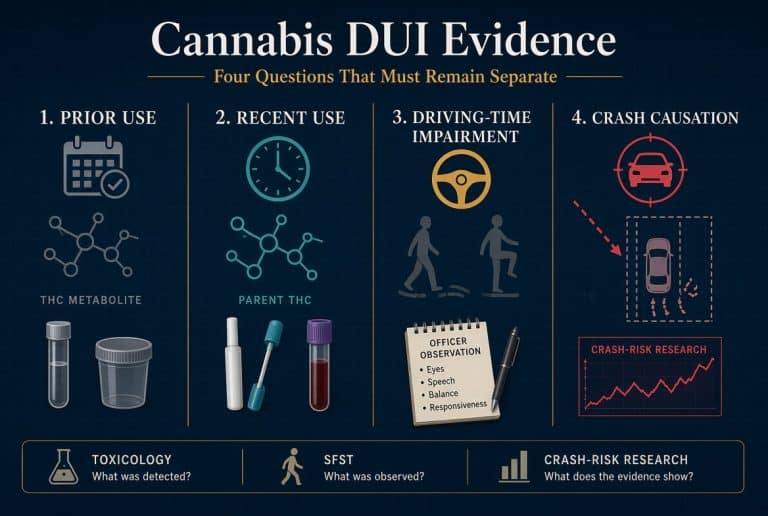
Cannabis DUI Evidence: Four Questions That Must Remain Separate
A cannabis DUI framework separating proof of prior use, recent use, driving-time impairment, and crash causation using toxicology, SFST, and crash-risk research.
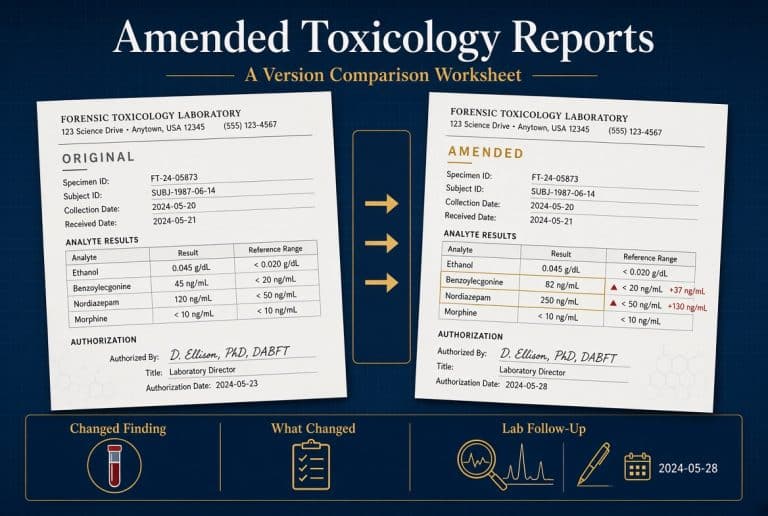
Amended Toxicology Reports: A Version Comparison Worksheet
A practical worksheet for comparing original and amended toxicology reports, tracking changed findings, and organizing focused laboratory follow-up.
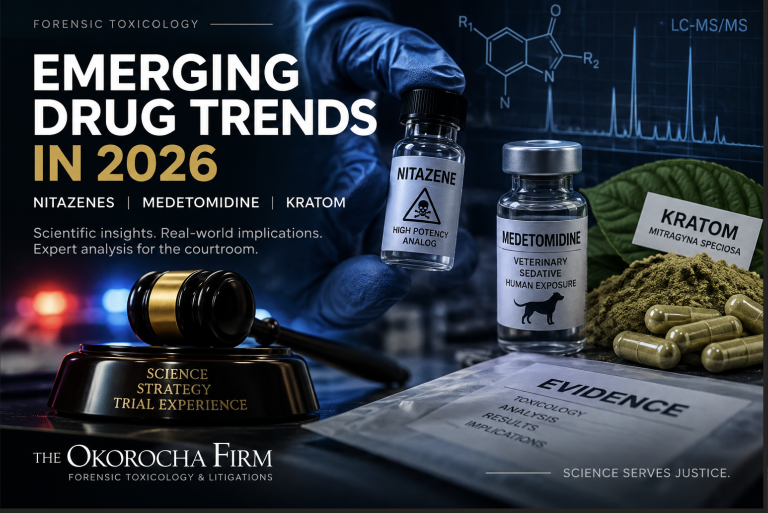
A Negative Nitazene Test: What Counsel Should Establish Before Relying on It
Review nitazene assay coverage, reporting limits, collection timing, and retained specimens before treating a negative result as evidence of no exposure.
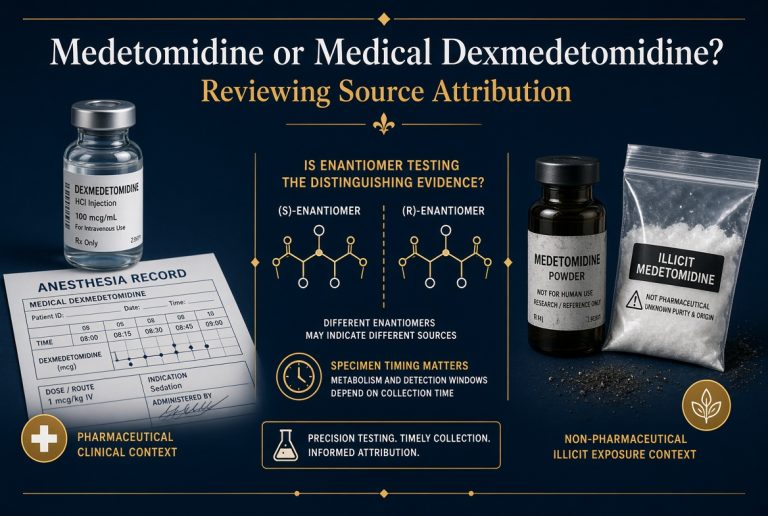
Medetomidine or Medical Dexmedetomidine? Reviewing Source Attribution
How medication records, specimen timing, and enantiomer testing affect attribution of a medetomidine finding to illicit exposure.
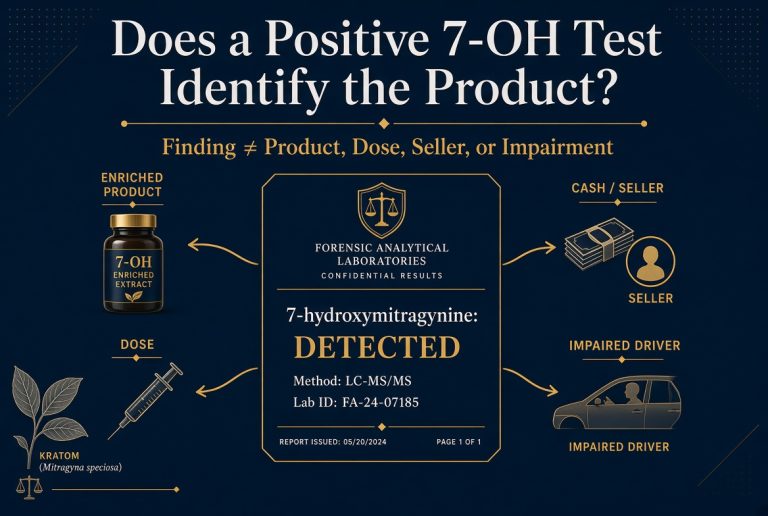
Does a Positive 7-OH Test Identify the Product Someone Took?
Distinguish a 7-hydroxymitragynine finding from proof of an enriched product, dose, impairment, or a particular seller.
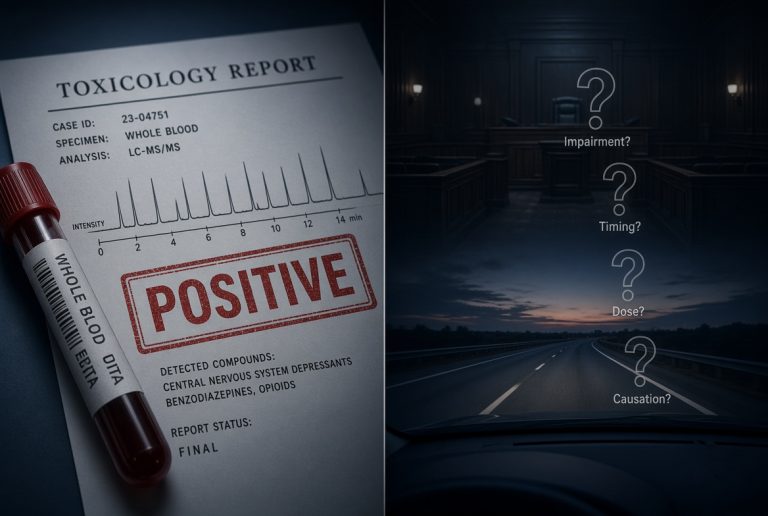
Medetomidine Withdrawal Evidence: Why the Timeline Matters
Review clinical phases, negative parent-drug results, co-withdrawal, and treatment records before assigning causation in medetomidine cases.
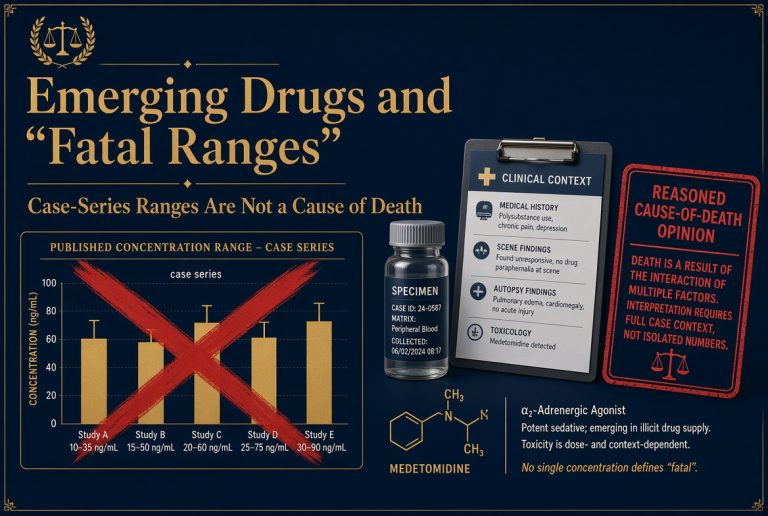
Emerging Drugs and “Fatal Ranges”: How to Evaluate Concentration Testimony
Why medetomidine case-series ranges cannot substitute for specimen-specific analysis, clinical context, and a reasoned cause-of-death opinion.
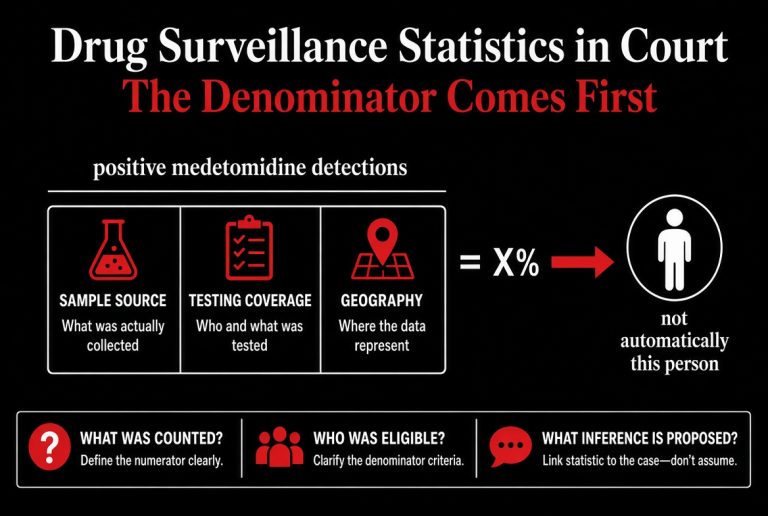
Drug Surveillance Statistics in Court: The Denominator Comes First
Evaluate medetomidine prevalence claims by sample source, testing coverage, geography, and the inference proposed for an individual case.
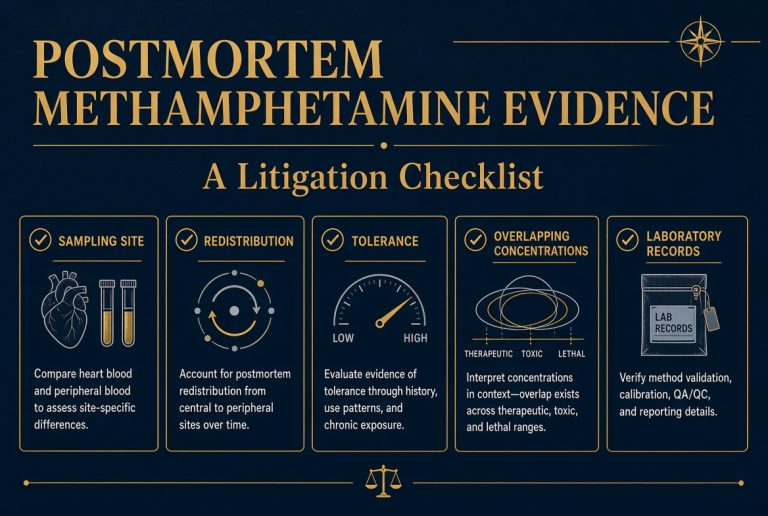
Postmortem Methamphetamine Evidence: A Litigation Checklist
A litigation-focused checklist for evaluating postmortem methamphetamine evidence, including sampling site, redistribution, tolerance, overlapping concentrations, and laboratory records.
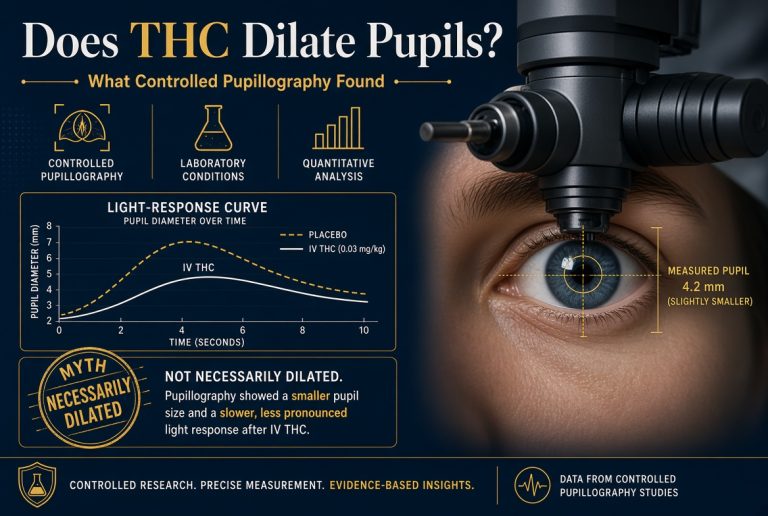
Does THC Dilate Pupils? What Controlled Pupillography Found
The common claim that cannabis necessarily causes dilated pupils is too simple. A controlled pupillography study found reduced pupil size and a slower, less pronounced response to light after intravenous THC.
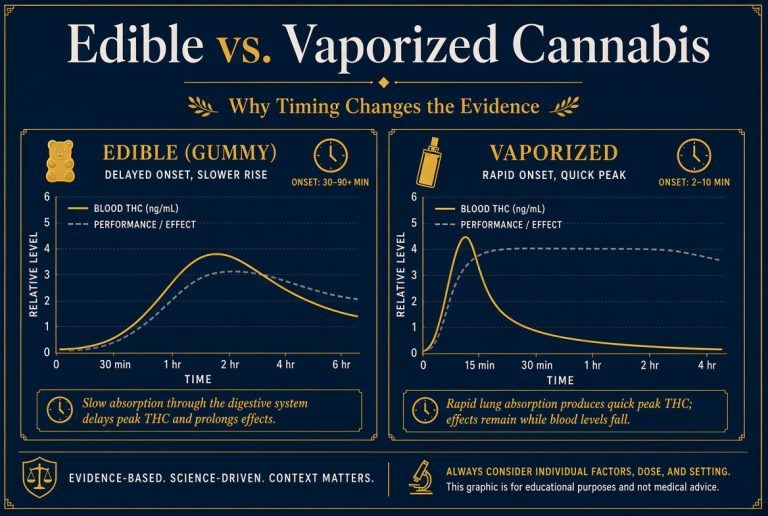
Edible vs. Vaporized Cannabis: Why Timing Changes the Evidence
The route of cannabis use changes the timing of both blood THC and observed effects. Controlled research shows delayed effects after edibles and rapidly falling blood THC after vaporization, even while performance effects continue.
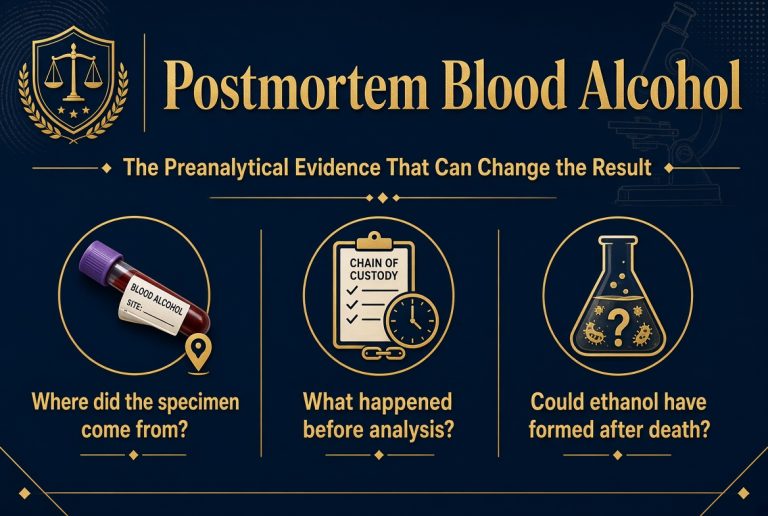
Postmortem Blood Alcohol: The Preanalytical Evidence That Can Change the Result
A postmortem ethanol number does not explain where the specimen came from, what happened before analysis, or whether some ethanol formed after death. A 2024 scientific review identifies the evidence needed to evaluate those questions.