BAC and Impaired-Driving Laws: A State-by-State Overview
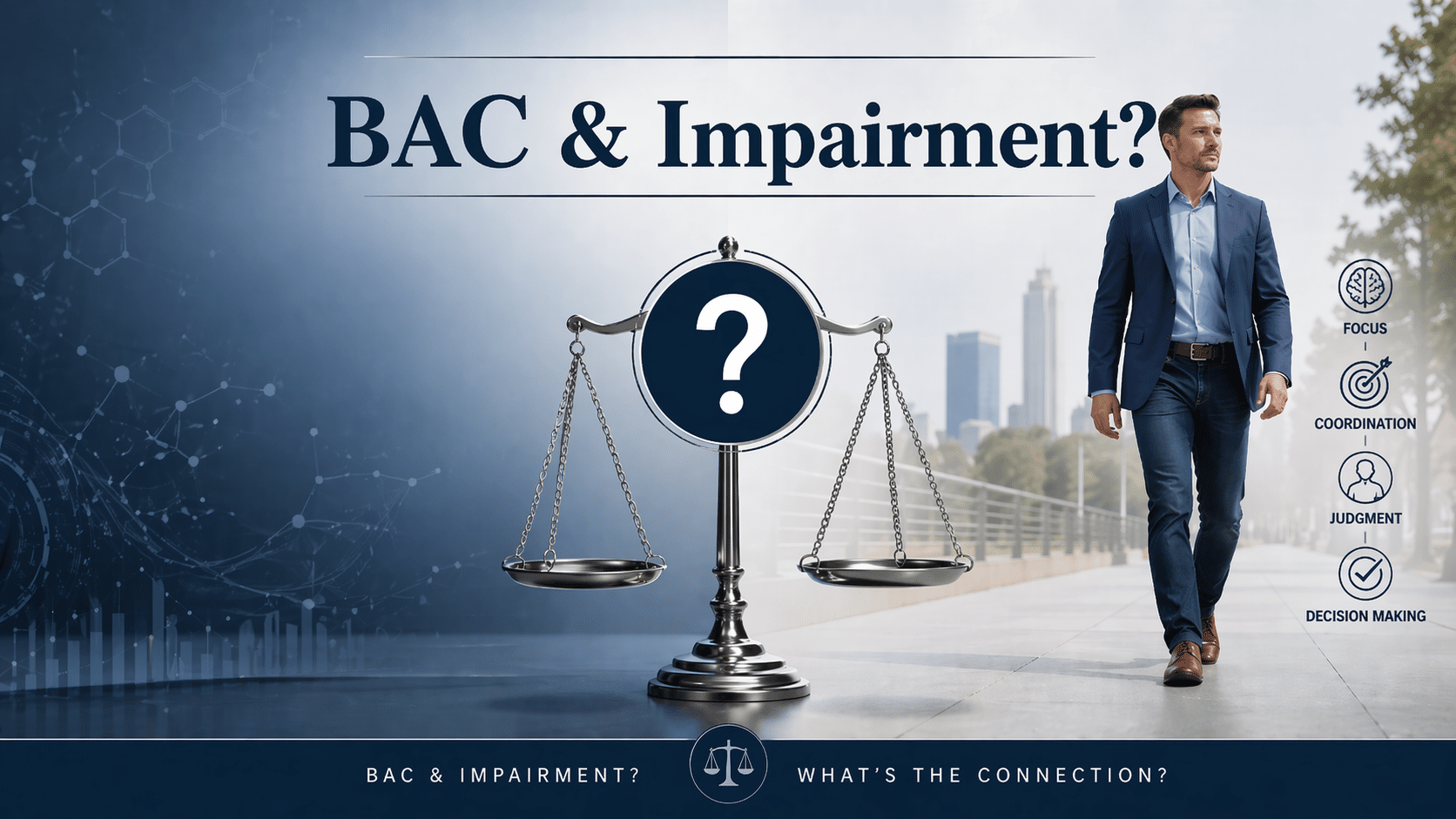
Article overview: BAC presumption statutes that codify evidentiary presumptions tied to the 0.05% BAC threshold
BAC presumption statutes that codify evidentiary presumptions tied to the 0.05% BAC threshold
What These Statutes Govern
These are chemical test evidentiary presumption statutes—not per se offense statutes (though the two often coexist). They govern what a jury or fact-finder is presumed to conclude based solely on a defendant’s BAC at the time of testing. The classic structure, codified by the overwhelming majority of states, is the three-tier framework:
| BAC Level | Presumption |
|---|---|
| ≤ 0.05% | Presumed not under the influence |
| 0.05% – 0.07% | No presumption (neutral zone) |
| ≥ 0.08% | Presumed under the influence |
State-by-State Highlights and Notable Deviations
Majority Rule (Three-Tier, Standard Thresholds) The vast majority of states — including California (Veh. Code § 23610), Florida (§ 316.1934), Texas (§ 724.064 with caveats), Illinois, Virginia, Washington, Wisconsin, and most others — follow this standard structure verbatim.
States with a Lower “Not Impaired” Threshold (0.04% instead of 0.05%)
- Alaska (AS 28.35.033) — ≤ 0.04% = not impaired
- Arkansas (§ 5-65-206) — ≤ 0.04% = not impaired
- New Mexico (§ 66-8-110) — < 0.04% = not impaired
This is a meaningful distinction for expert work: in these states, a BAC of 0.04–0.05% triggers no presumption in either direction, slightly narrowing the “safe harbor” for defendants.
States with a DWAI/DWI Tier Between 0.05%–0.08%
- Colorado — BAC 0.05–0.079% supports a separate DWAI charge (distinct from DUI), making the middle tier legally operative rather than a true “no presumption” zone.
- Maryland — Per se DWI offense at 0.07–0.079%.
- New York — DWAI at 0.07–0.079% under V.T.L. § 1192(2-a).
Massachusetts — Aberrational Post-Commonwealth v. Barbeau, Massachusetts removed the mandatory “not impaired” presumption at ≤ 0.05% from jury instructions. The ≥ 0.08% inference is permissive, not burden-shifting. This is a significant distinction for any Massachusetts expert engagement.
Texas — No Traditional Three-Tier Structure Texas does not codify evidentiary presumptions in the traditional sense. BAC evidence is admissible under § 724.064 and relevant to intoxication, but courts have held it does not constitute a formal presumption shifting the burden. Expert testimony on the significance of BAC therefore carries greater weight in Texas than in presumption-statute states.
Utah — National Outlier Utah has the lowest per se threshold in the country: 0.05% BAC = per se impaired (effective December 2018). The three-tier structure is entirely subsumed — there is no “not impaired” zone at 0.04% or below in the traditional sense. This is the functional analog to the presumption statute.
Alabama — Special Class Provisions Alabama’s statute (§ 32-5A-194) carves out school bus drivers and individuals under 21, for whom the 0.05% “not impaired” presumption does not apply — a class-specific caveat not seen in most states.
Pennsylvania — Tiered Penalty Structure Pennsylvania integrates its presumptions with a tiered penalty scheme: General impairment (0.08+), High BAC (0.10+), Highest BAC (0.16+). The evidentiary presumption and the sentencing enhancement are bound together in a single statutory framework.
Ohio — Per Se Dominant Ohio’s traditional three-tier presumptions exist in § 4511.19(D)(1), but the state is primarily per se-oriented under § 4511.19(B). Ohio also uses the distinctive “OVI” (Operating a Vehicle Impaired) designation.
Related reading: For related context, read Why Urine and Blood Drug Levels Do Not Prove Impairment, Commission on Judicial Performance Excerpts Concerning Judge Draper, When Courts Quote Expert-Witness Analysis. Browse the Forensic Toxicology topic hub.